Ditching sugar isn't about diving into a drastic, joyless diet. It's actually about making a series of small, smart changes that add up over time. The real trick is learning to spot those sneaky hidden sugars, making clever food swaps, and getting a handle on cravings without feeling like you're missing out. It's all about making informed choices that genuinely fit your life.
Why It Is Time to Rethink Your Sugar Intake
Let's be real for a moment—cutting back on sugar can feel like a massive challenge, especially when you start realising it's hiding in almost everything. But moving past the generic "just eat less sugar" advice means getting to grips with what it's really doing to your body and why making a change is so important.
The stats don't lie. The average Aussie is downing about 14 teaspoons of added sugar every single day, which is way over the recommended amount. This isn't just a number; it's a huge factor in public health, contributing to weight management issues for millions of adults and kids. You can see the full breakdown in this sugar consumption report.
The Ripple Effect of Excess Sugar
Beyond the big numbers, a high-sugar diet sends you on a constant rollercoaster of energy spikes and crashes. That wild ride messes with your mood, your ability to concentrate, and your general get-up-and-go throughout the day.
A massive part of wanting to change your sugar habits comes from understanding why stable blood sugar matters for your health in the long run. Keeping things balanced is a game-changer.
- Sustained Energy: You can finally say goodbye to that dreaded 3 PM slump when your energy levels are steady.
- Improved Mood: Keeping your blood sugar stable can help even out your moods and make you feel less irritable.
- Better Health Outcomes: Bringing down your sugar intake is directly linked to a lower risk of chronic health problems.
This journey isn't about deprivation. It's about taking back control of your energy and health by making conscious, healthier choices, one meal at a time.
Learning To Spot Hidden Sugars on Food Labels
Think your supermarket trolley is full of healthy choices? You might be in for a surprise. One of the biggest first steps in cutting down your sugar intake is becoming a bit of a detective in the grocery aisle, learning to spot the sugars hiding in plain sight.
It’s not just about the obvious culprits like lollies and soft drinks. So many foods marketed as ‘healthy’—from breakfast bars and flavoured yoghurts to pasta sauces—are absolutely loaded with added sweetness. This is exactly why getting savvy with nutrition panels is a genuine game-changer. Taking a moment to understand how to read nutrition labels is probably the most powerful skill you can build on this journey.
Sugar Has Many Different Names
Food manufacturers are quite clever; they use dozens of different names for sugar to make an ingredients list look less alarming than it actually is. Recognising these aliases is your secret weapon.
Keep an eye out for anything ending in “-ose,” like sucrose, dextrose, and fructose. But the list doesn't stop there. Be on the lookout for syrups and other sweeteners, too.
- High-fructose corn syrup
- Agave nectar
- Cane juice or cane syrup
- Malt syrup
- Molasses
The key takeaway here is simple: always scan the ingredients list for these names. Pay close attention to where they appear—if any form of sugar is listed in the first three ingredients, it’s a pretty sure bet that the product is packed with it.
It's amazing how common hidden sugars are on our shelves, especially in things like condiments and cereals.
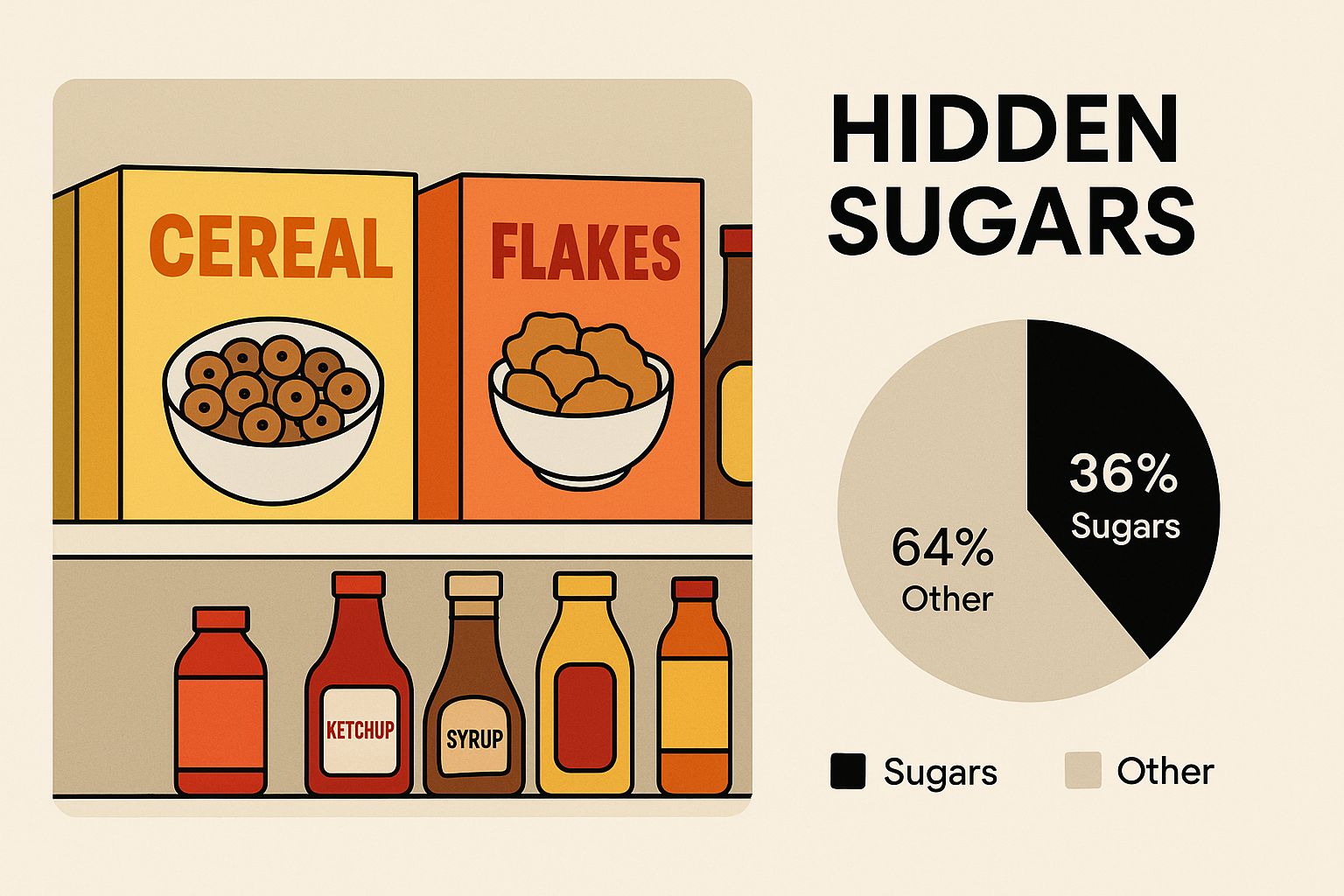
As you can see, even foods we often reach for to start the day on a healthy note can be a major source of the sweet stuff we're trying to avoid.
Before we dive deeper, let's get clear on what we're targeting. The goal isn't to cut out all sugar. The natural sugars found in a piece of fruit (fructose) or a glass of plain milk (lactose) are part of a whole food. Your real focus should be on reducing free sugars—that’s the stuff added by manufacturers purely to crank up the flavour.
Making Smart Swaps in Your Daily Meals
Knowing how to spot hidden sugars is a great starting point, but the real change happens in your own kitchen. Cutting back on sugar isn't about deprivation; it's about making clever, satisfying swaps in your day-to-day meals and rediscovering what real food tastes like.
Let’s start with breakfast. So many popular cereals are loaded with sugar, setting you up for that classic mid-morning energy crash. An easy switch is to trade that sugary box for a bowl of hearty rolled oats, topped with fresh berries and a dash of cinnamon. You’ll get sustained energy and fibre that keeps you feeling full and focused for hours.
Lunch is another fantastic opportunity for a simple swap. Pre-made sauces and dressings are often sneaky sugar bombs. Instead of a store-bought salad dressing, try whisking up your own zesty vinaigrette. All it takes is some good olive oil, a squeeze of lemon juice, and your favourite herbs. It’s fresher, tastier, and you know exactly what’s in it.
Building Flavour Beyond Sugar
The real secret to incredible low-sugar meals is learning to build flavour with other ingredients. Don't be shy with herbs and spices—they can transform a dish without a single grain of sugar.
- Herbs: Fresh basil, coriander, mint, and parsley bring a vibrant, fresh lift to everything from salads to stir-fries.
- Spices: Think cinnamon, nutmeg, cumin, and paprika. They add a wonderful warmth and complexity. A sprinkle of cinnamon in your morning coffee can even trick your tastebuds into perceiving sweetness.
- Healthy Fats: Things like avocado, nuts, and quality olive oil add a rich, satisfying mouthfeel that often dials down the craving for something sweet.
When you shift your focus like this, you start training your palate to appreciate savoury, complex flavours over just plain sweetness. Before you know it, you won't even miss the sugar. And for those special occasions when you do want a treat, exploring a range of delicious sugar-free cakes can be a brilliant way to indulge wisely.
Smart snacking is your secret weapon against the 3 p.m. slump. Instead of reaching for a processed muesli bar, try a handful of almonds or a small tub of plain Greek yoghurt with a swirl of cinnamon.
This approach of making small, consistent swaps is clearly working on a national level. One of the biggest drivers behind Australia's falling sugar consumption has been the move away from sugary drinks. Back in 2011–12, about 42% of Australians had a sugary drink every day. By 2023, that figure had dropped to under 29%. It just goes to show how powerful these simple changes can be.
Rethinking Your Drinks for the Biggest Impact
If you’re hunting for the single biggest win in your mission to cut back on sugar, the first place to look is in your glass. Sugary drinks are often the number one source of added sugars in our diet, and making changes here can have a massive, almost immediate, effect.
It’s easy to forget just how much sugar is packed into soft drinks, cordials, energy drinks, and even many seemingly healthy fruit juices. A single 375 ml can of your typical fizzy drink can contain anywhere from 33 to 50 grams of sugar – that’s nearly 10 teaspoons. It's a huge dose of empty calories that does very little to make you feel full.
Thankfully, there’s a shift happening. People are demanding healthier choices, and the beverage industry is starting to listen. A voluntary industry pledge is aiming to cut sugar content right across the board, and as a result, low and no-sugar drinks are now making up about half of all sales.
Smart Sips and Gradual Changes
You don't have to quit everything overnight. In fact, a gradual approach is far more likely to stick, giving your palate time to adjust without feeling like you're missing out. Small, consistent swaps are the real secret to long-term success.
Here are a few simple ideas to get you started:
- Dilute Your Drinks: If you're a big fan of fruit juice, try mixing it with still or sparkling water. Start with a 50/50 split and, over a few weeks, slowly up the water ratio. You'll barely notice the change.
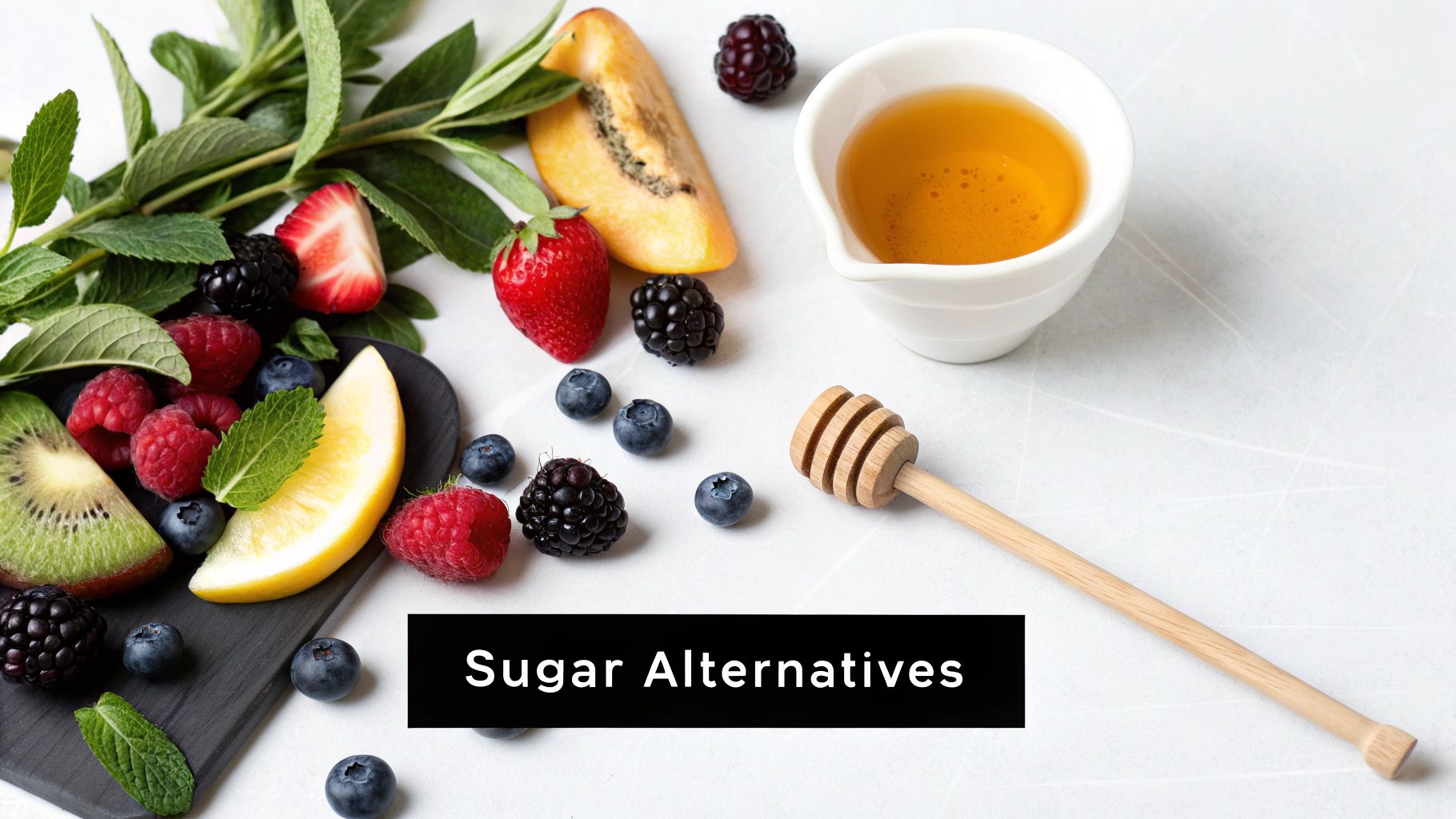
- Infuse Your Water: Plain water doesn't have to be boring. Make it exciting by adding slices of lemon, lime, cucumber, or a few sprigs of fresh mint. It adds a beautiful, refreshing flavour with zero sugar.
- Embrace Herbal Teas: There’s a whole world of herbal teas out there to explore. From peppermint and ginger to chamomile and berry blends, they can be enjoyed hot or chilled over ice for a seriously refreshing drink.
The goal is to gently retrain your taste buds. Over time, you’ll find that those super-sweet drinks you used to love just don't taste as good anymore as you start to appreciate more natural, subtle flavours.
A quick word on ‘diet’ drinks. While they don't contain sugar, they do use artificial sweeteners. The best long-term strategy is to shift your focus towards naturally unsweetened hydration like water and herbal teas.
For other fantastic drink ideas that are full of goodness, check out our guide on how to make healthy smoothies that pack a real nutritional punch without the sugar crash.
How to Manage Cravings and Build Lasting Habits
Successfully cutting back on sugar is less about raw willpower and more about getting smart with your strategy. It’s a mental game, and winning means understanding the psychology behind why you’re reaching for that sweet treat in the first place. Lasting change comes from building new, healthier habits, not from fighting a constant battle you’re bound to lose.
Often, what feels like a desperate sugar craving isn't true hunger at all. It can be your body’s way of signalling it needs something else entirely. Before you give in, just pause for a moment and check in with yourself. Are you genuinely hungry, or could it be something else?
It’s amazing how often cravings are just triggered by dehydration, fatigue, or even plain old boredom. A big glass of water, a quick walk around the block, or a five-minute break can sometimes be all it takes to make the urge completely disappear.
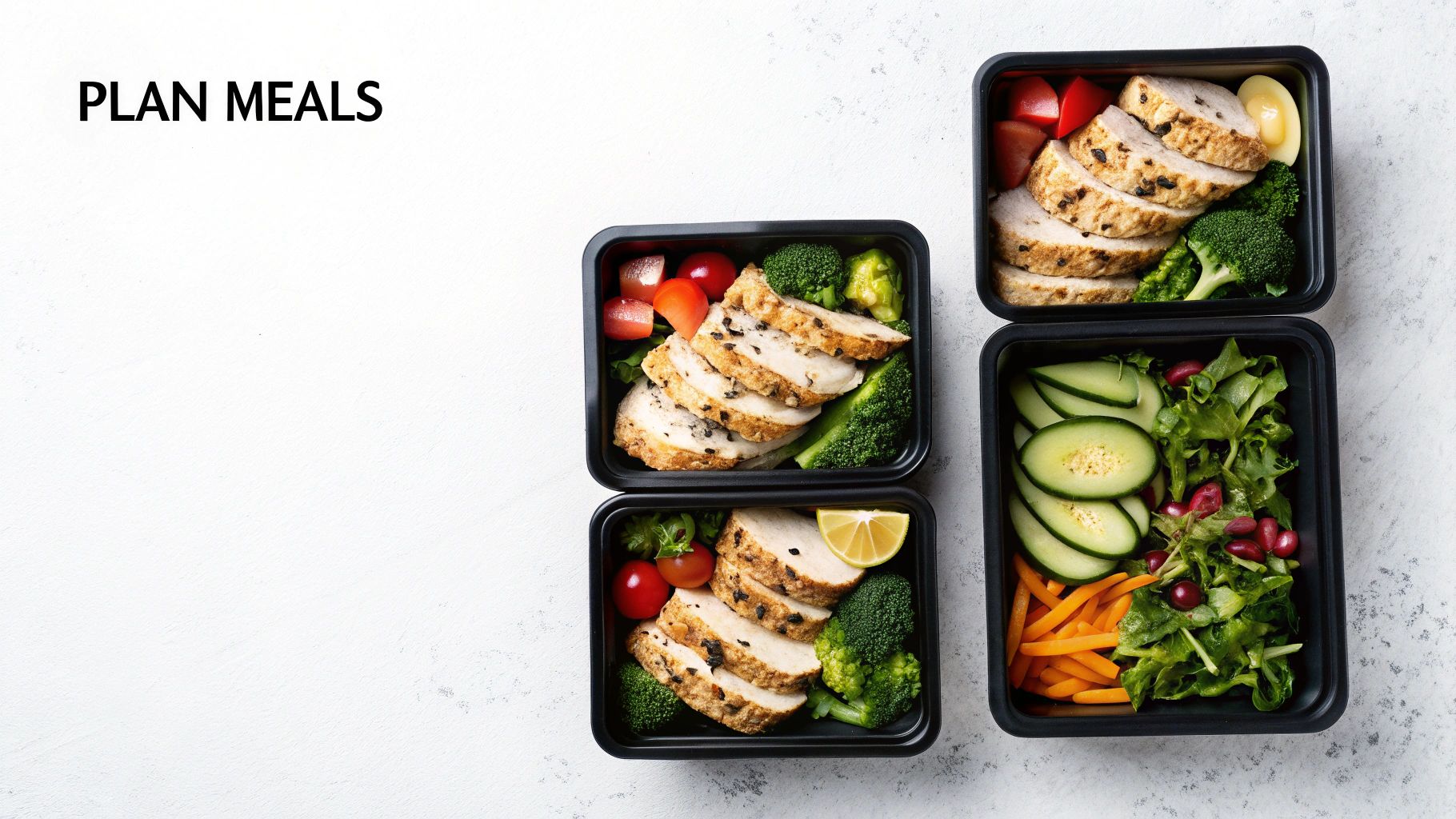
The best defence is a good offence. Building routines that support your goals is key. This means prioritising whole foods packed with protein and fibre, which are your best friends in this journey. These nutrients work to stabilise your blood sugar and keep you feeling full and satisfied, dramatically reducing the odds of a sudden, intense sugar craving.
Identify Your Triggers with Mindful Eating
Getting to the bottom of your personal craving triggers is a game-changer. This is where a practice like mindful eating becomes so powerful—it’s about paying full attention to why you’re eating, not just what you’re eating.
Think about it. Do you always reach for the biscuit tin when you’re stressed after a long day at work? Or crave a block of chocolate when you're feeling a bit bored on a quiet afternoon? Recognising these patterns is the very first step toward breaking them. If you’re curious, our guide on what is mindful eating is a great place to start.
Here are a few practical ways to manage those all-too-common moments:
- Stay Hydrated: It sounds simple, but dehydration is so often mistaken for hunger or a sugar craving. Keep a water bottle handy and sip on it throughout the day.
- Prioritise Sleep: A bad night's sleep really messes with your hunger hormones. It makes you far more likely to crave high-sugar, high-energy foods the next day to compensate.
- Have a Plan: Don't wait for a craving to strike. Be prepared with healthy snacks ready to go. A handful of nuts, a piece of fresh fruit, or some Greek yoghurt can be the perfect thing to tide you over.
Got Questions About Cutting Sugar? Let's Talk.
Deciding to cut back on sugar is a great move, but it almost always comes with a few questions. Getting a handle on these from the start can be the difference between sticking with it and feeling like you've been thrown in the deep end.
One of the first things people wonder is how quickly they should cut back. It’s so tempting to go for a dramatic "sugar detox," but from what I’ve seen, that approach often backfires. You’re left with intense cravings and headaches, which makes it incredibly tough to stay the course.
A much kinder, more sustainable way to do it is to take things gradually. Try focusing on just one thing for a week—maybe it's swapping out that daily can of soft drink. Once that feels like second nature, pick your next challenge, like finding a breakfast cereal that isn't loaded with hidden sugars. This way, you give your body and your taste buds a real chance to adjust without the shock.
What About Natural Sweeteners and Weight Loss?
This is another big one. Are "natural" sweeteners like honey or maple syrup a better choice? While they might contain a few trace minerals, your body processes them almost exactly the same way it processes regular table sugar. They’re still considered free sugars, so they count towards your daily intake.
It's far better to use them sparingly and work on reducing your overall sweet tooth, rather than just swapping one type of sugar for another.
And then there's the question of weight loss. Does cutting out sugar automatically mean you'll lose weight? It often does, but it’s not a magic bullet. Foods packed with added sugar are usually high in calories and low in nutrients. When you replace them with whole foods, you naturally tend to consume fewer calories.
But remember, genuine weight management is a bigger picture. It involves your entire diet, how active you are, and other lifestyle habits. Think of cutting sugar as a massive step toward better health—with weight loss being a very common and welcome side effect.
At the end of the day, a slow, steady approach that champions whole foods is always going to be the most effective strategy for the long haul.
At Absolute Cravings, we believe healthy food should be delicious and accessible. Whether you're after a fresh smoothie or a nutritious meal, find your new favourite by visiting us in Townsville or checking out our menu online at https://www.absolutecravings.com.au.


