Want to know the secret to a really great smoothie? It's not about just chucking a bunch of fruit in a blender and hoping for the best. To create a smoothie that’s not just delicious but genuinely satisfying and packed with nutrients, you need a simple, reliable game plan.
Think of it less as a strict recipe and more as a flexible blueprint. This is the formula I've used for years to whip up endless smoothie variations that keep me full, energised, and never bored.
Your Simple Formula for a Perfect Smoothie
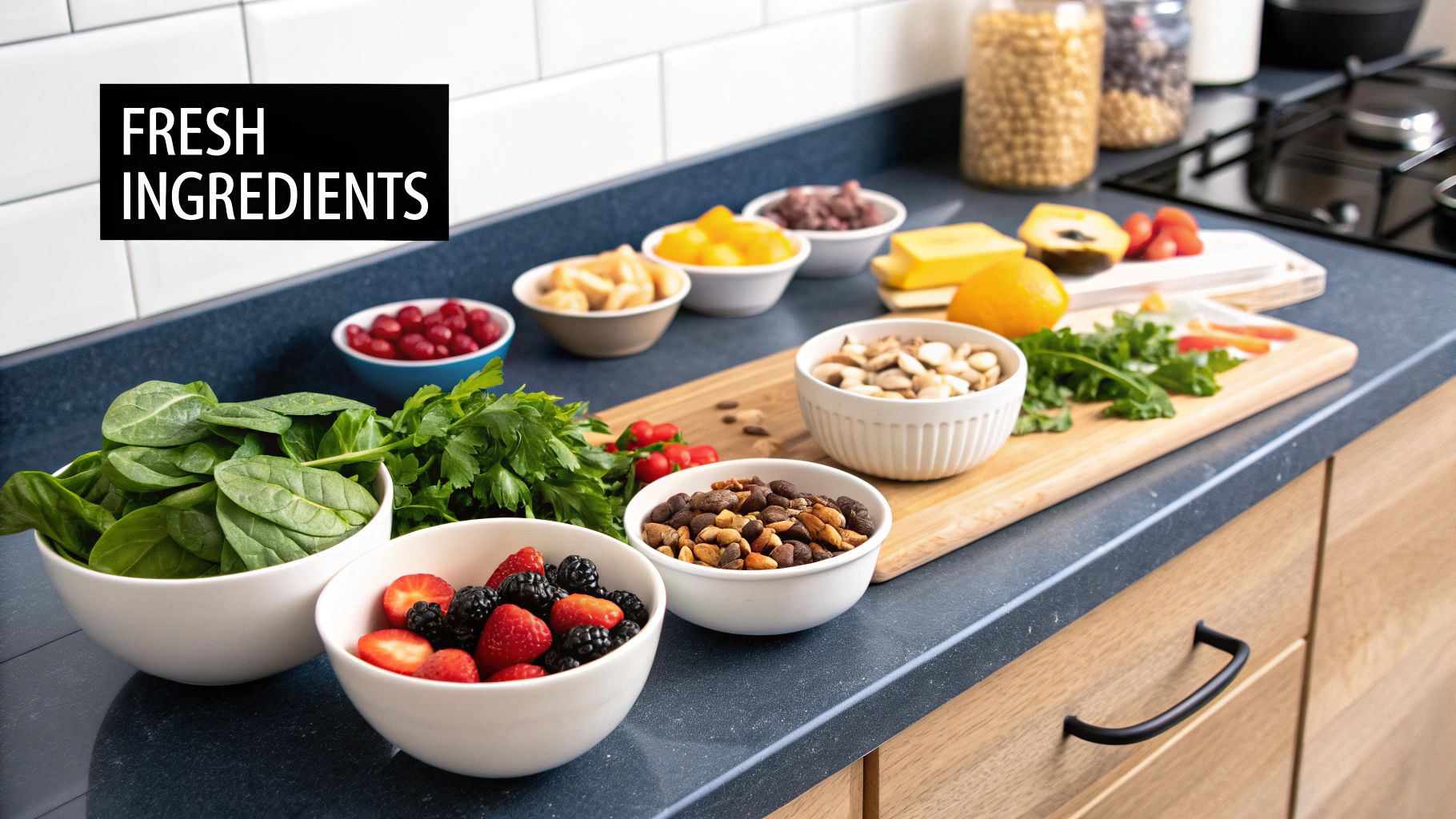
This method empowers you to use what you've got on hand, adapt to what's in season, and really nail the flavour and texture every single time. It's all about understanding the role each component plays in the final blend.
Building Your Smoothie Blueprint
The core idea is to combine four key elements. Get these right, and you'll have a perfectly balanced smoothie that works as a proper meal.
-
The Liquid Base (around 1 cup): This is what gets everything moving. Plain old water is fine, but you can also use coconut water for extra electrolytes, or dairy and plant-based milks (like almond or oat) for a creamier result.
-
Fruits & Veggies (1-2 cups): Here's where you get your flavour, natural sweetness, and a huge hit of vitamins. A classic combo is frozen banana or berries for creaminess and chill, plus a handful of leafy greens like spinach—you won't even taste it, I promise!
-
A Protein Boost (1 serving): This is what turns your smoothie from a snack into a meal that actually keeps you full. A scoop of Greek yoghurt, your favourite protein powder, or even some cottage cheese all work brilliantly.
-
Healthy Fats (about 1 tablespoon): Don't skip this! Healthy fats add a wonderful richness and are crucial for long-lasting energy. Think a spoonful of nut butter, some chia or ground flaxseed, or a slice of avocado for incredible creaminess.
A well-built smoothie isn't just a drink; it's a balanced meal in a glass. The combination of fibre from the fruit and veg, protein, and healthy fats helps keep your blood sugar stable and gives you sustained energy, stopping that dreaded mid-morning crash.
Putting It All Together
Once you've picked your ingredients, the actual blending is a piece of cake. The trick is to layer them properly.
Pour your liquid in first. This helps the blades get going without getting stuck. Then add your softer ingredients, followed by the frozen stuff and any powders. This simple technique makes for a much smoother, quicker blend.
By sticking to this blueprint, you have a foolproof method for making amazing, healthy smoothies that you can tweak endlessly. It’s all about mixing, matching, and finding the combinations you absolutely love.
Choosing the Best Core Smoothie Ingredients
The secret to a truly crave-worthy smoothie isn't some complex recipe; it's all about understanding how good, simple ingredients work together. Building a great smoothie starts long before you press the blend button—it begins in the produce aisle and your pantry, with smart choices that lead to a delicious and nourishing result.
Fruit is the natural foundation for most smoothies, and for good reason. It provides sweetness, fibre, and a whole host of essential vitamins. In Australia, fruit-based smoothies are incredibly popular, holding a massive 46.73% revenue share of the market in 2023. It’s easy to see why—they're packed with goodness and can be adapted to almost any dietary need.
Selecting Your Fruits and Vegetables
When you're picking out fruits, think about both the flavour and the texture you're after. Bananas are a classic because they add an amazing creaminess and a gentle sweetness that rounds everything out. Berries, like strawberries and blueberries, are fantastic because they're low in sugar but high in antioxidants. Using them frozen is a great trick for creating a thick, chilled texture without watering your smoothie down with ice.
But a truly healthy smoothie often has a secret veggie weapon. A large handful of baby spinach is a perfect place to start. Its flavour is so mild it gets completely lost behind the fruit, but it sneaks in a significant boost of iron and vitamins. For an even creamier, more decadent texture, try adding a quarter of an avocado. It’s a game-changer, contributing healthy fats that help keep you feeling full for longer.
Some of the keenest smoothie makers I know have even started growing your own fruit trees to get the freshest possible ingredients right from their own backyard.
Balancing Sweetness and Nutrients
A common mistake is to go a bit overboard and load up a smoothie with too much high-sugar fruit. While it might taste amazing, it can lead to a nasty blood sugar spike followed by a crash. I always aim for a balanced ratio, something like one cup of fruit to one or two big handfuls of leafy greens. It’s a simple guideline that ensures you get all the benefits without the unwanted sugar rush.
Key Takeaway: The goal isn't just to make a sweet drink. It’s to create a balanced blend. Prioritise nutrient-dense, low-sugar ingredients like leafy greens and healthy fats to turn your smoothie from a snack into a genuinely sustaining meal.
To help you stay on track, it's really useful to know exactly what you’re putting into your body. Learning how to read nutrition labels on store-bought items like plant milks or yoghurts can make a huge difference in creating smoothies that are genuinely good for you.
Here's a quick checklist to help you build a brilliant smoothie every single time. Just pick one or two items from each category, and you're good to go.
Essential Smoothie Ingredient Checklist
| Category | Examples (Choose 1-2) | Purpose |
|---|---|---|
| Liquid Base | Water, Coconut Water, Almond Milk, Oat Milk | Creates the right consistency and helps blend ingredients. |
| Fruit | Banana, Berries, Mango, Pineapple | Provides natural sweetness, fibre, and essential vitamins. |
| Vegetables | Spinach, Kale, Avocado, Cucumber | Boosts nutrient content with minimal impact on flavour. |
| Protein | Protein Powder, Greek Yoghurt, Chia Seeds, Hemp Seeds | Increases satiety and supports muscle repair. |
| Healthy Fats | Avocado, Nut Butter, Flaxseed, Chia Seeds | Adds creaminess and provides long-lasting energy. |
| Flavour Boosters | Cinnamon, Cacao Powder, Vanilla Extract, Ginger | Enhances the overall taste without adding sugar. |
Using a table like this can take the guesswork out of your morning routine and ensure you're getting a well-rounded mix of nutrients.
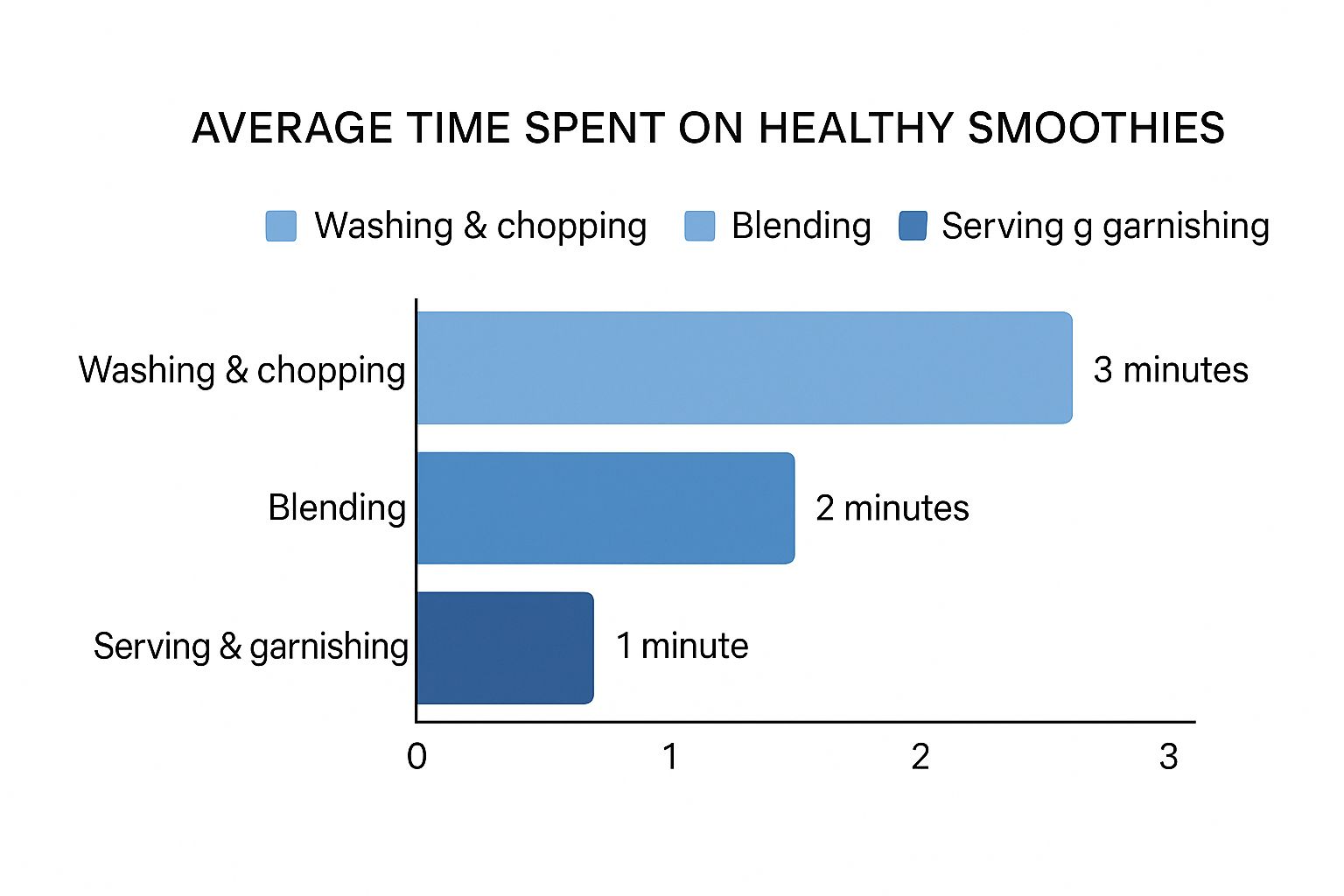
As you can see, most of the time is spent on prep, which makes your ingredient selection even more important for an efficient and enjoyable routine.
By thoughtfully choosing your core ingredients, you can easily craft a smoothie that truly supports your wellness goals. It’s all about being intentional with your fruits, veggies, and extras to create a blend that’s as nutritious as it is delicious.
Exploring Plant-Based and Functional Add-Ins
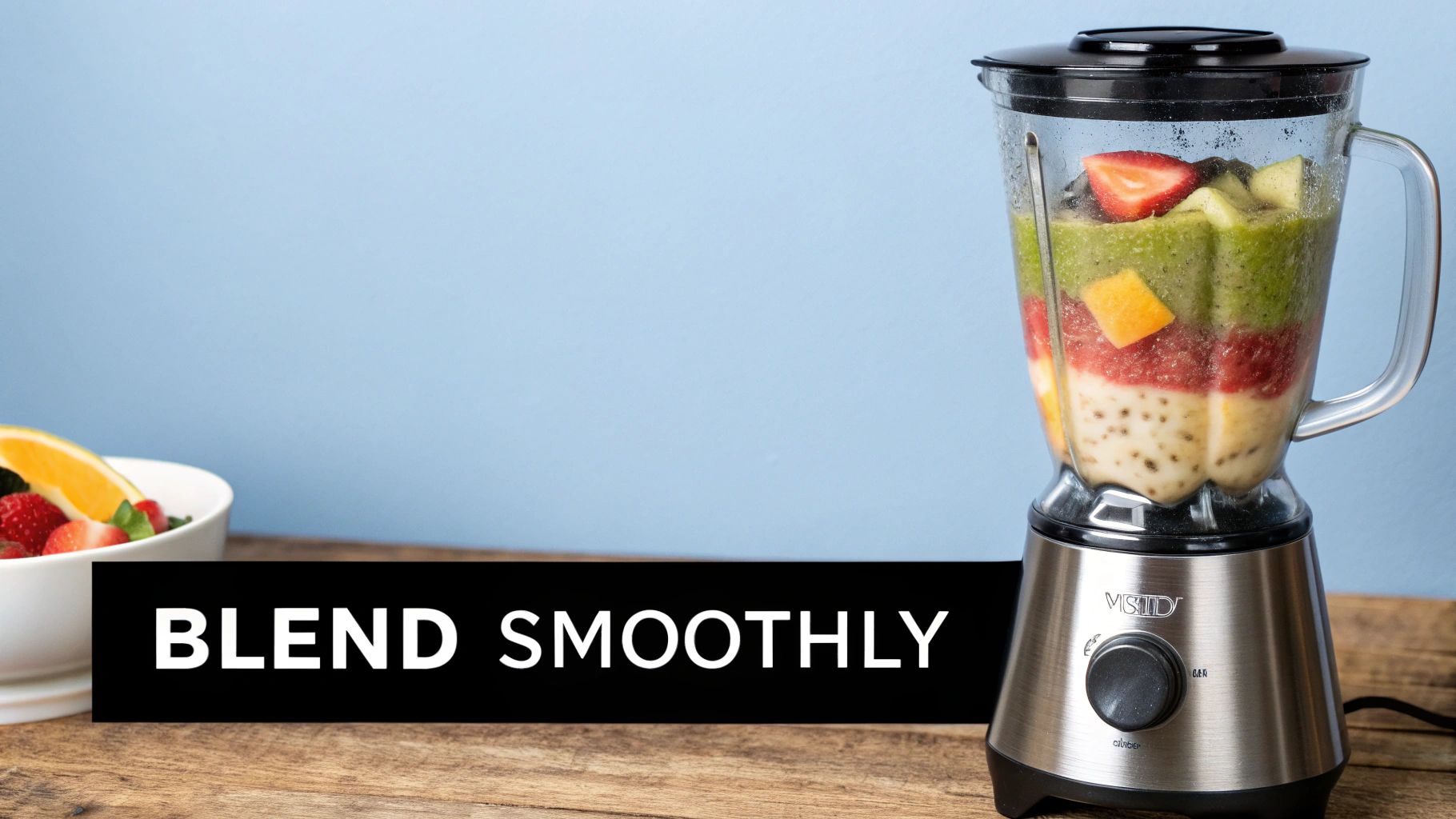
Once you've got the hang of the basic smoothie building blocks, it’s time for the fun part. This is where you can start experimenting with ingredients that take your blend from a simple healthy meal to a targeted nutritional powerhouse.
Plant-based milks and functional add-ins are your secret weapons here. They offer unique flavours, textures, and health benefits that dairy milk or plain water just can't compete with.
The demand for these specialised ingredients is booming. In Australia, the smoothie market is seeing some serious growth, and it’s all thanks to health-conscious people like us looking for natural, organic ingredients. This trend is driven by a real desire for smoothies that do more—like boost energy or improve digestion.
This shift means we have more amazing options than ever to customise our blends. Knowing a bit about these add-ins is the key to creating a smoothie that truly works for you and your body.
Choosing Your Plant-Based Milk
The plant-based milk you pick does more than just get the blender going; it completely changes the creaminess and flavour of the final product. Each one brings something different to the table, so it’s worth trying a few to see what you like.
- Almond Milk: This is a crowd favourite for a reason. It’s low in calories with a neutral taste that lets your fruits and veggies be the star of the show. It’s quite thin, making it perfect for a more drinkable, less-thick smoothie.
- Oat Milk: If you’re chasing that ultimate creamy, luxurious texture, oat milk is your best friend. It has a naturally smooth and slightly sweet profile that makes any smoothie feel incredibly rich.
- Coconut Milk: For a tropical vibe and a hit of healthy fats, coconut milk (the kind from a carton, not the thick tinned stuff) adds a distinct flavour and a lovely, moderate creaminess.
Playing around with different milks is one of the easiest ways to find new favourite combos and nail the perfect texture for your healthy smoothies.
Supercharging with Functional Boosters
This is where you can get really specific with your health goals. Functional ingredients are foods that offer benefits beyond basic nutrition, and even a small amount can make a huge difference.
Tossing in these power-packed ingredients is such a simple step, but it massively boosts the nutritional value of your drink. If you're keen to learn more about where to find top-notch ingredients, understanding the benefits of organic food is a great place to start.
Think of these boosters as small additions with big rewards. Just a single tablespoon of chia seeds, for instance, can completely change how long your smoothie keeps you feeling full and satisfied.
Pro Tip: Start small with functional add-ins. A little really does go a long way, especially with potent flavours like ginger or maca powder. I always suggest starting with half a teaspoon and adjusting from there until you find what tastes right to you.
Here are a few of my go-to functional ingredients to get you started:
- Chia Seeds: These tiny powerhouses are loaded with fibre, omega-3 fatty acids, and protein. They soak up liquid and create a gel-like consistency, which helps thicken your smoothie and keeps you feeling full for hours.
- Ground Flaxseed: Another brilliant source of fibre and omega-3s, flaxseed adds a lovely nutty flavour and is fantastic for supporting digestive health.
- Hemp Seeds: Offering a complete protein with all nine essential amino acids, hemp seeds have a mild, nutty taste and add a creamy texture when blended up.
- Maca Powder: This root vegetable powder is well-known for its potential to boost energy and mood. It has an earthy, slightly caramel-like flavour that pairs beautifully with things like cacao or banana.
By thoughtfully picking your liquid base and adding a functional booster or two, you can craft a delicious, healthy smoothie that’s tailored precisely to what your body needs.
Mastering Your Blending Technique for the Perfect Texture
A truly great smoothie isn’t just about what you put in it; it's about how you bring it all together. The difference between a clumpy, gritty mess and a silky-smooth, cafe-quality drink often boils down to a few simple tricks of the trade.
It’s a common misconception that you need a top-of-the-line blender to get that perfect texture. The truth is, it’s much more about working with your machine, not against it. Once you know how to layer your ingredients correctly, you’ll be able to whip up a velvety, satisfying smoothie every single time.
The Right Way to Layer Your Ingredients
You might be surprised to learn that the order you add things to your blender jug makes a massive difference. Just piling everything in at random can strain the motor and leave you with stubborn chunks of frozen banana or, even worse, unblended bits of kale.
Following a specific layering strategy is the secret. This method protects your blender's blades and helps create a powerful vortex that pulls all the solid ingredients down for a much smoother, faster blend.
-
Liquids First: Always start here. Pour your liquid base—whether it’s almond milk, water, or coconut water—into the jug first. This gives the blades something to grab onto right away, so they can start spinning freely without getting stuck.
-
Powders and Boosters Next: Now’s the time for your protein powder, cacao, maca, or other supplements. Adding them now lets them dissolve properly into the liquid instead of getting stuck in clumps to the side of the jug.
-
Leafy Greens: Follow up with your spinach or kale. By submerging the greens in the liquid, you help them break down completely. No more chewy, leafy bits in your final drink!
-
Soft Ingredients: Next in are your fresh fruits, yoghurts, and things like nut butters.
-
Frozen and Hard Ingredients Last: Finish with the heavy hitters—your frozen fruits, nuts, and any ice. Their weight is crucial, as it helps push everything else down towards the blades, creating an even, consistent blend from top to bottom.
By layering this way, you create a natural blending flow. The liquid base forms a whirlpool, pulling the lighter ingredients down before the heavier frozen items power through everything. The result is a perfectly smooth finish without overworking your blender.
Getting Your Smoothie’s Thickness Just Right
One of the best things about making your own smoothies is having complete control. Whether you're in the mood for a thick, spoonable smoothie bowl or a thin, easy-to-sip drink for on the go, a few simple tweaks are all it takes.
-
For a Thicker Smoothie: The easiest trick is to use frozen fruit instead of fresh. Frozen bananas, in particular, are fantastic for adding an incredible creaminess. You can also add a tablespoon of chia seeds or ground flaxseed—they absorb liquid and naturally thicken the blend. A scoop of Greek yoghurt or even a piece of avocado works wonders for a richer texture, too.
-
For a Thinner Smoothie: This one's an easy fix! Simply add more of your liquid base. I recommend starting with just a small splash, blending for a few seconds, and then checking the consistency. Keep adding a little at a time until it's perfect for you.
Mastering these simple techniques will give you the confidence to troubleshoot any smoothie. Say goodbye to gritty textures or watery disappointments—and hello to perfectly blended, delicious smoothies that are a joy to make and drink.
Simple Smoothie Recipes To Get You Started
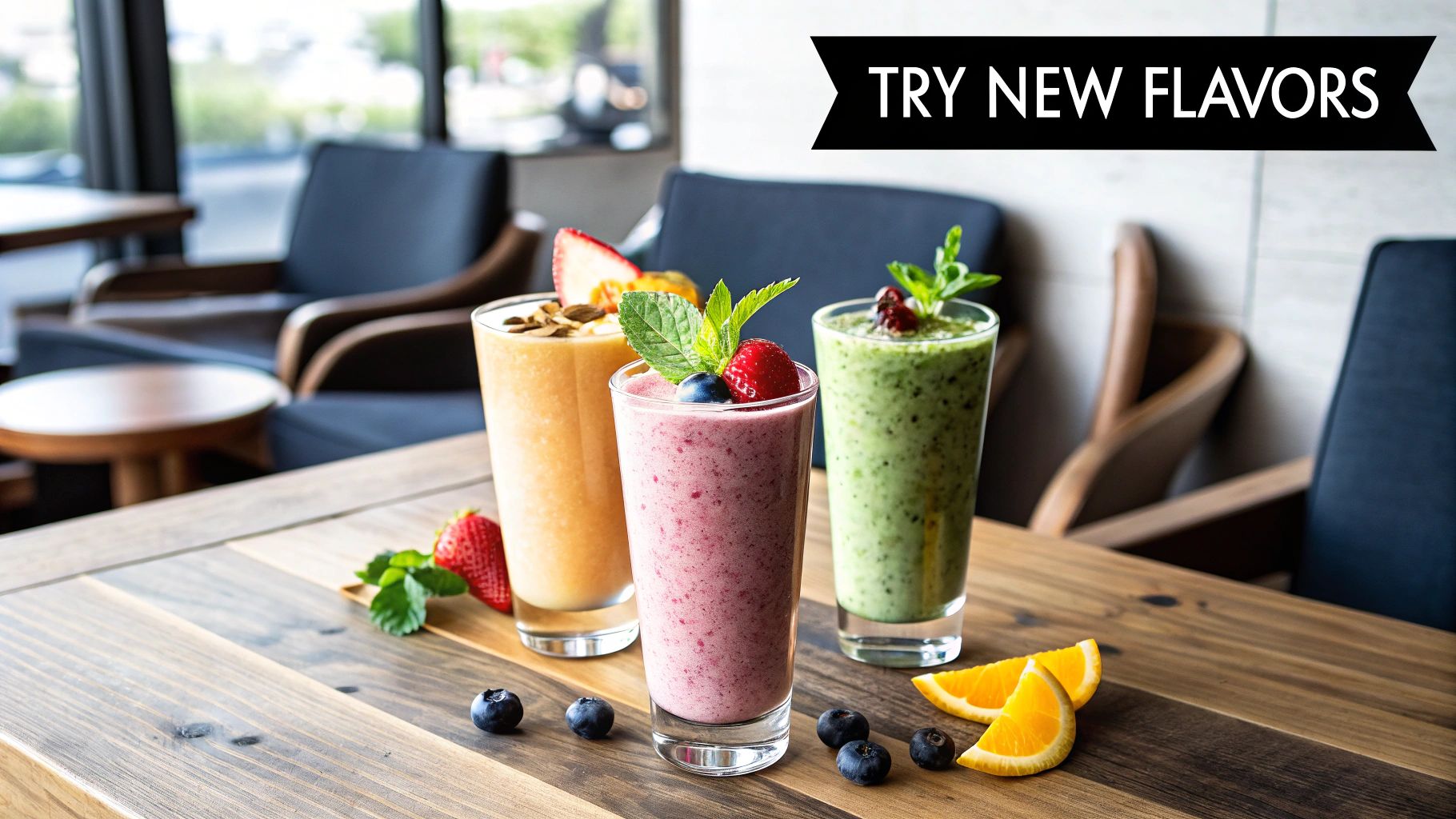
Now that you've got the fundamentals down, it's time for the fun part – putting your new skills to the test with a few of our go-to recipes. Think of these as a starting point; they’re a solid foundation you can tweak and customise depending on what’s in the fridge or what your body is craving that day.
These recipes are designed to be quick and easy, which is a huge part of why smoothies have become so popular. The demand for convenient and nutritious meals has seen smoothie consumption steadily rise across Australia. For busy Aussies, a well-made smoothie is the perfect answer for a fast, nutrient-packed meal, whether you're whipping it up at home or grabbing one on the go.
Here are a couple of delicious combinations to get you inspired.
The Classic Green Detox Smoothie
Don't let the vibrant green colour throw you; this smoothie is surprisingly sweet and incredibly refreshing. It's my favourite way to sneak in a massive serving of greens without even realising they're there. The banana and pineapple team up to deliver a beautiful tropical sweetness that completely balances out the spinach flavour.
Ingredients:
- 1 large handful of fresh baby spinach
- 1/2 frozen banana
- 1/2 cup frozen pineapple chunks
- 1 tbsp chia seeds
- 1 cup of coconut water or plain water
Just toss all the ingredients into your blender, remembering the layering technique we talked about, and blitz it until it's perfectly smooth. This is my go-to when I need an energising kick-start to the day.
The Berry Antioxidant Boost
This recipe is an absolute powerhouse of flavour and nutrients, loaded with antioxidants from the mixed berries. The Greek yoghurt adds a fantastic creamy texture and a welcome protein boost that will keep you feeling full and satisfied all morning.
Ingredients:
- 1 cup frozen mixed berries (strawberries, blueberries, raspberries)
- 1/2 cup plain Greek yoghurt
- 1 tbsp almond butter
- 1/2 to 1 cup almond milk (adjust for your preferred thickness)
Combine everything in your blender and let it rip until it's lovely and creamy. The almond butter brings in some healthy fats and a subtle nutty taste that goes so well with the tangy berries. For more ideas on creating satisfying blends, check out our guide to the https://www.absolutecravings.com.au/best-protein-smoothie-recipes/.
A Quick Tip on Customising: Feel free to swap ingredients around! No pineapple? Try mango instead. Don't have almond butter? A tablespoon of hemp seeds works great, too. The best smoothie is the one you actually enjoy drinking, so don't be afraid to experiment.
These recipes are just the beginning of your smoothie-making journey. If you're looking for more inspiration, especially for blends that support specific health goals, you can find some delicious low sugar high protein smoothies to try. Use these ideas as a jumping-off point to discover your own perfect flavour combinations
Your Smoothie Questions, Answered
Even when you've got the best recipes on hand, a few questions always come up when you start making healthy smoothies a regular thing. Getting those little details sorted can be the difference between a new habit that sticks and a blender that just gathers dust.
Let's dive into some of the most common queries we hear, so you can perfect your blend and get the most out of every glass.
Is Fresh or Frozen Fruit Better for Smoothies?
This is a classic, and the answer is refreshingly simple: both are brilliant choices, but they serve slightly different purposes.
Fresh fruit is incredible when it’s in season, packed with vibrant flavour and goodness. But if you're chasing that perfect, thick smoothie texture, frozen fruit is your secret weapon. It’s typically picked and frozen at peak ripeness, which locks in all the nutrients. Plus, it chills and thickens your smoothie beautifully without needing ice, which can just water things down.
For that thick, creamy, almost dessert-like consistency, nothing beats frozen fruit like bananas or mangoes.
How Can I Prep Smoothies in Advance?
Mornings are hectic, we get it. Prepping ahead is a game-changer. The easiest way to get organised is by making individual "smoothie packs."
Just portion out your solid ingredients for one smoothie – think chopped fruit, spinach, protein powder, and seeds – into a freezer-safe bag or container. When you’re ready for a smoothie, all you have to do is tip the contents of a pack into your blender, pour in your liquid, and hit the button.
This little trick keeps everything fresh and makes your morning routine so much smoother. You can knock out a week's worth of smoothie packs in just a few minutes on a Sunday afternoon.
How Do I Store Leftover Smoothie?
Sometimes your eyes are bigger than your blender, and you end up with a bit extra. To keep it fresh, pour your leftover smoothie into an airtight container like a mason jar, filling it right up to the brim. This cuts down on air exposure, which helps stop it from oxidising and separating.
It should keep nicely in the fridge for up to 24 hours. You might notice it separates a little, but a quick shake or stir will usually bring it right back together. For a longer-term solution, pour the leftovers into an ice cube tray and freeze. These frozen smoothie cubes are perfect for adding a flavour boost to your next blend.
Ready to blend up something amazing with the freshest ingredients? If you're around Townsville, pop into Absolute Cravings for a delicious, healthy smoothie made with love, or have a look at our full menu online. We’re all about creating nutritious, satisfying food that makes healthy eating a pure joy. Visit us at https://www.absolutecravings.com.au.


