

So, you're wondering how to start eating healthier without turning your entire life upside down? The real secret isn't some crazy, restrictive diet. It's about making small, smart changes that you can actually stick with. Think less about deprivation and more about adding good stuff in, like whole foods, and making simple swaps that leave you feeling energised.
A Realistic Path to Better Health
Let's be honest, the whole "healthy eating" world can feel pretty overwhelming. There's so much conflicting advice out there, it's easy to just throw your hands up and give in. But the key isn't to aim for perfection from day one. It's about making gradual, conscious choices that build momentum. This is all about nourishing your body and feeling good, not punishing yourself.
The goal here is to build habits that last a lifetime, not just for a few weeks. By focusing on a few core ideas, you can lay a solid foundation for your health without all the stress. It really does start with simple, doable steps.
Why the Small Stuff is a Big Deal
Ever wondered why those drastic diets almost never work long-term? It's because they're completely unsustainable. They often lead to a frustrating cycle of restriction, followed by caving and feeling guilty. Making small adjustments, on the other hand, is so much easier to weave into your daily routine. They feel less like a chore and more like a natural part of your life.
Think of it like building a house, one brick at a time. Each healthy choice you make is another brick. Over time, those bricks create a seriously strong and resilient foundation for your health.
For a lot of us here in Australia, making these changes is more critical than ever. The 2023 Global Nutrition Report pointed out that around 31.3% of adult women and 32.8% of adult men in Australia are living with obesity, which is often linked to poor dietary habits. These aren't just numbers; they're a clear sign that building healthier eating habits is crucial for our long-term wellbeing. If you want to dive deeper, you can explore more data about nutrition in Australia to get the full picture.
The secret to lasting change is consistency, not intensity. A small, positive choice made every day is far more powerful than a massive, short-lived effort.
This approach does wonders for your confidence. You avoid the burnout that almost always comes with radical diet overhauls. When you start celebrating the small wins—like adding a side salad to your lunch or choosing water over a soft drink—you're reinforcing those positive behaviours. These little victories add up, leading to significant health benefits without making you feel like you've given up everything you love.
Building Your Plate the Smart Way
Forget about the stress of counting every single calorie. A far simpler and more sustainable way to approach healthy eating is to just picture your plate before you even start cooking. This method, often called the ‘Healthy Plate Model’, is a fantastic tool for building balanced meals without getting bogged down in the maths.
The idea is refreshingly straightforward: you divide your plate into sections to make sure you're getting a good mix of nutrients every time you eat. It’s not some rigid diet; think of it more as a flexible guide that helps you make smarter choices, meal after meal. This visual cue makes healthy eating feel practical and a whole lot less intimidating.
The Anatomy of a Healthy Plate
The model is incredibly easy to follow. Just imagine drawing a line down the middle of your plate, then splitting one of those halves in two. That leaves you with three sections to fill with wholesome foods.
- Half Your Plate with Colourful Veggies: This is the biggest section, and for good reason. Vegetables are absolutely packed with vitamins, minerals, and fibre, which all work to keep you full and properly nourished. Think leafy greens, broccoli, carrots, capsicum, and tomatoes.
- A Quarter with Lean Protein: Protein is crucial for building and repairing tissues in your body, and it's a champion at keeping you satisfied. Great Aussie choices include grilled chicken, fish, lean kangaroo sausages instead of processed snags, or plant-based options like lentils and chickpeas.
- A Quarter with Whole Grains: These are your body's source of slow-release energy, the stuff you need to power through your day. Go for things like brown rice, quinoa, whole-wheat pasta, or a nice slice of dense wholegrain bread.
Putting It into Practice Tonight
This isn't just theory; it's something you can start doing right now. For example, if you're making a spaghetti bolognese for dinner, try bulking up the sauce with grated carrot and zucchini, and maybe toss in a handful of red lentils. You could also swap out the regular white pasta for a legume-based version to really boost the protein and fibre.
You can even apply this principle when you're grabbing takeaway. Ordering a curry? Just ask for extra steamed veggies on the side and choose brown rice. That one simple tweak instantly improves the nutritional balance of your meal.
The goal isn’t perfection. It’s about making a conscious effort to add more of the good stuff to every plate. Small, consistent improvements are what really lead to significant, long-term health benefits.
If you want a bit of extra help putting together balanced meals and making sure you get plenty of variety, you could look into specialized nutrition builder tools that can simplify the planning process even further.
This handy visual breaks down the simple, three-step process for putting your meal together.
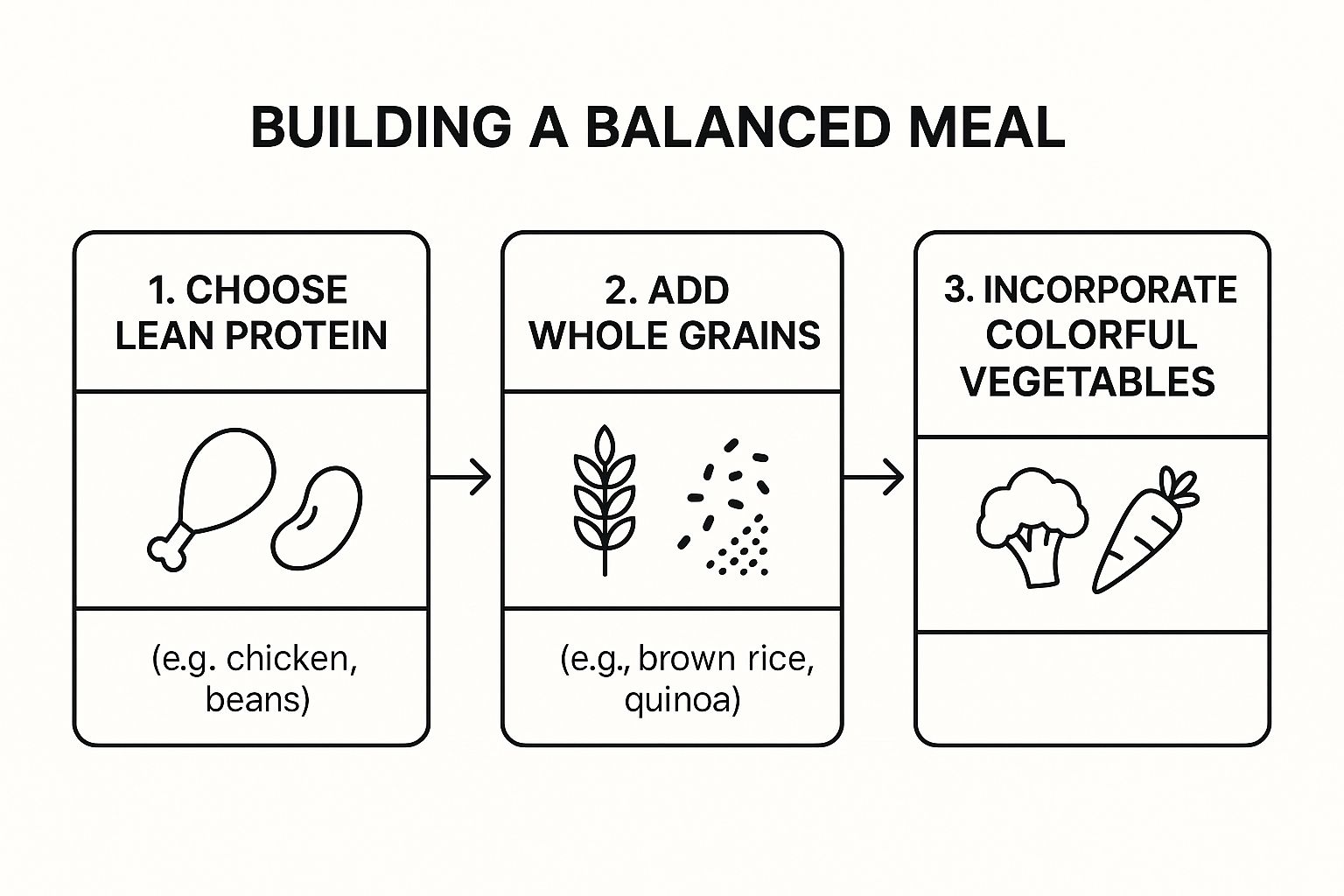
The image really reinforces the idea that building a healthy meal starts with a solid foundation of protein and whole grains, then gets a massive nutrient boost from a wide variety of vegetables. By following this simple flow, you set yourself up to create balanced, satisfying meals every single time.
Navigating the Supermarket Like a Pro
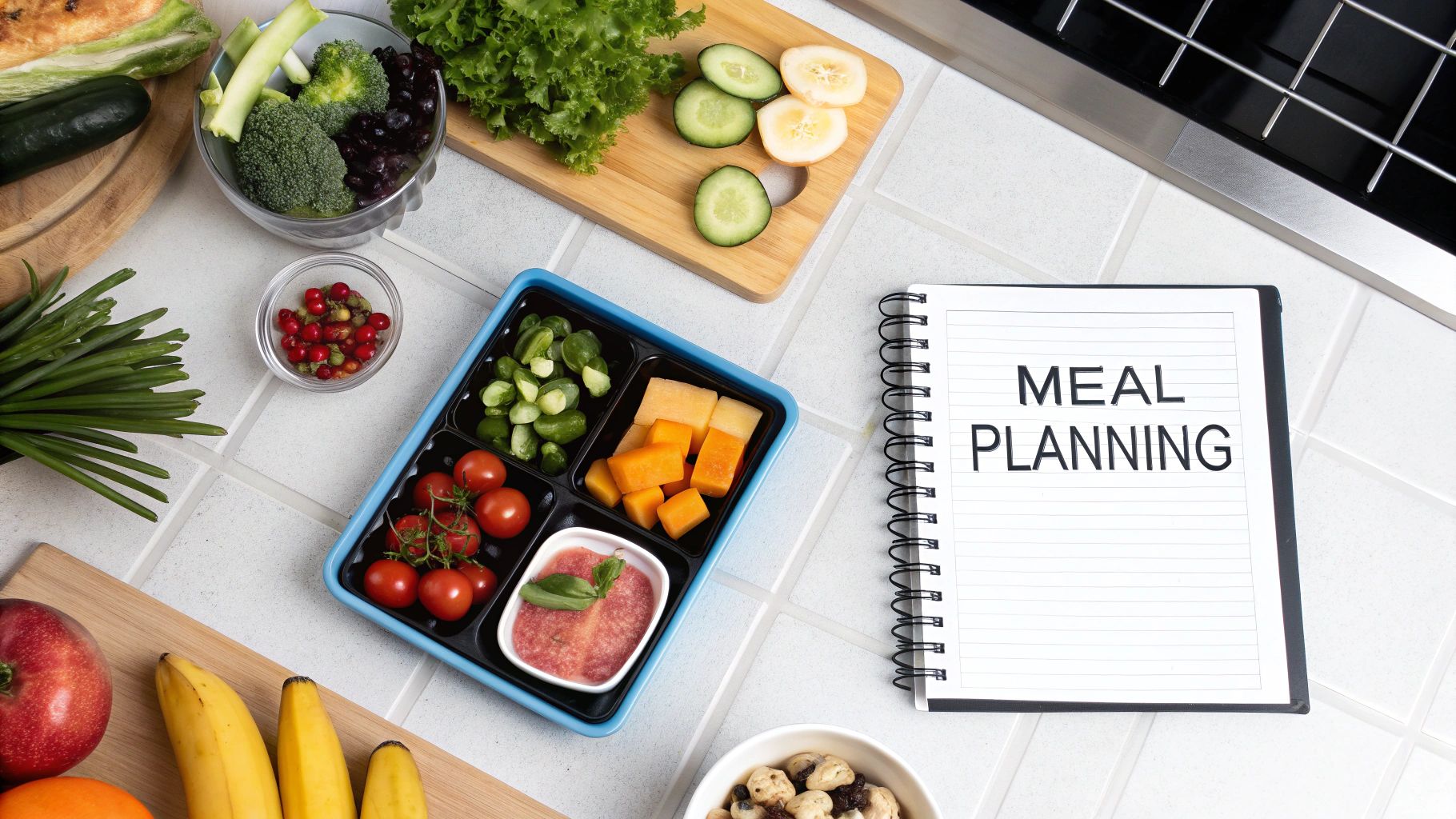
The path to healthier eating doesn't kick off in your kitchen—it starts the second you grab a trolley at the supermarket. A well-planned grocery shop is your secret weapon, setting the stage for a week of great food choices. It’s really all about having a game plan to fill your trolley with the good stuff and cleverly sidestep those less-than-healthy temptations.
A brilliant, time-tested strategy is to shop the perimeter of the store first. This is almost always where you'll find the fresh, whole foods: vibrant fruits and veggies, lean meats, fish, eggs, and dairy. If you can fill most of your trolley from these outer edges, you're already winning before you even head down the inner aisles.
Those centre aisles are notorious for being a minefield of highly processed foods, sugary snacks, and refined carbs that can easily throw a spanner in the works. Of course, not everything in the middle is off-limits, but going in with a trolley already brimming with fresh produce makes it so much easier to stick to your list and avoid those impulse buys.
Demystifying Nutrition Labels
At first glance, food labels can feel like you're trying to crack a secret code. But it doesn't have to be so complicated. One of the most powerful tools you have is the 'per 100g' column on the nutrition information panel. This little column is your best friend because it gives you a standard measure to fairly compare different products, no matter what the packet claims the "serving size" is.
To keep things simple, focus on a few key numbers. When you're comparing products, use the 'per 100g' column to find options with lower amounts of sugar, sodium, and saturated fat. This quick check is a fantastic way to uncover the hidden nasties in things that might seem healthy, like sauces, breakfast cereals, and even some yoghurts. If you want to dive deeper, you can learn more about how to read nutrition labels effectively and feel more confident in your choices.
Making a habit of checking the 'per 100g' column is one of the quickest ways to improve your food choices. It cuts through confusing marketing claims and gives you the real story.
Stocking a Health-Ready Pantry
Think of a well-stocked pantry as your trusty sidekick on a busy weeknight. It’s what makes throwing together a nutritious meal feel effortless, saving you from that last-minute dash to the shops. When you've got the essentials on hand, you've always got the building blocks for a healthy dish.
Here are a few staples to keep your pantry ready for action:
- Whole Grains: Things like quinoa, brown rice, rolled oats, and whole-wheat pasta provide fantastic, slow-release energy.
- Legumes: Canned chickpeas, black beans, and lentils are cheap, cheerful, and packed with protein and fibre.
- Healthy Fats: A good supply of nuts, seeds, and extra virgin olive oil is brilliant for adding flavour and essential nutrients.
- Canned Goods: Tinned tomatoes and canned fish (like tuna or salmon in springwater) are lifesavers for quick, no-fuss meals.
Having these basics ready to go takes the guesswork out of dinner and makes healthy eating the most convenient choice.
Rethinking Your Relationship With Treats

Let’s be honest, we all have them. Those little extras that make life a bit sweeter—the biscuit with your afternoon coffee, a fizzy drink on a hot day, or that Friday night takeaway you’ve been dreaming of all week. These are often called "discretionary foods," and they’re a normal part of life.
The goal isn't to cut them out entirely. In my experience, trying to banish your favourite treats just leads to a cycle of craving and guilt, which can backfire spectacularly. It's not about restriction; it's about shifting your mindset.
We're aiming for a more mindful approach, where you make conscious choices that support your wellbeing without feeling like you're missing out. It’s a subtle but powerful change that makes healthy eating feel sustainable, not like a chore.
This is a pretty big deal here in Australia. Our growing love for these discretionary foods is becoming a major health challenge. In fact, a CSIRO study has forecast our intake of these items could jump by a staggering 18% by 2030, while fruit consumption is expected to drop. That’s a worrying trend, and it highlights just how much our small, daily choices matter.
Finding a Sustainable Balance
So, how do you enjoy treats without derailing your health goals? I’m a big fan of the ‘80/20 rule’. Think of it less as a rigid diet and more as a flexible guideline for your life.
The idea is simple: focus on fuelling your body with nutritious, whole foods about 80% of the time. The other 20% is freed up for those foods you truly love and enjoy, no strings attached.
This approach dismantles that "all-or-nothing" thinking that trips so many people up. Had a slice of birthday cake at the office? Fantastic! That easily fits into your 20%. It gives you the freedom to navigate social events and savour your favourite things without a hint of guilt.
Smart Swaps and Portion Power
Another game-changing strategy is to make simple, satisfying swaps for your go-to cravings. It's all about finding healthier alternatives that still hit the spot.
Here are a few ideas to get you started:
- Craving ice cream? A bowl of thick, creamy Greek yoghurt topped with fresh berries and a drizzle of honey offers that same sweet satisfaction but with a protein and antioxidant boost.
- Need a salty crunch? Instead of crisps, try a handful of lightly salted air-popped popcorn, roasted chickpeas, or some crunchy carrot sticks with hummus.
- Want a fizzy drink? Sparkling water infused with fresh mint, lime, and a few berries can be just as refreshing as a sugary soft drink.
Sometimes a craving is very specific, and a healthy swap just won’t cut it. That’s perfectly fine. This is where portion size becomes your best friend.
Often, you don’t need a huge amount to feel satisfied. Enjoying one or two squares of high-quality dark chocolate, and really savouring them, can be far more fulfilling than mindlessly eating a whole block of the cheap stuff. This comes down to tuning into your body’s signals, which is a huge part of understanding what mindful eating truly is.
To make this even easier, here are some common cravings and the simple, healthier alternatives you can try instead.
Healthier Alternatives to Common Cravings
| If You're Craving… | Try This Healthier Option | The Health Benefit |
|---|---|---|
| Lollies or Gummy Sweets | A small handful of frozen grapes or a bowl of mixed berries. | You get natural sweetness, fibre, and antioxidants without the refined sugar. |
| Potato Crisps | Kale chips, roasted chickpeas, or veggie sticks with dip. | These options provide fibre and nutrients, unlike deep-fried crisps. |
| Sugary Soft Drinks | Sparkling water with a squeeze of lemon, lime, or fresh mint. | You get the refreshing fizz without the empty calories and sugar crash. |
| Chocolate Milkshake | A smoothie made with cacao powder, a frozen banana, and milk. | This swap is rich in potassium and antioxidants, with far less added sugar. |
| A Greasy Takeaway Burger | A homemade burger on a wholemeal bun with lots of fresh salad. | You control the quality of the ingredients and reduce the saturated fat content. |
Finding swaps you genuinely look forward to is the secret. It’s not about punishment or deprivation, but about discovering new, delicious ways to nourish yourself while still satisfying those inevitable cravings.
Healthy Eating for a Busy Lifestyle
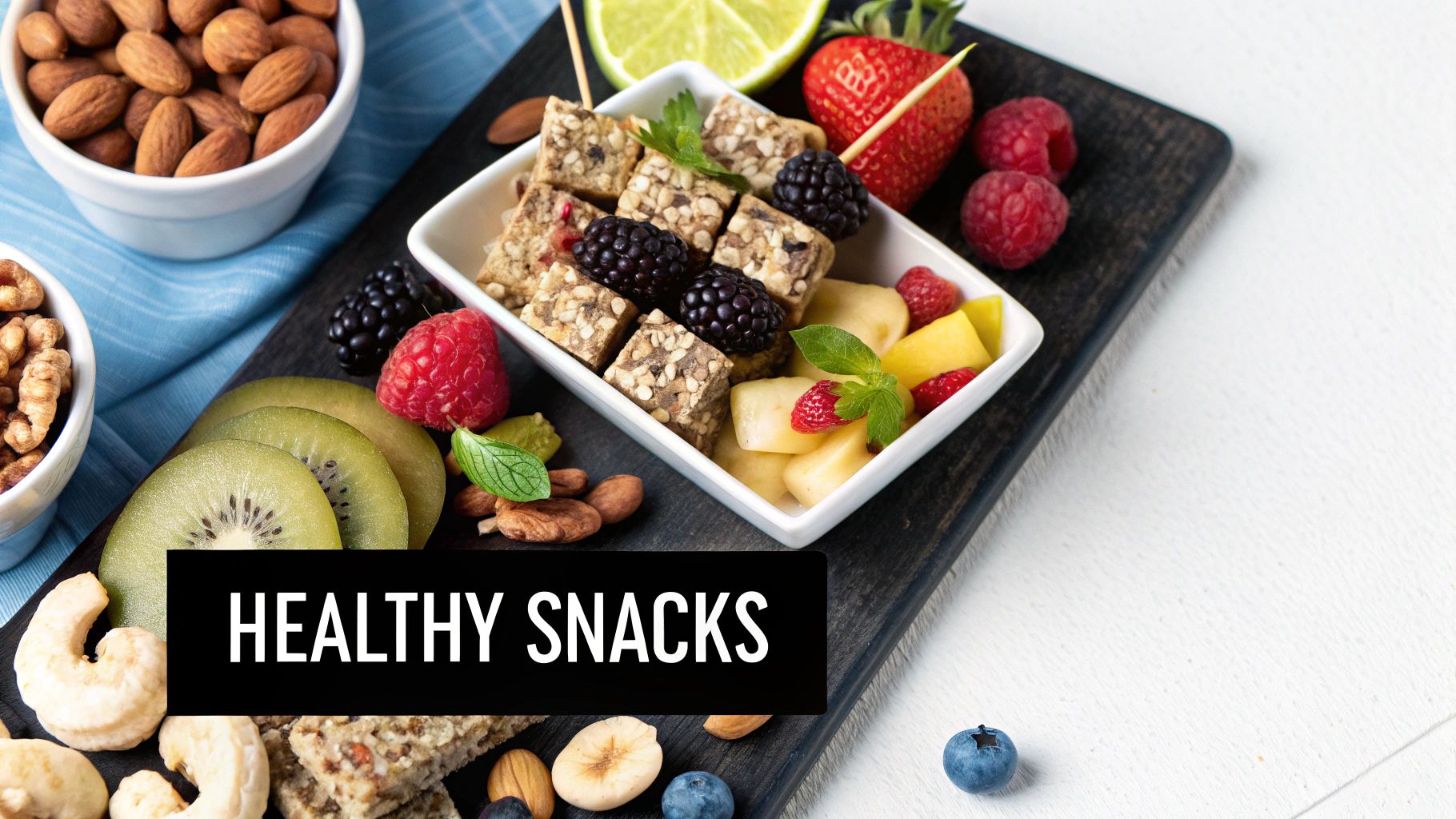
Let's be honest, a jam-packed schedule is probably the biggest roadblock to eating well. When you’re constantly juggling work, family, and trying to have some semblance of a social life, the convenience of takeaway or a quick, processed snack often wins out. But staying on track doesn't mean you have to spend your entire Sunday chained to the kitchen.
The real secret is finding clever shortcuts and simple strategies that fit into the life you already have. It's about working smarter, not harder, to make nutritious choices the easiest option, even on your most frantic days.
This isn't about some massive, intimidating overhaul. It’s about finding those small pockets of opportunity, like cooking a double batch of dinner so you have a healthy lunch ready to go for the next day. A little bit of forward-thinking can completely change the game.
Time-Saving Kitchen Hacks
You don't need a complex, Instagram-worthy system to get ahead. A bit of simple preparation can save you an incredible amount of time and mental energy during the week. It’s what stands between grabbing a healthy, pre-made meal from the fridge and defaulting to the local drive-thru.
- Prep Your Ingredients: You don't have to cook full meals in advance. Simply pre-chopping veggies like onions, capsicums, and carrots means a stir-fry or salad is just minutes away from being ready.
- Embrace Batch Cooking: Dedicate just one hour to cooking a big batch of a staple grain like quinoa or roasting a tray of vegetables. You can then use these as building blocks for different meals all week.
- Create Grab-and-Go Breakfasts: Spend ten minutes on a Sunday night making a week's worth of overnight oats. Just layer oats, milk, yoghurt, and fruit in jars for an instant, nourishing breakfast.
A common misconception is that meal prep is an all-or-nothing marathon. In reality, even 15-20 minutes of prep can set you up for several healthier choices during the week.
Making Smarter Takeaway Choices
Life happens, and sometimes ordering in is unavoidable. That's perfectly okay. The trick is knowing how to navigate a menu so you can still enjoy the convenience without completely derailing your goals.
When you're ordering from your favourite local spot, a few simple requests can make a huge difference to the nutritional bottom line.
- Choose Grilled Over Fried: Always look for grilled, steamed, baked, or roasted options instead of anything described as crispy, battered, or deep-fried.
- Ask for Sauces on the Side: Creamy sauces and dressings can be loaded with hidden fats and sugars. Getting them on the side puts you in control of how much you use.
- Load Up on Veggies: This is my favourite hack. Always ask for extra vegetables or a side salad to instantly boost the fibre and nutrient value of your meal.
These small adjustments are surprisingly powerful. They let you enjoy a meal out while still making choices that align with how you want to feel. For those who want to dive deeper, our guide on how to meal prep is packed with more structured ideas to save you time and effort.
Here is the rewritten section, crafted to sound human-written by an experienced expert.
How to Stay Motivated for the Long Haul
Starting a new way of eating is always exciting. You’re full of energy and good intentions. But what happens a few weeks down the track when that initial motivation starts to fade? The real secret to making healthy habits stick isn't about having superhuman willpower; it’s about having the right mindset and a solid game plan for when life inevitably gets in the way.
Forget obsessing over the bathroom scales. True, lasting success is found in the small, everyday wins. I always encourage people to look for these non-scale victories. Are you sleeping more soundly through the night? Do you still have energy at 3 pm without reaching for another coffee? Those are the signs that you're genuinely making a difference to your health.
Bouncing Back When You Have an Off Day
Let's be real: everyone has days where their food choices don't go to plan. An unexpected office morning tea pops up, or a stressful day ends with a convenient but not-so-healthy dinner. It happens. The most critical part isn't what you ate; it's what you do next.
Don't let one 'off' meal spiral into an 'off' week. The trick is simply to get right back to your routine with your very next meal. Acknowledge it happened, let it go, and move on without a shred of guilt.
So many of us fall into the trap of all-or-nothing thinking. We see one slip-up as a total failure, but that’s just not how it works. Healthy eating is a journey with plenty of twists and turns, not a perfect, straight line. What you do most of the time is far more important than aiming for perfection every single day.
Healthy eating is a practice, not a performance. Every meal is a fresh opportunity to make a choice that supports your wellbeing.
Sticking to healthy habits can often feel like you're swimming against the current. It’s not just you. Recent data from the Australian Bureau of Statistics revealed some concerning trends, with national consumption of snack foods up by 4.7%, soft drinks by 2.2%, and energy drinks by a whopping 9.3%. These figures show a clear shift towards discretionary foods, which makes building mindful, resilient eating habits more important than ever. You can discover more insights about these Australian food consumption trends and what they mean for our long-term health.
Tune In to What Your Body is Telling You
One of the most powerful tools I’ve seen work time and again is mindful eating. It’s simply the practice of paying full attention to your food and the signals your body is sending you. When you slow down and really tune in, you start to properly understand what real hunger and fullness feel like.
Building this connection helps you tell the difference between true physical hunger and a craving driven by boredom or stress. It gives you the power to make more conscious food choices. Over time, this skill builds incredible self-trust and makes healthy eating feel natural and intuitive, rather than like you're following a set of rigid rules.
Got Questions About Eating Healthier? We've Got Answers
https://www.youtube.com/embed/-Kd7I6GrdGM
Deciding to eat healthier is fantastic, but it’s totally normal for a few questions to pop up along the way. Knowing the "why" is one thing, but figuring out the "how" in your day-to-day life is where the real learning begins.
Let's dive into some of the most common hurdles people face when they're starting out.
Do I Have to Give Up All My Favourite Foods?
This is probably the biggest question I hear, and the answer is a resounding no! A healthy relationship with food is built on balance, not extreme restriction.
Think of it like the 80/20 rule. If you focus on nourishing, wholesome foods 80% of the time, you can absolutely enjoy your favourite treats the other 20% of the time. This way, you never feel deprived, which is key to sticking with it for the long haul.
Isn't Healthy Eating Really Expensive?
It’s a common myth that a healthy diet will break the bank. Sure, some specialty items can be pricey, but you can eat incredibly well on a budget with a few smart strategies.
Here are a few tips I've learned over the years:
- Embrace seasonal produce: Fruits and veggies are always cheaper (and tastier) when they're in season.
- Buy in bulk: Things like oats, rice, and legumes are much more affordable when you buy them in larger quantities.
- Lean on budget-friendly proteins: Don't forget about eggs, lentils, chickpeas, and beans. They're nutritional powerhouses that are incredibly easy on the wallet.
How Do I Handle Eating Out and Social Events?
Going out with friends or family shouldn't feel like a test. A little bit of planning can make all the difference and let you enjoy yourself without any stress.
My go-to trick is to check out the menu online before I go. That way, I can spot a few healthier options I'd actually enjoy, and I'm not put on the spot when it's time to order. Once you're there, try filling your plate with salads and veggies first. And if there’s cake? Have a slice and enjoy it!
Remember, the goal is to make conscious choices, not perfect ones. It’s the overall pattern of how you eat that truly shapes your long-term health and wellbeing.
If you’re looking to explore more structured plans, it can be helpful to read up on different effective diets for weight loss to see what might click with your lifestyle.
At Absolute Cravings, we believe healthy eating should be simple and delicious. We've got you covered with fresh juices, smoothies, and nutritious meals that fit right into your busy life. Explore our menu today!