

Learning how to meal prep is really about creating a flexible system that helps you reclaim your time, reduce stress, and eat healthier. It’s not about eating the same bland meal every single day, but about getting ingredients and dishes ready in advance to make your week a whole lot simpler.
Building Your Meal Prep Foundation
Let go of the idea that meal prepping means losing your entire Sunday to the kitchen, surrounded by endless rows of identical containers. At its heart, it's really just a smart way to handle your food that gives you back your most precious asset: time.
Think of it as the perfect answer to the chaos of modern life. It turns that daily, nagging question of "what's for dinner?" from a moment of stress into a moment of simple satisfaction.
This shift in mindset is everything. Instead of seeing it as another chore on your list, think of it as a gift to your future self. Every vegetable you chop and every grain you cook is one less decision you have to make on a frantic Tuesday evening.
This growing need for convenience is something we're seeing all across Australia. As busy schedules become the new normal, the ready-meals market has exploded. Its value is projected to jump from around AUD 3 billion to nearly AUD 4.93 billion. This trend just goes to show how essential smart food preparation has become for juggling work, family, and everything in between. You can check out more of these market insights on Researchandmarkets.com.
The Core Principles of Sustainable Prepping
To make meal prepping a habit that actually sticks, it helps to understand the principles that make it work. It’s less about following strict rules and more about tweaking a framework to fit your own life.
Here’s what really makes a difference:
- Planning Over Perfection: A simple plan is always better than no plan. You don't need to map out an entire week's menu. Just start with a few meals. A solid approach to meal planning is the best first step.
- Flexibility is Key: Your plan should work for you, not the other way around. If you suddenly feel like having something different, just swap a meal. The goal is to have great options ready to go, not to feel locked into a rigid schedule.
- Start Small and Build Momentum: Please don’t try to prep every single breakfast, lunch, and dinner for seven days on your first go. You'll just burn out. Start by prepping lunches for the work week, or maybe just pre-chopping all your veggies. Small wins build the confidence you need to keep going.
By focusing on preparation rather than just pre-made meals, you create a kind of 'capsule pantry' full of ready-to-go components. This is what allows for variety and creativity, helping you avoid the flavour fatigue that derails so many good intentions.
Adopting a meal prep routine brings a surprising number of real-world benefits that go far beyond just having lunch ready.
Key Benefits of a Meal Prep Routine
This table breaks down how a little planning can make a big impact on your daily life.
| Benefit | How It Helps You | Real-World Example |
|---|---|---|
| Saves Time | Frees up hours during the week by cooking in one dedicated block. | Instead of cooking for an hour every night, you spend 2-3 hours on Sunday and have meals ready in minutes all week. |
| Reduces Stress | Eliminates the daily "what's for dinner?" dilemma and last-minute grocery runs. | You come home tired from work and your healthy dinner is ready to be heated, no stressful decisions needed. |
| Healthier Eating | Gives you full control over ingredients, portions, and cooking methods. | You avoid a greasy takeaway lunch by having a pre-portioned, nutritious salad waiting for you in the fridge. |
| Saves Money | Cuts down on impulse takeaway orders and helps you use up groceries before they spoil. | You use that bag of spinach in your prepped meals instead of letting it go bad, saving you from buying lunch out. |
Ultimately, these benefits work together to create a calmer, more organised week where you feel more in control of your health and your schedule.
Designing a Meal Plan You Will Actually Use
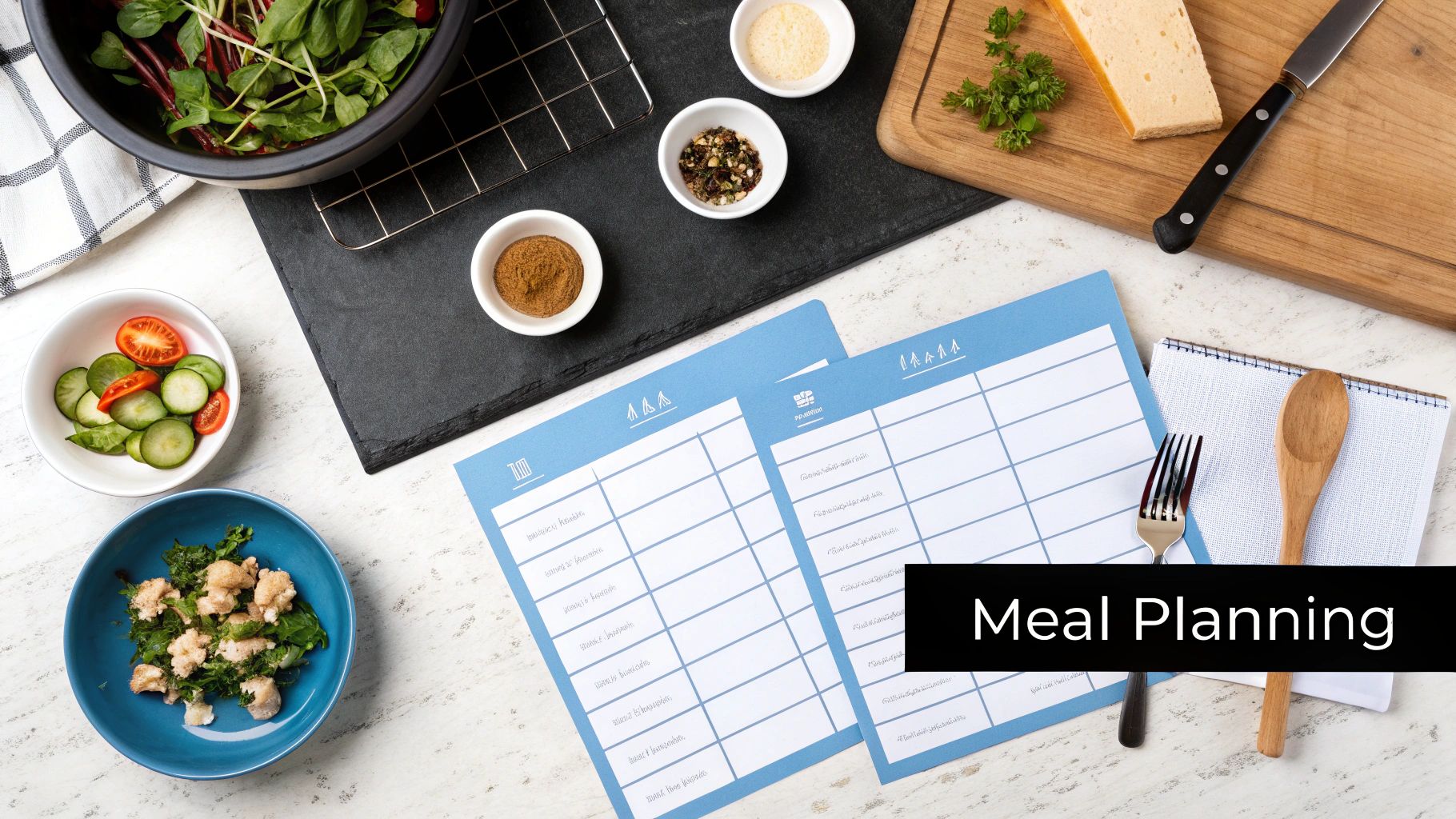
The real secret to successful meal prep is creating a plan that feels less like a strict diet and more like a helpful roadmap for your week. Forget those complicated spreadsheets and rigid schedules you'll ditch by Tuesday. The best plan is one that’s built around your actual life, your tastes, and your energy levels.
A great place to start is simply by looking at your calendar. Got a late meeting on Wednesday? That’s a perfect night for a quick 10-minute meal you’ve already prepped. Are the kids busy with sports on Thursday? That’s the night for a slow-cooker dinner that’s ready the moment you walk in the door.
This approach syncs your food with your life, turning it into a tool for convenience rather than another source of pressure. It’s all about being realistic and building a system that truly serves you.
Embrace Themed Days To Simplify Decisions
One of the easiest ways to beat that dreaded "what's for dinner?" decision fatigue is by giving your days a theme. This doesn’t mean you have to eat the exact same thing every week, but it creates a framework that makes planning almost automatic.
Think of it as creating your own personal weekly menu, one that offers both structure and flexibility. This strategy really streamlines your thought process and makes the grocery shop far more efficient.
Here are a few ideas to get you started:
- Meatless Monday: Kick off the week with a plant-based meal like a hearty lentil curry or a big batch of veggie chilli.
- Taco Tuesday: Use ground turkey, fish, or black beans as your base, and have pre-chopped toppings ready to go for a quick assembly.
- Stir-fry Friday: A perfect way to use up any leftover vegetables from the week with a simple protein and a delicious sauce.
By assigning a simple theme, you narrow down endless possibilities into a manageable choice. Instead of asking "What's for dinner?" you’re simply asking "What kind of tacos should we have?" – a much easier question to answer after a long day.
Build Your Shopping List From Your Plan
Once your weekly themes are set, creating a shopping list becomes a much more straightforward task. Just go through your plan day by day and list every single ingredient you need. This direct link between your plan and your list is the key to preventing food waste and those impulse buys at the supermarket.
For a family dealing with different tastes, this planning stage is especially important. You might find that looking for some healthy family meal ideas can provide the inspiration you need for dishes everyone will actually enjoy.
The goal is to walk into the grocery store with a precise, actionable list that perfectly reflects the meals you’ve chosen. This strategic approach not only saves you money but also ensures you have everything on hand for a smooth and successful week of meal prep.
Your Smart Shopping and Kitchen Setup Guide
A brilliant meal prep session is won or lost long before you ever switch on the stove. It all kicks off with a smart trip to the grocery store and a kitchen that’s set up to help you, not hinder you. When you walk into the supermarket with a clear plan, you sidestep all those tempting impulse buys and leave with versatile ingredients that’ll see you through the week.
When you're shopping, think of it as collecting building blocks for your meals. Focus on whole foods that you can spin into multiple recipes. That bag of quinoa? It can be a simple side dish, the base for a hearty salad, or even part of a protein-packed breakfast bowl. It's also a good idea to prioritise produce that holds its own, like carrots, capsicums, and kale, over more delicate greens if you plan to eat them later in the week.
This organised way of thinking is becoming more common. The demand for convenient, healthy food has seen Australia's prepared meals sector explode, now pulling in around $1.9 billion in revenue. It just goes to show how much Aussies value having quality, ready-to-go components for their meals—a principle you can easily apply to your own weekly shop.
Setting Up Your Kitchen for Success
You don’t need a fancy commercial kitchen to meal prep like a pro. All you need are a few key tools to make your workflow smooth and efficient.
Investing in the right gear is a game-changer. It saves you time and a whole lot of frustration, turning what could be a chore into a seamless process. Forget the single-use gadgets; we’re talking about quality basics that will serve you well for years to come.
Here are the non-negotiables for an efficient prep session:
- A Sharp Chef's Knife: A good, sharp knife makes chopping vegetables feel almost effortless (and a lot safer), which dramatically cuts down your prep time.
- Quality Storage Containers: This is a big one. Airtight glass or BPA-free plastic containers are essential for keeping food fresh, preventing messy leaks, and making reheating safe and simple.
- Sturdy Cutting Boards: To avoid cross-contamination, it’s best to use separate boards for raw meat and produce. You can even find colour-coded sets to make it foolproof.
Think of your kitchen as your workstation. An organised space where your tools are within easy reach allows you to move efficiently, chop methodically, and assemble your meals without any unnecessary stress.
Organise Your Pantry and Fridge
Once you get your groceries home, an organised storage system is your best friend. A tidy pantry and fridge mean you can see everything at a glance, which helps prevent food waste and makes it easy to grab exactly what you need.
Try grouping similar items together—grains with grains, spices with spices. To make sure your pantry is always ready for action, it pays to implement some clever pantry organization ideas. This simple step ensures nothing gets lost at the back of the shelf and supports your entire meal prep system, setting you up for a week of delicious, stress-free meals.
Mastering Your Prep and Cook Workflow
With your plan in hand and your kitchen organised, it’s time to dive into the real magic of meal prep. This is where you turn a pile of fresh ingredients into a week’s worth of easy, delicious meals. The secret isn't about working harder; it’s about creating a smarter, smoother workflow.
Two concepts will absolutely change the game for you: batch cooking and component prepping. Think of batch cooking as making a huge pot of quinoa or roasting a big tray of chicken breasts. Component prepping is all about getting the smaller, fiddly jobs done in one go – like chopping every single onion, capsicum, and carrot you'll need for the entire week.
When you bring these two methods together, you basically create your own little kitchen assembly line. You’re not just cooking one meal at a time; you're creating the building blocks for many. It’s an incredible way to save time and mental energy.
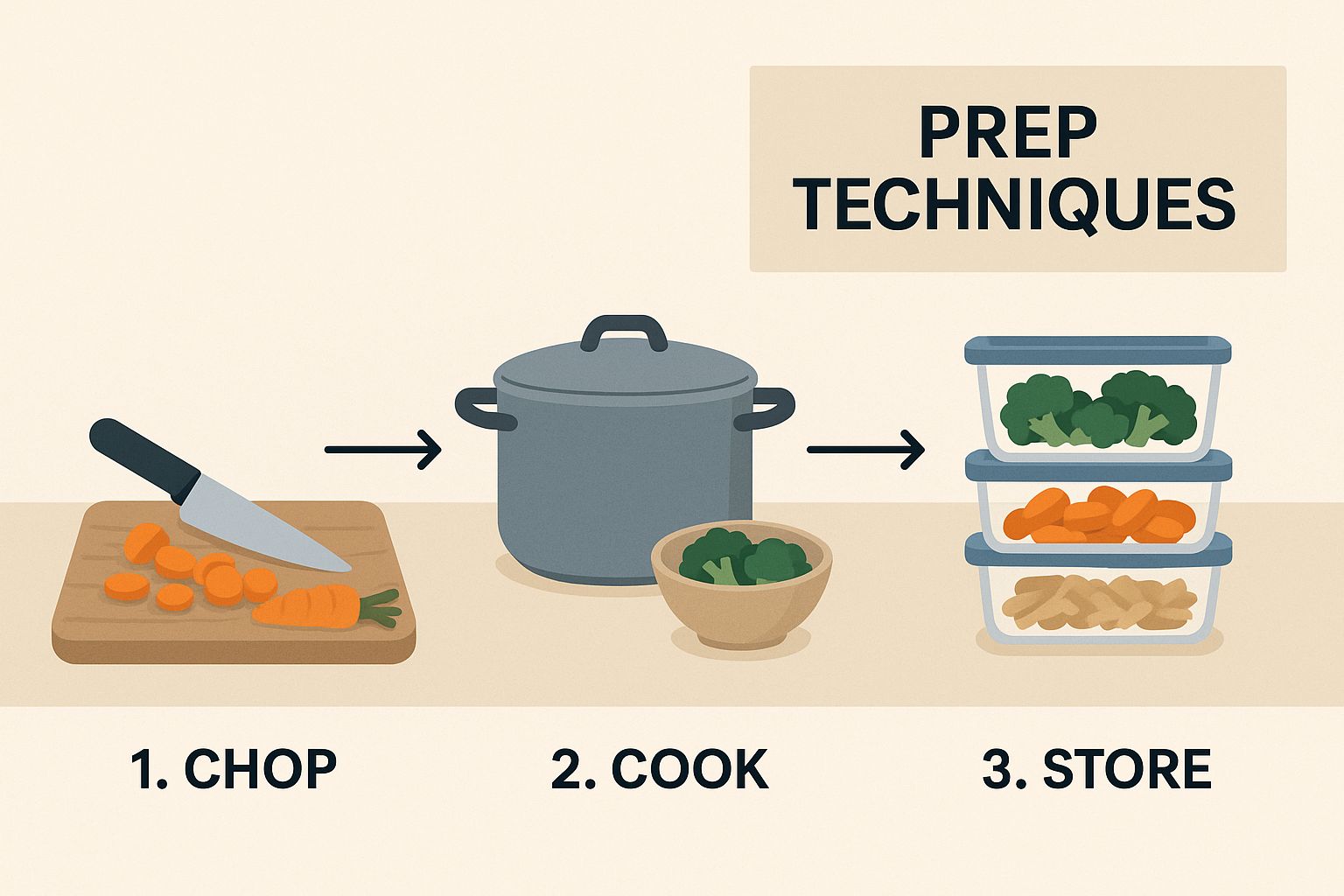
Laying out all your tools and ingredients before you even start is a simple trick that makes the whole process feel less chaotic and much more enjoyable.
Optimise Your Time with Multitasking
This is where your kitchen workflow really starts to shine. The key is to pair active tasks with passive ones. For example, while a tray of sweet potatoes is roasting away in the oven (a passive task), you can be actively chopping veggies for a stir-fry or letting a soup simmer on the stove.
I always recommend starting with the things that take the longest to cook. Get your grains on the boil and your proteins in the oven first. While they’re doing their thing, you can switch gears to quicker jobs like washing salad greens, whisking together dressings, or portioning out snacks into containers.
It’s also incredibly important to follow good food safety practices. Be sure to use different cutting boards for raw meat and produce and wash your hands often. There are plenty of good resources on the ways to prevent cross-contamination that are worth a read.
The goal is to keep moving and make every minute count. Think of it like a dance—once you find your rhythm, you’ll be amazed at how much you can get done in a short amount of time without feeling overwhelmed.
You only have to look at the explosive growth of meal kit delivery services in Australia to see how much people value this kind of convenience. The industry is now pulling in around $1.1 billion in revenue, after growing at an incredible rate of 17.2% over the last five years. It’s clear people are looking for smarter ways to eat well at home.
From Components to Complete Meals
Once all your individual components are cooked and cooled, it's time for the final, satisfying step: assembly. This is where your meal plan truly comes to life.
If you’ve prepped grab-and-go lunches, now’s the time to layer your salad jars or portion out your soup into single-serve containers. For some fantastic and genuinely practical ideas, check out our guide on https://www.absolutecravings.com.au/healthy-lunch-ideas-for-work/.
For dinners, you might find it better to assemble 'kits' rather than entire finished meals. For instance, you could pack a container with your pre-cooked chicken, chopped stir-fry veggies, and a little tub of sauce. When a busy weeknight rolls around, all you have to do is throw everything into a hot pan. You get a fresh, delicious meal in minutes, which keeps things interesting and avoids that 'same-old-leftovers' feeling.
A little bit of batch cooking on the weekend can set you up for a whole week of varied and exciting meals. It’s all about cooking smarter, not harder. Here’s a quick table to give you some ideas.
Batch Cooking Time Savers
| Ingredient | Cooking Method | Meal Ideas for the Week |
|---|---|---|
| Quinoa | Simmer on stovetop | Use as a base for salads, a side for grilled chicken, or mix into a veggie stir-fry. |
| Chicken Breast | Roast in the oven | Shred for tacos and sandwiches, slice for salads, or dice for a quick chicken fried rice. |
| Roast Vegetables | Roast in the oven | Add to pasta dishes, blend into a soup, serve as a side, or toss into a frittata. |
| Hard-Boiled Eggs | Boil on stovetop | A quick snack on their own, chopped into a salad, or mashed for an egg salad sandwich. |
By having these core components ready to go, you can mix and match throughout the week, keeping your meals interesting without spending hours in the kitchen every night.
Storing Food for Maximum Freshness and Flavour
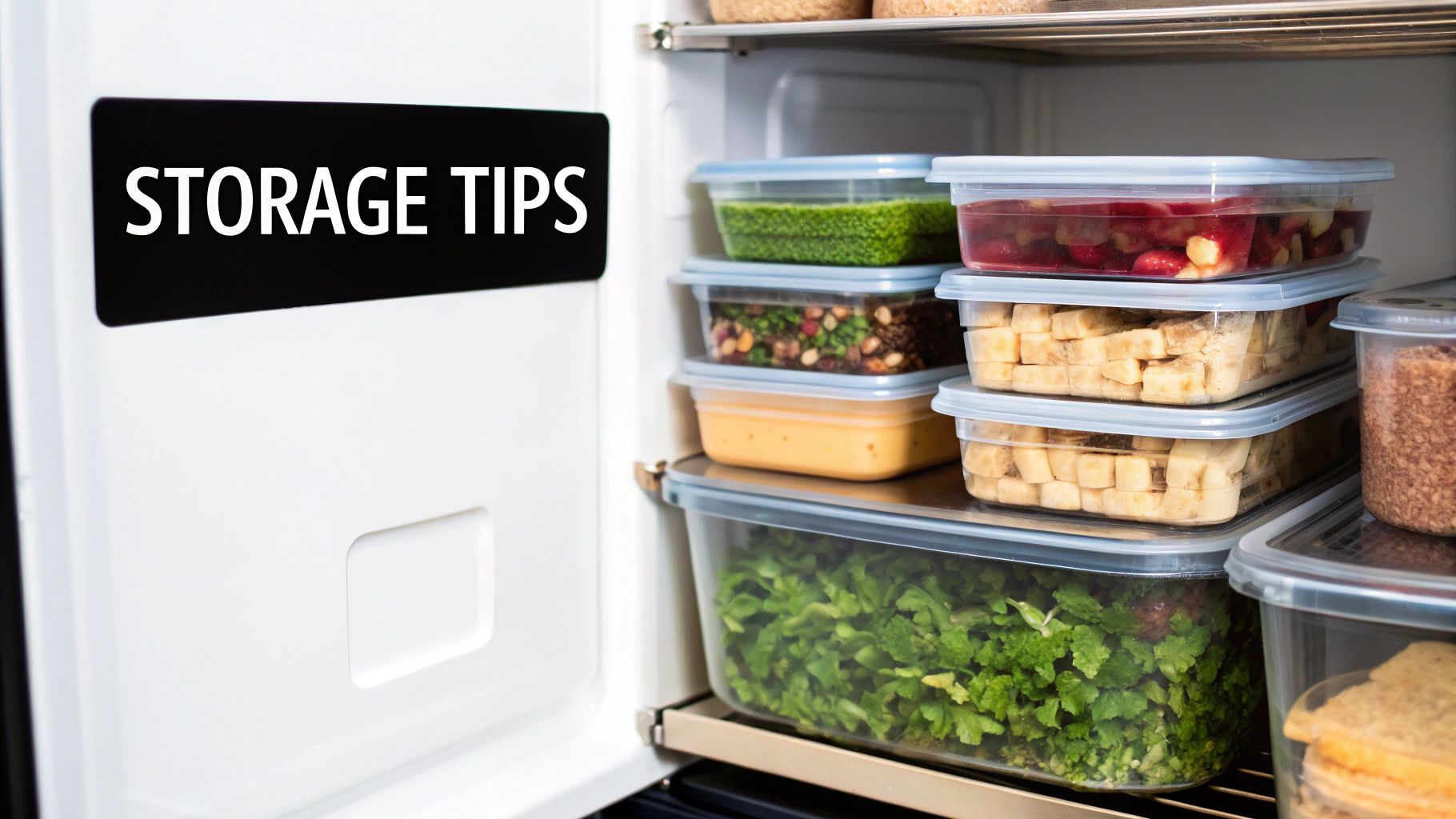
You’ve done the planning, shopping, and cooking – don't fall at the final hurdle! How you store your food is what makes all that effort worthwhile, ensuring your meals are safe, delicious, and appealing all week long. Skipping this step is like running a marathon and stopping a metre from the finish line.
The golden rule of food storage is to cool everything down properly before it goes anywhere near the fridge or freezer. Tossing hot food straight into a cold fridge can actually raise the internal temperature, creating a risky environment where bacteria can thrive on all your food, not just the new addition.
I find it’s best to let meals cool on the counter for about 60-90 minutes, or until they've come down to room temperature. If you're in a hurry, you can speed things up by dividing big batches of soup, stews, or curries into smaller, shallower containers. This trick increases the surface area and helps heat escape much faster.
Choosing the Right Containers
Your containers are more than just boxes; they're your food's home for the next few days. Picking the right ones is a game-changer for preserving texture and flavour.
- Glass Containers: These are my absolute top pick. They never stain or hold onto odours (goodbye, lingering curry smell!), and you can take them straight from the fridge to the microwave or even the oven. They're a brilliant long-term investment.
- BPA-Free Plastic: For something lighter and more portable, good quality plastic containers are a great choice. Just make sure they have airtight seals and are clearly marked as microwave and freezer-safe.
- Bento-Style Boxes: I love these for keeping meal components separate. They're perfect for stopping your crunchy salad toppings from turning your lettuce soggy or for packing a meal with lots of different elements.
Honestly, the single most important feature to look for is an airtight seal. Air is the enemy of freshness. A solid seal is your number one defence against oxidation, locking in moisture and preventing all the flavours in your fridge from mingling.
Fridge and Freezer Timelines
Knowing how long your creations will last is key to a safe and successful meal prep. These are some general guidelines I follow, but always trust your senses – if something looks or smells off, it's always best to toss it.
Here’s a handy guide for some common prepped items:
- Cooked meat and poultry: 3–4 days in the fridge
- Cooked fish: 2–3 days in the fridge
- Roasted vegetables: 4–5 days in the fridge
- Cooked grains (quinoa, rice): 4–6 days in the fridge
- Soups and stews: 3–4 days in the fridge
For anything you won't get to within a few days, the freezer is your best friend. Most cooked meals will keep beautifully for 2-3 months without a noticeable drop in quality. A little pro tip for freezing: leave a small gap at the top of your container to allow the food to expand.
And don't forget your drinks! To ensure your prepped smoothies or infused waters stay perfectly chilled, it's worth checking out the best insulated water bottles for keeping drinks fresh.
Common Meal Prep Questions Answered
Even with the best intentions and a solid plan, a few questions are bound to pop up when you start meal prepping. It's totally normal to wonder how to keep things interesting or how long your carefully prepped food will actually stay fresh. Let's walk through some of the most common hurdles to help you build confidence and get into a smooth rhythm.
Think of this as your go-to guide for refining your process. A few simple tweaks can make a massive difference in how sustainable and, more importantly, enjoyable your new routine feels. The goal is to move past that initial learning curve and into a workflow that genuinely works for you.
How Do I Keep My Meals From Getting Boring?
This is the number one fear for pretty much everyone starting out, but trust me, it's surprisingly easy to sidestep flavour fatigue. The real secret is to stop thinking about prepping identical, finished meals and start prepping versatile, mix-and-match components instead.
For instance, instead of making five identical chicken salads for the week, just grill up a big batch of chicken breasts. That one component can be used in totally different ways.
- Day 1: Slice it over a fresh garden salad.
- Day 2: Shred it, mix it with some BBQ sauce, and you've got a quick sandwich.
- Day 3: Cube it and toss it into a veggie-packed stir-fry.
Another fantastic trick I love is to make a "flavour booster" each week. A simple lemon-herb vinaigrette, a creamy peanut sauce, or a spicy homemade salsa can completely transform the same base ingredients, making every meal feel brand new.
By focusing on components, you're creating a system with endless possibilities. You aren't locked into a single dish; you're armed with the building blocks to create whatever you're craving that day.
Is It Safe to Reheat All Prepped Foods?
Most cooked foods are perfectly safe to reheat, but the method you choose can make or break the end result. You want to bring your food back to life, not zap it into a rubbery or soggy mess. The golden rule is to always heat your food until it's steaming hot all the way through.
For anything liquid-based like soups, stews, and curries, the microwave or a pot on the stovetop works beautifully. When it comes to rice or other grains, I find adding a tiny splash of water and covering the container before heating helps to steam it, bringing back that fluffy texture and stopping it from drying out.
But for foods that are meant to be crispy—think roasted veggies, chicken schnitzel, or potato wedges—your best friend is the oven or an air fryer. This approach helps draw out any moisture that's built up in the fridge and brings back that delicious, crispy texture that a microwave just can't deliver.
How Much Time Should I Set Aside?
There's no magic number here, and you definitely don't need to sacrifice your entire Sunday. The right amount of time is whatever fits into your schedule without feeling like a massive chore.
Many people find a 2-3 hour block on a weekend works well for the week ahead. But you can absolutely split this up. Maybe you do a 90-minute session on Sunday to get you through to Wednesday, then a quick one-hour prep on Wednesday evening for the rest of the week. This is a great way to keep things like salads extra fresh.
If you're just starting, please begin small. Just focus on prepping your work lunches or pre-chopping all the veggies for your planned dinners. Once you're in a comfortable rhythm with that, you can gradually add more. The whole point is to build a habit that sticks, not to burn yourself out on week one.
Ready to take the stress out of your weekly meals? Let Absolute Cravings help! We offer delicious, healthy, and convenient meal options right here in Townsville, perfect for those days when you need a break from the kitchen. Explore our menu and discover your new favourite healthy meal at https://www.absolutecravings.com.au.