

Choosing a plant-based diet isn't just about what you eat; it's a powerful decision that benefits your health, our planet, and animal welfare. The ripple effects are huge, from a lower risk of chronic disease and a smaller carbon footprint to a more conscious approach to food. It’s a holistic choice for a better you and a better world.
The Rise of Plant-Based Eating in Australia
Have you noticed how many cafes now proudly offer oat milk or feature an entire vegan menu? It’s not just your imagination. There’s an incredible shift happening right here in Australia as more people discover the amazing benefits of a plant-based diet.
This movement is growing fast, fuelled by a desire for better health, more energy, and a deeper connection to our planet. It’s about rethinking what goes on our plates. A plant-based diet isn’t about restriction; it’s about abundance—building meals around a vibrant foundation of fruits, vegetables, grains, nuts, and legumes.
Why Are So Many Aussies Making the Switch?
The reasons people are embracing this change are as diverse as Australia itself. For some, it’s all about the compelling health outcomes, like a healthier heart or easier weight management. For others, it’s driven by a strong ethical stance on animal welfare or deep concerns about the environmental toll of modern farming.
It’s this powerful mix of personal and global benefits that’s making it so popular.
And the numbers back it up. An estimated 2.5 million Australians (that's about 12.1% of us) now eat a diet that’s mostly or entirely plant-based. That’s a massive jump over the past decade, showing this isn’t just a fad but a sustained shift in how we think about food. You can dive deeper into the data on Australia's plant-based trend to see the full picture.
This guide is your practical starting point. We’ll walk you through:
- The profound health improvements you can experience.
- The positive environmental and ethical impacts of your food choices.
- Simple, actionable tips to make the transition smooth and delicious.
Join us as we unpack the rewards of this lifestyle and show you why it’s become such a compelling choice for so many people across the country.
How Plant-Based Foods Transform Your Health
Think of your body as a high-performance engine. Shifting to a plant-based diet is like upgrading to a cleaner, more premium fuel. This isn’t just a simple tweak; it’s a foundational change that can genuinely improve how your body runs from the inside out, boosting your overall wellbeing in some pretty incredible ways.
One of the most talked-about benefits is the massive impact on heart health. Picture your arteries as the body’s plumbing system. Diets heavy in saturated fats can cause blockages, a bit like grease clogging up a drain. Plant-based foods, on the other hand, are naturally low in saturated fat and cholesterol, helping keep these crucial pathways clear and supporting healthy blood flow.
Boosting Your Body's Defences
Beyond just looking after your heart, this way of eating is a powerful ally for managing weight and lowering the risk of chronic conditions. Plant foods are typically loaded with fibre, which acts a bit like a sponge in your digestive system. It helps you feel fuller for longer, which can naturally lead you to eat fewer calories without ever feeling like you’re missing out.
This high-fibre content also does wonders for stabilising blood sugar levels, a key factor in preventing and managing type 2 diabetes. By slowing down how quickly your body absorbs sugar, fibre helps you avoid those sharp energy spikes and crashes that can put a strain on your system over time.
A focus on whole, unprocessed plant foods provides your body with a wealth of vitamins, minerals, antioxidants, and phytochemicals. These compounds work together to reduce inflammation and support a robust immune system, helping protect your cells from damage.
A Richer Nutrient Profile
There’s a common myth that cutting out meat means you'll miss out on vital nutrients. In reality, a well-planned plant-based diet often leads to a plate that’s far more packed with goodness. Research shows that Australians following plant-based diets tend to consume more vegetables, fruit, legumes, and nuts while eating fewer discretionary foods high in sugar and unhealthy fats. If you're keen to dive deeper, you can read more about the nutritional patterns of plant-based diets.
This simple shift naturally boosts your intake of essential vitamins and minerals. The trick is to focus on variety to make sure you’re covering all your nutritional bases.
- Whole Grains: Provide steady, sustained energy and B vitamins.
- Legumes: An excellent source of fibre and plant protein.
- Nuts and Seeds: Deliver healthy fats, protein, and minerals like zinc.
- Leafy Greens: Jam-packed with calcium, iron, and antioxidants.
Of course, the big question on everyone’s mind is protein. Luckily, the plant kingdom is brimming with fantastic, high-quality protein sources. By simply including a mix of foods like lentils, chickpeas, tofu, and quinoa in your meals, you can easily hit your daily protein goals. For a detailed breakdown, check out our guide on the best plant-based protein sources to see just how simple it is. This way of eating doesn’t just support your health today—it builds a solid foundation for long-term vitality.
Making a Difference One Meal at a Time
Your dinner plate holds more power than you might realise. Every meal is a choice, and when you opt for plant-based foods, you send a powerful ripple effect across the globe. It's easily one of the most effective ways an individual can support a healthier planet.
This isn't about guilt; it's about understanding the incredible empowerment that comes from your daily decisions.
Think of your food's journey like a car trip. Producing a single beef patty generates greenhouse gas emissions equivalent to driving a car for several kilometres. By choosing a lentil burger instead, you’re essentially taking a polluting car off the road for that trip. The collective impact of these small swaps is simply enormous.
Reducing Your Environmental Footprint
There’s no getting around it: animal agriculture places a massive strain on our planet's resources. From the vast amounts of land cleared for grazing to the incredible volumes of water required, it's an intensive process. Shifting towards a plant-based diet directly addresses these issues, helping to conserve our precious natural environments.
A plant-based diet requires significantly less land and water. This simple change frees up resources and allows ecosystems to recover, which is vital for preserving biodiversity. By just changing what we eat, we contribute to a more sustainable and balanced world.
The infographic below highlights how a plant-based diet encourages healthier choices, which also happen to be more sustainable.
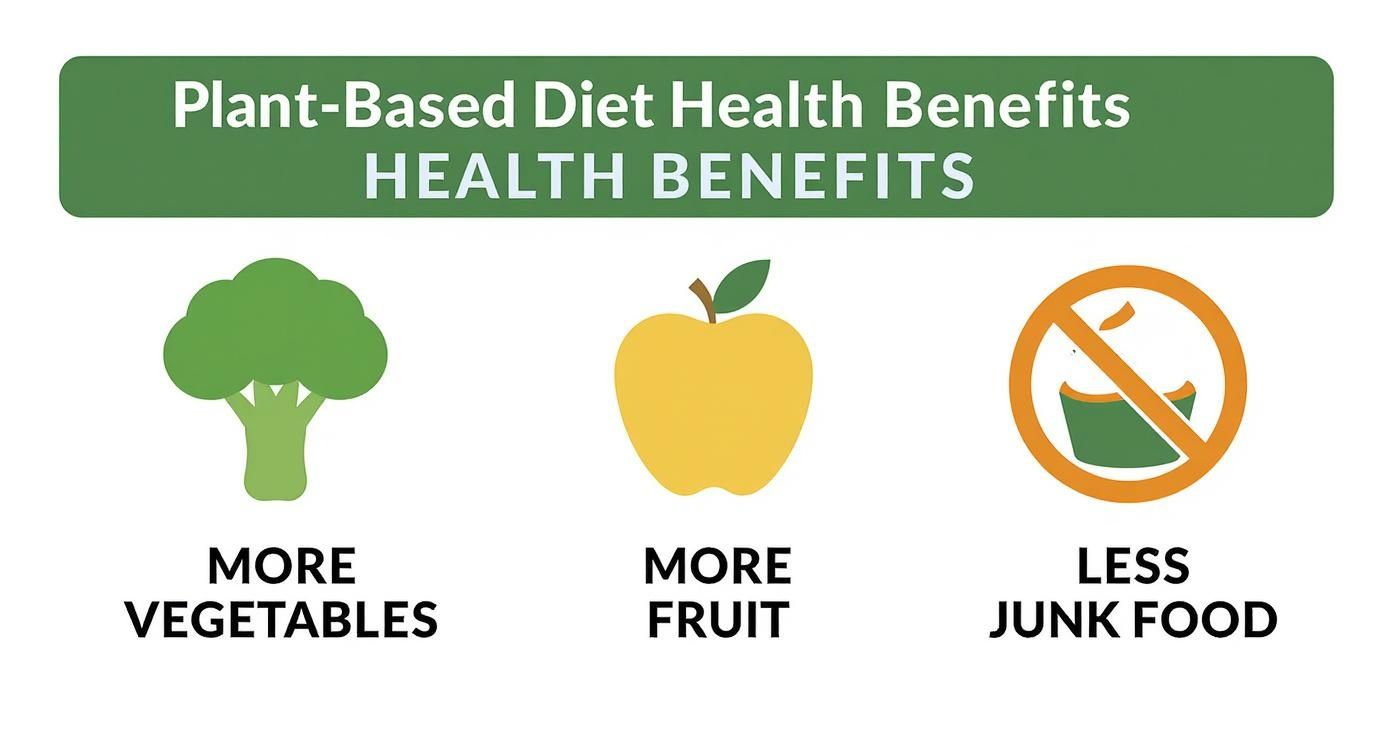
As you can see, embracing plant-based eating naturally leads to consuming more nutrient-dense vegetables and fruits while cutting down on processed junk foods.
A Collective Impact Starts on Your Plate
The scale of this positive change is backed by some pretty compelling data. Global research shows that if just half of the world's animal-based meals were replaced with plant-based alternatives, it could free up enough land to reforest an area the size of Australia.
That same shift could also slash global greenhouse gas emissions by up to 10%.
Here in Australia, where the plant-based sector is booming, these choices have a huge local impact. The market for plant-based meat has nearly doubled since 2019, reflecting a powerful consumer-led movement towards sustainability. If you're curious about the numbers, you can discover more about the growth of plant-based eating.
Choosing plant-based meals is a direct vote for a healthier planet. It’s an actionable step anyone can take to reduce their carbon footprint, conserve precious resources, and contribute to a more ethical and sustainable food system for everyone.
Every time you choose a plant-based option, you’re not just nourishing yourself; you’re contributing to a much larger, positive transformation. Each meal becomes a meaningful act that helps protect our shared environment for future generations. It’s a simple change with a profound impact.
Your Practical Guide to Going Plant Based
So, you're ready to see what this plant-based life is all about? That’s fantastic. Making the switch can feel like a massive undertaking, but it really doesn’t have to be an all-or-nothing mission from day one.
The secret is to see it as an exciting new adventure in food, not a chore filled with restrictions. This guide is your friendly roadmap to making the transition feel simple, sustainable, and genuinely enjoyable. The best way forward is usually a gradual one. Start with small, manageable changes and let the momentum build naturally. Think of it less as taking things away and more as adding more good stuff in. That simple shift in mindset makes the whole process feel so much more positive.
Starting Your Plant Based Journey
One of the easiest and most popular ways to dip your toes in the water is 'Meatless Mondays'. Just committing to one plant-powered day a week gives you a brilliant, low-pressure space to experiment with new recipes and flavours without feeling overwhelmed. It's a fantastic way to discover just how delicious and satisfying plant-based meals can be.
Another great strategy is to find and master a few go-to plant-based recipes that you absolutely love. Start with meals you already enjoy and figure out how to give them a plant-based twist. Think lentil bolognese instead of mince, or a creamy pasta made with a dreamy cashew sauce. Having these reliable favourites in your back pocket makes weeknight dinners an absolute breeze. For a deeper dive, you can find more tips for a successful transition to a plant-based diet to help you on your way.
Stocking Your Pantry for Success
Getting your kitchen set up is a game-changer. A well-stocked pantry makes it incredibly easy to throw together a healthy, satisfying meal at a moment's notice. Focus on building a collection of versatile staples that can form the foundation of countless dishes. This is also a brilliant way to make the lifestyle more affordable; as our guide to healthy eating on a budget shows, staples like legumes and grains can really stretch your dollar.
Here are a few essentials to get you started:
- Legumes: Canned or dried lentils, chickpeas, and black beans are your protein powerhouses.
- Whole Grains: Brown rice, quinoa, oats, and wholewheat pasta provide that slow-release, sustained energy.
- Nuts and Seeds: Almonds, walnuts, chia seeds, and flaxseeds are brilliant for healthy fats and adding great texture.
- Herbs and Spices: Don't underestimate these! Smoked paprika, cumin, nutritional yeast, and others can completely transform the flavour of a dish.
Remember, a truly nourishing plant-based diet is all about celebrating whole foods. Put fruits, vegetables, whole grains, and legumes at the centre of your plate. While processed vegan alternatives are handy sometimes, the biggest health rewards come from eating foods in their most natural state.
Making smart swaps is another easy win. It can be as simple as switching cow's milk for almond or oat milk in your morning coffee, or using a plant-based butter when you cook. These small changes often go unnoticed but they all add up, helping you build a healthy new habit that fits seamlessly into your life. You’ve got this.
Simple Plant-Based Food Swaps
To make things even easier, here are some incredibly simple one-to-one swaps. You'll be surprised how many great alternatives are out there!
| Instead Of This (Animal-Based) | Try This (Plant-Based) | Why It Works |
|---|---|---|
| Cow's Milk | Oat, Soy, or Almond Milk | These plant milks are creamy and versatile for cereals, coffee, and baking. |
| Mince Meat | Lentils or Crumbled Tofu | Lentils create a rich, hearty texture perfect for bolognese, shepherd's pie, or tacos. |
| Butter | Plant-Based Butter or Coconut Oil | These work perfectly for spreading, cooking, and baking with a similar taste and texture. |
| Cheese | Nutritional Yeast or Cashew Cheese | Nutritional yeast adds a cheesy, savoury flavour to sauces, while cashew cheese is great for a creamy texture. |
| Eggs (in baking) | Flax "Egg" or Mashed Banana | A "flax egg" (1 tbsp ground flaxseed + 3 tbsp water) is a fantastic binder for muffins and cakes. |
| Chicken Strips | Marinated Tempeh or Jackfruit | Tempeh offers a firm, protein-rich bite, while jackfruit has a wonderfully shreddable texture. |
These swaps are a great starting point and can make your favourite meals plant-friendly with minimal effort. Have fun experimenting
Discovering Delicious Plant Based Food
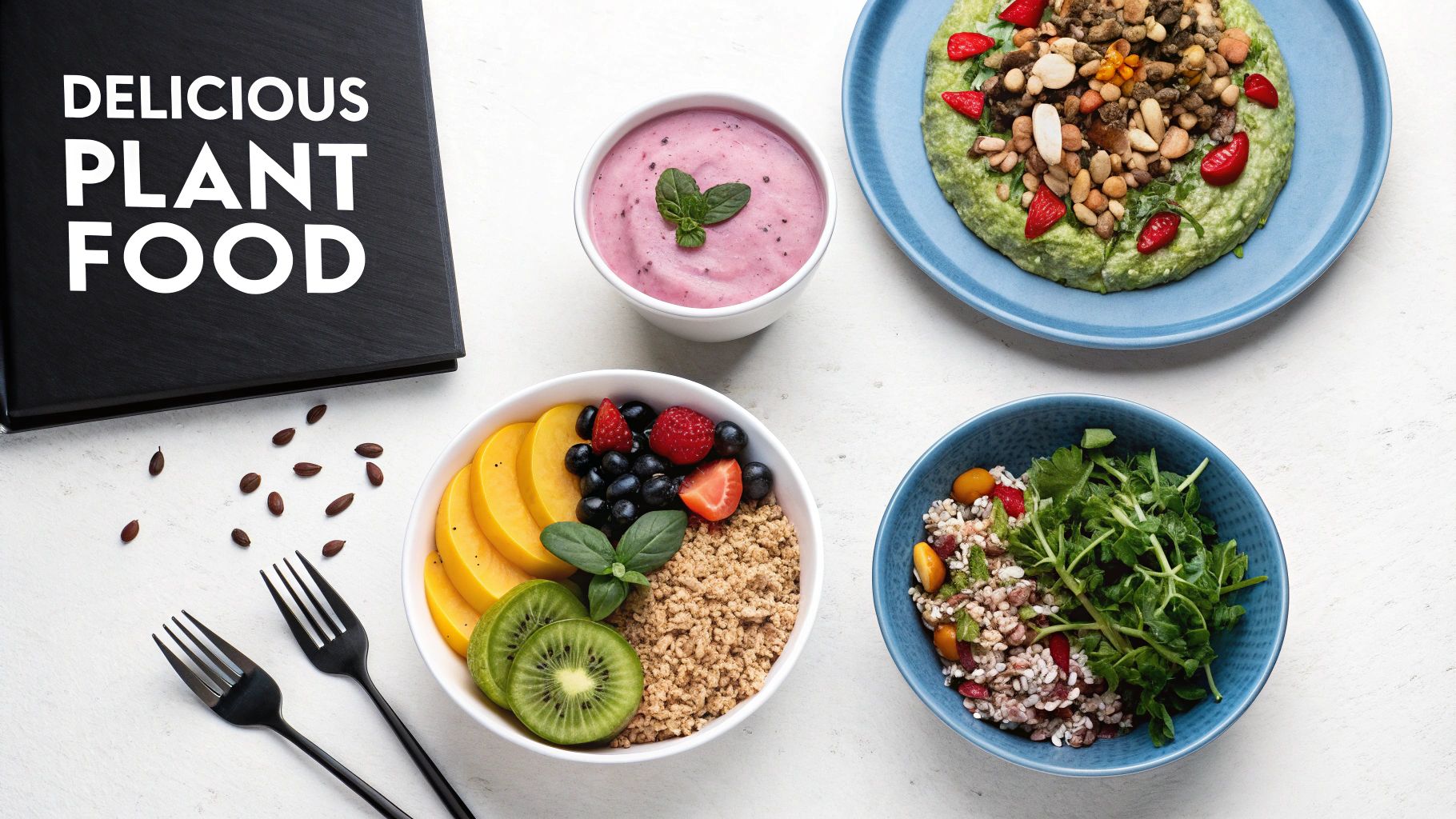
Let's clear up one of the biggest myths about plant-based eating: that it's all about boring salads and bland tofu. Honestly, nothing could be further from the truth. Stepping into this lifestyle is like opening the door to a whole new world of incredible flavours, vibrant colours, and satisfying textures.
It's not about restriction; it's about abundance. You start cooking with a much wider palette of ingredients—think earthy lentils, creamy cashews, sweet roasted veggies, and fragrant herbs. The possibilities are genuinely endless, and you'll probably be surprised by just how fulfilling and delicious your plate can become.
What a Delicious Plant Based Day Looks Like
To give you a real sense of how flavourful this can be, here’s a little inspiration for a day of meals. This isn't a strict rulebook, just a taste of how you can enjoy hearty, delicious food from morning till night.
-
Breakfast: Kick off your day with some creamy overnight oats. Made with almond milk and a spoonful of chia seeds, they’re topped with fresh berries and a little drizzle of maple syrup. It's a fantastic source of fibre and slow-release energy.
-
Lunch: How about a vibrant Buddha bowl? Start with a base of quinoa, then top it with roasted sweet potato, spiced chickpeas, sliced avocado, and a generous dollop of tahini dressing. It's both incredibly nutritious and deeply satisfying.
-
Snack: To keep you going, a handful of almonds and an apple or some crunchy carrot sticks with hummus is perfect. Simple, packed with nutrients, and just what you need to beat that afternoon slump.
-
Dinner: Settle in for a rich and hearty lentil bolognese served over wholewheat pasta. By simmering lentils with tomatoes, garlic, onion, and herbs, you get a classic comfort dish that’s packed with flavour and protein.
And if you want to take your cooking to the next level, why not grow your own fresh herbs? There are plenty of easy edible indoor plants for year-round harvests that can add that extra something to your meals.
Navigating Dining Out in Australia
Eating out should always be a pleasure, not a puzzle. The good news is that the Australian dining scene has really embraced plant-based options, making it easier than ever to find an incredible meal. All you need is a bit of confidence and a few smart strategies.
Don't ever be afraid to ask questions. Most chefs and staff are more than happy to help with dietary requests. A polite question about swapping butter for olive oil or leaving off the cheese often gets a positive response.
A great tip is to check out the side dishes on the menu. You can often piece together a fantastic and filling meal by combining a few creative sides like roasted vegetables, seasoned grains, or a hearty bean salad.
Many cuisines are naturally packed with plant-friendly dishes. Thai, Vietnamese, Indian, and Middle Eastern restaurants are brilliant choices, as their menus are often built around vegetables, legumes, and rice. It's a fantastic way to keep your dining experiences fresh and exciting.
Of course, finding dedicated spots makes things even simpler. For anyone in Townsville, exploring the local scene is a must. You can discover some truly amazing vegan food in Townsville that shows just how creative and delicious plant-based dining can be. It turns every meal into a chance to explore new tastes, which is one of the best parts of this lifestyle.
Got Questions About Plant-Based Diets?
It's only natural to have a few questions floating around when you're thinking about a big lifestyle shift. Taking the first steps on a plant-based journey is exciting, but it often brings up some real-world "how-to" concerns.
Let's tackle the most common questions we hear at the cafe. We’ll give you clear, straightforward answers to help you feel ready and confident, covering everything from the grocery bill to the family barbecue.
Is a Plant-Based Diet Expensive in Australia?
It's a huge myth that eating plant-based will drain your bank account. In fact, it’s often the other way around. While some specialty vegan products can be a bit pricey, a diet built around whole foods is one of the most wallet-friendly ways to eat.
Just think about the basics: legumes like lentils and chickpeas, grains like brown rice and oats, and seasonal fruit and veg are some of the cheapest and most nutritious things you can buy. By building your meals around these staples and shopping for produce that’s in season, you can seriously cut down your grocery spending. Meal prepping and cooking in big batches are also brilliant ways to make your food – and your money – go further.
How Do I Get Enough Protein Without Meat?
This has to be the number one question we get asked, and the good news is that the plant kingdom is absolutely brimming with protein. You don’t need meat to build muscle or feel full and satisfied; you just need to know where to look.
Powerhouse sources like lentils, chickpeas, tofu, tempeh, quinoa, and even certain whole grains and vegetables give you all the protein your body needs. The secret is variety. By eating a wide range of these foods throughout your day, you’ll easily hit your protein goals and get a whole spectrum of other nutrients at the same time. Think a hearty lentil bolognese for dinner or a tasty chickpea salad for lunch – simple, delicious, and protein-packed.
The goal isn't to find a single replacement for meat. It’s about building your plate with a variety of plant-based protein sources. This approach makes sure you get a complete amino acid profile along with a rich mix of vitamins and minerals.
What Should I Do in Social Situations?
Navigating barbecues and family dinners can feel a bit daunting at first, but it doesn’t have to be a source of stress. The best way to handle it is to be positive and prepared. Most hosts are more than happy to help you out if you just give them a heads-up.
A fantastic strategy is to offer to bring a delicious plant-based dish to share. This not only guarantees you’ll have something amazing to eat but also shows your friends and family just how incredible plant-based food can be. Try to focus on connecting with people and enjoying the company – remember, your food choices are your own. A polite and confident vibe always works best.
Will I Need to Take Supplements?
A well-planned plant-based diet can give you almost everything your body needs, but there is one crucial nutrient you need to be mindful of: Vitamin B12. This vitamin is made by bacteria and isn’t naturally found in plant foods.
Because B12 is vital for healthy nerve function and making red blood cells, we strongly recommend that anyone on a fully plant-based diet takes a supplement or eats B12-fortified foods. While other nutrients like iron and calcium are plentiful in plant sources, it's always a good idea to have a chat with a healthcare professional or a registered dietitian. They can help you put together a plan that’s right for you.
Ready to explore the delicious world of plant-based eating without the cooking? Visit Absolute Cravings in Townsville for a vibrant menu of healthy, satisfying meals, smoothies, and juices. Order online for delivery today!