Juggling finances while prioritising health is a modern-day challenge. Many operate under the misconception that a nutritious diet comes with a hefty price tag, forcing a difficult choice between personal wellness and financial stability. This belief, however, is far from the truth. With the right strategies and a bit of planning, healthy eating on a budget is not only entirely achievable but can also be a rewarding and flavourful journey.
This comprehensive guide is designed to move beyond generic advice. We will provide eight detailed, actionable strategies that empower you to take firm control of your grocery bills while fuelling your body with wholesome, nourishing foods. We will explore practical methods covering everything from strategic meal planning and preparation to mastering the art of the grocery run, proving that a well-nourished life doesn’t require an extravagant bank account.
Whether you're a busy professional, a student on a tight budget, or part of a growing family looking to manage expenses more effectively, these tips will equip you to eat well, save money, and build sustainable habits for a healthier future. And for those days you need a convenient, healthy meal in Townsville, remember that local favourites like Absolute Cravings offer delicious options that align with a health-conscious lifestyle, proving convenience doesn't have to compromise quality. This article will show you how to make smart, cost-effective choices every step of the way.
1. Meal Planning and Prep
Meal planning and preparation are foundational strategies for anyone serious about healthy eating on a budget. The concept is straightforward: you decide your meals for the week in advance, create a precise shopping list based on those meals, and then prepare ingredients or full dishes ahead of time. This organised approach is the ultimate defence against last-minute, expensive takeaway orders and impulse buys at the grocery store.
By dedicating just a couple of hours each weekend, you transform your kitchen into a hub of efficiency. Instead of wondering what’s for dinner on a busy Tuesday night, you’ll have a pre-planned, healthy option ready to go. This simple shift in routine empowers you to take full control of your food budget and nutritional intake, proving that eating well doesn't have to be costly or complicated.
Why It Works: A Proactive Approach
The power of meal planning lies in its ability to eliminate decision fatigue and prevent food waste. When you shop with a specific list, you buy only what you need, significantly cutting down on ingredients that might otherwise spoil. For example, a family of four can slash their monthly food expenses by planning meals around weekly supermarket specials, while a busy professional can save hundreds by having pre-made salad jars and overnight oats ready for the week.
This infographic summarises the significant savings in time, money, and resources you can achieve through consistent meal planning and prep.
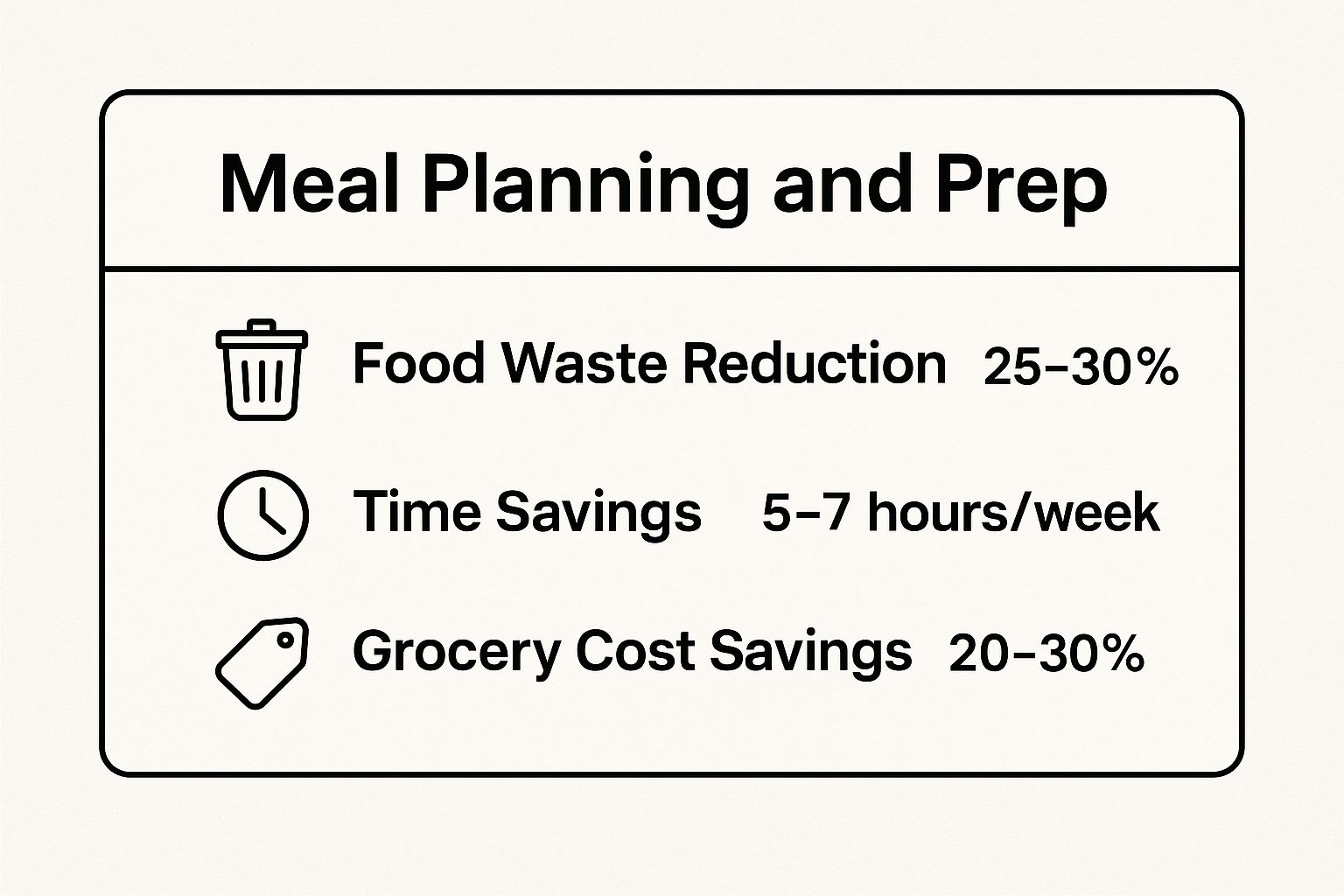
As the data highlights, the benefits extend beyond your wallet; reclaiming several hours each week and reducing your household's food waste are equally valuable outcomes.
Getting Started with Meal Planning
Diving into meal planning doesn't have to be an all-or-nothing effort. Here are some actionable tips to ease into the process:
- Start Small: Begin by planning just three or four dinners for the upcoming week. As you get comfortable, you can gradually expand to include lunches and breakfasts.
- Shop Your Pantry First: Before making a list, take inventory of what you already have. Build your first few meals around these existing ingredients to minimise spending.
- Use an 'Anchor' Protein: Choose one versatile, budget-friendly protein like chicken thighs or a large batch of lentils. Plan to use it in multiple dishes, such as chicken stir-fry, chicken salads, and chicken wraps.
- Leverage Technology: Utilise free online templates or apps like Mealime and Plan to Eat, which can help generate shopping lists and organise your recipes.
If preparing entire meals feels overwhelming, start by prepping individual components. Having chopped vegetables, cooked quinoa, and marinated proteins on hand makes assembling a healthy meal much faster. For a more detailed guide, you can learn more about how to meal prep on absolutecravings.com.au.
2. Buy Whole Foods and Cook from Scratch
Purchasing whole, unprocessed ingredients and preparing meals from scratch is one of the most effective strategies for healthy eating on a budget. The logic is simple: whole foods like dried beans, whole grains, and fresh produce are significantly cheaper per serving than their pre-packaged or processed counterparts. While convenience foods save time, they carry a substantial markup for the labour and packaging involved.
Embracing this approach means you trade a bit of time in the kitchen for significant savings and complete control over what goes into your body. Learning a few basic cooking skills empowers you to transform humble, affordable ingredients into nutritious and delicious meals, sidestepping the hidden sugars, sodium, and preservatives common in processed foods.
Why It Works: A Cost-Benefit Analysis
The financial benefits of cooking from scratch are undeniable. The price difference between a finished product and its core components is often staggering. For instance, making your own hummus from dried chickpeas can cost around $0.50, whereas a small tub from the store can set you back $4 to $6. Similarly, a single portion of cooked dried beans costs about $0.15, compared to $1 to $2 for a canned organic version.
This principle, championed by food advocates like Michael Pollan and Mark Bittman, applies across the board, from baking your own whole grain bread for under $2 a loaf to preparing a large, nourishing vegetable soup that feeds a family for just $5. The initial time investment pays long-term dividends for both your wallet and your health.
Getting Started with Cooking from Scratch
Making the shift to home cooking doesn't require becoming a gourmet chef overnight. Focus on building confidence with simple, forgiving recipes.
- Master the Basics: Start by mastering 5-7 simple, versatile recipes like stir-fries, soups, or sheet pan dinners. Once you feel comfortable, you can expand your repertoire.
- Invest in Flavour: A small collection of quality spices, herbs, oils, and vinegars can elevate the simplest ingredients. Cumin, smoked paprika, garlic powder, and a good olive oil are excellent starting points.
- Cook in Batches: Double your recipes and freeze the extra portions. This creates your own healthy, budget-friendly "convenience" meals for busy days.
- Use Visual Guides: Free resources like YouTube cooking channels provide step-by-step visual instructions, which are perfect for learning fundamental techniques.
For those ready to take food sourcing into their own hands, a valuable resource like a beginner's guide to starting a garden can empower you to cultivate your own produce. Keeping a well-stocked pantry with staples like rice, pasta, and tinned tomatoes ensures you always have the building blocks for a quick, homemade meal.
3. Embrace Plant-Based Proteins
Shifting from meat-centric meals to plant-based proteins is one of the most impactful strategies for anyone serious about healthy eating on a budget. This approach involves incorporating affordable, nutrient-dense foods like beans, lentils, chickpeas, tofu, and even eggs as the primary protein source. This simple swap delivers high-quality protein and essential nutrients at a significantly lower price point than most meat, poultry, and fish.
Incorporating plant-based meals is a powerful way to reduce grocery bills without sacrificing nutrition. For example, a kilogram of dried lentils costs a few dollars and can form the base for numerous meals, while the same amount of protein from beef could easily cost five to ten times more. This strategic shift empowers you to take control of your food budget and your health, proving that nutritious eating can be both delicious and economical.

Why It Works: A Cost-Effective & Nutrient-Dense Swap
The power of plant-based proteins lies in their incredible value and nutritional profile. They are not only cheaper but also packed with fibre, complex carbohydrates, and various micronutrients often lacking in animal products. This makes them a cornerstone of any effective plan for healthy eating on a budget. For example, a family can save $30-50 per month just by implementing 'Meatless Mondays', while an individual can make lentil bolognese instead of using beef mince, saving $4-5 per meal.
This approach is championed by budget food experts like Beth Moncel of Budget Bytes and movements such as The Meatless Monday campaign, who demonstrate the significant financial and health benefits. The savings are clear: a homemade black bean burger might cost $0.50 per serving, whereas a traditional beef burger can cost upwards of $2-3.
Getting Started with Plant-Based Proteins
Diving into plant-based eating doesn't require a complete overhaul of your diet. Here are some actionable tips to ease into the process:
- Start Gradually: Begin by introducing one or two meatless meals per week. As you become more comfortable, you can explore more options.
- Embrace 'Blended' Dishes: To maintain familiar flavours, try mixing finely chopped mushrooms or lentils into ground meat for burgers, meatballs, or sauces. This reduces the meat content and cost while boosting nutrients.
- Season Generously: Plant proteins like tofu and beans are excellent at absorbing flavours. Don't be shy with herbs, spices, and marinades to make your dishes vibrant and delicious.
- Explore Global Cuisines: Many international dishes are naturally plant-based and full of flavour. Think Indian dals, Middle Eastern falafel, or Mexican bean burritos for inspiration.
To make the transition even easier, start by learning about the most accessible options. For a comprehensive guide, you can learn more about the best plant-based protein sources on absolutecravings.com.au.
4. Shop Seasonally and Locally
Aligning your shopping habits with nature's calendar is a powerful yet simple strategy for healthy eating on a budget. The principle is straightforward: purchase fruits and vegetables when they are in season and, whenever possible, sourced from local growers. This approach drastically cuts costs because seasonal produce is abundant, reducing the need for expensive long-distance transport, artificial ripening, and prolonged storage.
Embracing seasonal and local food not only stretches your grocery budget but also maximises the nutritional value and flavour of your meals. Instead of paying a premium for out-of-season produce that has travelled thousands of kilometres, you get access to fresh, vibrant ingredients at their peak. This timeless practice connects you to your local food system and proves that the most economical choice is often the healthiest and most delicious.
Why It Works: A Proactive Approach
The economic and nutritional benefits of this strategy are rooted in the basic principles of supply and demand. When a crop is in season, its supply is at its highest, which naturally drives down the price. For instance, you can buy juicy strawberries in summer for just $2-3 a punnet, compared to the $6-8 they might cost in winter. Similarly, autumn butternut squash can be found for as little as $0.99 per kilogram, a fraction of its springtime price.
Local farmers markets are epicentres for these savings. Visiting towards the end of the day often leads to significant discounts as vendors prefer to sell their remaining stock rather than transport it back. This simple timing adjustment can result in savings of 40-60% on high-quality produce, making it a cornerstone of affordable, healthy eating.
Getting Started with Seasonal Shopping
Adopting a seasonal shopping habit is easier than it sounds and can be integrated into your routine gradually. Here are some actionable tips to get you started:
- Know Your Seasons: Familiarise yourself with your region's seasonal produce calendar. You can find these online or use an app to see what's currently fresh and affordable.
- Visit Farmers Markets Strategically: Head to your local market 30-60 minutes before closing. Politely ask vendors if they have any end-of-day deals or "seconds" (cosmetically imperfect but perfectly edible produce) available at a discount.
- Explore a CSA: Consider joining a Community Supported Agriculture (CSA) program. For a weekly fee, you receive a box of seasonal produce directly from a local farm. You can often split a share with a friend to lower the cost and commitment.
- Preserve the Bounty: When you find a great deal on peak-season produce, buy in bulk. You can freeze, can, or dehydrate items like berries, tomatoes, and herbs to enjoy affordable, healthy ingredients all year round.
For more resources on finding local food sources, websites like Local Harvest can connect you with farmers, markets, and CSA programs in your area.
5. Reduce Food Waste with Strategic Storage and Usage
Reducing food waste is a powerful and often overlooked strategy for healthy eating on a budget. It’s estimated that the average household throws away a significant portion of the food it buys, which is like tossing cash directly into the bin. By focusing on proper storage and getting creative with what you have, you directly combat this loss, ensuring every dollar spent on groceries is fully utilised.
This proactive approach means learning how to extend the life of fresh produce, repurposing leftovers, and understanding what food labels really mean. Instead of letting that half-bunch of celery wilt or throwing out overripe bananas, you transform them into nutritious, flavourful meals. This maximises your budget and your nutritional intake, proving that resourcefulness is a key ingredient in affordable healthy eating.
Why It Works: A Waste-Not, Want-Not Approach
The effectiveness of this strategy lies in its ability to turn potential waste into tangible savings and delicious meals. When you store food correctly and use every part of an ingredient, you buy less over time. For example, storing herbs in a jar of water like a bouquet can extend their life from a few days to two weeks, while freezing leftover bread slices prevents them from going stale and provides ready-to-toast slices for weeks.
This isn’t just about saving money; it’s a shift in mindset towards appreciating and maximising the value of your food. Transforming leftover roast chicken into a hearty soup or a chicken salad for lunch means you get multiple meals from a single initial cost. Every scrap of food saved is a victory for both your wallet and your health goals.
Getting Started with Waste Reduction
Implementing waste-reduction habits doesn’t require a major lifestyle overhaul. Small, consistent changes can make a huge difference. Here are some actionable tips to get you started:
- Store Smarter, Not Harder: Keep ethylene-producing fruits like apples and bananas separate from vegetables to prevent premature ripening. Wrap celery in aluminium foil to keep it crisp for weeks, and revive wilted greens with a quick soak in ice water.
- Embrace the Freezer: Your freezer is your best ally. Freeze overripe bananas for smoothies, portions of soups or stews for quick future meals, and even nuts and flour to extend their shelf life significantly.
- Create a "Use First" Zone: Designate a shelf or bin in your fridge for items that need to be eaten soon. This visual reminder helps ensure that yoghurts, leftovers, and produce get used before they spoil.
- Understand Date Labels: Learn the difference between "best before" and "use by" dates. "Best before" is about peak quality, not safety, and many foods are perfectly safe to eat past this date. Trust your senses of sight and smell to judge freshness.
6. Buy Generic and Store Brands
Opting for generic or store-brand products over their name-brand counterparts is a simple yet powerful strategy for reducing your grocery bill. The core idea is that you can often get the same quality and nutritional value for a fraction of the cost. The price difference rarely reflects the product's quality; instead, it covers the extensive marketing, advertising, and premium packaging costs associated with well-known brands.
By making this switch, you stop paying for a name and start paying for the actual product. For staple items like rice, pasta, canned goods, and frozen vegetables, the store brand is often produced in the same facility as the name brand. This savvy move can slash your grocery expenses by 25-30%, proving that smart choices in the supermarket aisle are key to healthy eating on a budget.
Why It Works: Quality Without the Cost
The effectiveness of this strategy lies in understanding what you're actually paying for. Generic brands bypass expensive marketing campaigns, passing those savings directly to you. Consumer studies and blind taste tests frequently show that store brands, like Costco's Kirkland Signature or Aldi's house brands, perform as well as, or even better than, their more expensive competitors.
When you compare the nutrition labels and ingredient lists of a store-brand product and a name-brand one, you will often find they are identical. This means you can confidently purchase store-brand oats, canned tomatoes, or Greek yoghurt without compromising on your health goals. It’s one of the most direct ways to lower costs while maintaining a nutritious diet.
Getting Started with Store Brands
Making the switch to generic products is easy and can be done gradually. Here are some actionable tips to help you get started:
- Start with Staples: Begin with low-risk items where brand loyalty is less of a factor. Flour, sugar, salt, canned beans, frozen fruit, and dried pasta are perfect starting points.
- Compare Ingredient Lists: Before buying, take a moment to compare the labels. You'll be surprised how often the ingredients and nutritional information are a perfect match.
- Check the Unit Price: Always look at the price per 100g or per unit on the shelf tag. This gives you a true, apples-to-apples comparison and confirms the savings.
- Try Premium Store Brands: For items like organic products or specialty foods, check out premium store lines such as Target's Good & Gather. They offer high-quality options at a more accessible price point.
7. Leverage Bulk Buying and Food Co-ops
Purchasing foods in bulk quantities and utilising food cooperatives are powerful tactics for dramatically reducing your grocery bill. The principle is simple: buying larger quantities lowers the per-unit cost, often by 30-70% for shelf-stable items and frequently used ingredients. This strategic approach to stocking your pantry is a cornerstone of long-term healthy eating on a budget.
From warehouse stores like Costco to the bulk bin aisle at your local grocer, buying more at once translates to significant savings. Instead of paying a premium for packaging and convenience, you invest in the food itself. This method empowers you to stock up on healthy staples like grains, legumes, and nuts at a fraction of the price, ensuring your kitchen is always ready for a nutritious, low-cost meal.
Why It Works: The Power of Volume
The financial benefit of bulk buying stems from economies of scale. When you purchase a 10kg bag of rice, you avoid the packaging, marketing, and shelving costs associated with a small 500g box. For example, buying quinoa from bulk bins can cost around $8/kg compared to over $20/kg for pre-packaged versions. Similarly, spices bought from bulk bins can be pennies on the dollar compared to small jars, saving you a small fortune over time.
Food co-ops take this a step further by operating on a member-ownership model, which provides access to wholesale prices on organic and natural foods, often 20-40% below conventional supermarkets. This collective buying power makes high-quality, healthy food more accessible and affordable for everyone involved.
Getting Started with Bulk Buying
Effectively leveraging bulk purchasing requires a strategic mindset, not just a bigger trolley. Here are some actionable tips to get started:
- Calculate Unit Prices: Always compare the per-unit price (e.g., price per 100g or per kg) to ensure the bulk option is genuinely cheaper. Don't assume bigger is always better.
- Focus on Non-Perishables: Prioritise items with a long shelf life, such as dried beans, lentils, rice, pasta, oats, and canned goods. This minimises the risk of food waste.
- Split the Cost: Team up with friends, family, or neighbours to share a warehouse club membership and split bulk purchases. This makes large quantities manageable for smaller households.
- Invest in Proper Storage: Use airtight containers to store your bulk goods. This protects them from pests and moisture, preserving their freshness and extending their shelf life.
- Shop with a List: Warehouse stores are designed to encourage impulse buys. Go in with a strict list of what you need and stick to it to avoid derailing your budget.
8. Master the Art of Smart Grocery Shopping
Strategic grocery shopping is much more than just grabbing what you need; it's a deliberate skill that combines planning, timing, and savvy use of available tools. This approach transforms a routine chore into a powerful money-saving activity. It involves creating a detailed list, hunting for sales, comparing unit prices, and steadfastly avoiding impulse buys, turning you into a highly effective, budget-conscious consumer.
By mastering these tactics, you can dramatically lower your grocery bill without compromising the quality or nutritional value of your food. Instead of falling for marketing tricks or overspending on convenience, you take charge of every dollar. This organised method is a cornerstone of sustainable, healthy eating on a budget, ensuring your kitchen is stocked with nutritious foods purchased at the best possible prices.
Why It Works: A Tactical Approach
The effectiveness of smart shopping lies in its proactive, data-driven nature. Research shows that shopping without a list can lead to spending up to 50% more, while shopping hungry can increase purchases by nearly 40%. Smart shopping directly counters these tendencies. For instance, building your meal plan around weekly "loss-leaders" (deeply discounted items designed to draw you in) can save a family $30-$50 per week.
Likewise, understanding your supermarket’s markdown schedule can lead to scoring meat, produce, and bakery items for 30-50% off. Combining these strategies with cash-back apps like Ibotta or Fetch can yield an additional $40-$80 back in your pocket each month, compounding your savings significantly.
Getting Started with Smart Shopping
You don’t need to become an extreme couponer overnight. Start by integrating these simple, high-impact habits into your routine:
- Never Shop Hungry: Always have a snack before you go. This simple step is your best defence against impulse purchases of expensive, less-healthy items.
- Make a Detailed List: Organise your list by supermarket section (produce, dairy, meat) to prevent backtracking and stay focused. Stick to it rigidly.
- Compare Unit Prices: The bigger package isn't always cheaper. Look at the price-per-unit or price-per-100g on the shelf tag to find the true best value.
- Learn the Markdown Schedule: Ask an employee when their store typically marks down items. Meat is often marked down on Monday mornings and bakery items in the evening.
- Leverage Technology: Use apps like Flipp to browse weekly circulars from all local stores in one place and plan your shopping around the best deals.
Becoming a savvy shopper also involves understanding what you're buying. To get the most nutritional value for your money, it's essential to learn more about how to read nutrition labels on absolutecravings.com.au. This skill ensures your budget-friendly choices are also genuinely healthy ones.
8 Strategies for Healthy Eating on a Budget
| Strategy | Implementation Complexity 🔄 | Resource Requirements | Expected Outcomes 📊 | Ideal Use Cases | Key Advantages ⭐💡 |
|---|---|---|---|---|---|
| Meal Planning and Prep | Moderate (weekly 1-3 hrs planning + prep) | Storage space, containers, planning tools | Saves $100-300/month; reduces food waste 25-30% | Busy families, health-conscious planners | Cost savings, time efficiency ⚡, reduces impulse buys |
| Buy Whole Foods and Cook from Scratch | Moderate (cooking skills + prep time) | Basic kitchen equipment, pantry staples | 50-75% cheaper per serving; higher nutrition | Those willing to learn cooking; budget cooks | Nutritional control, skill development ⭐, cost-effective |
| Embrace Plant-Based Proteins | Moderate (recipe learning; soaking time) | Basic cooking tools, pantry staples | Costs 70-90% less than animal protein servings | Vegetarians, budget-conscious, health-focused | Lower cost and environmental impact; health benefits ⭐ |
| Shop Seasonally and Locally | Low to moderate (needs seasonal knowledge) | Access to farmers markets, seasonal sources | 30-60% less on produce; peak flavor & nutrients | Those near local markets; seasonal variety seekers | Better taste & nutrition ⭐, supports local economy |
| Reduce Food Waste with Strategic Storage | Moderate (organizational discipline) | Storage containers, freezer space | Saves $125-175/month; reduces environmental impact | All households seeking savings and sustainability | Maximizes food use, reduces waste 📊, promotes creativity |
| Buy Generic and Store Brands | Low (simple brand substitution) | None special | Saves 20-40% instantly on groceries | Everyone looking for quick savings | Quality comparable to name brands ⭐; immediate savings |
| Leverage Bulk Buying and Food Co-ops | Moderate to high (storage, upfront cost) | Storage space, membership fees | Saves 30-70% on staples; $600-1200/year possible | Large families, steady users of pantry staples | Large savings, less packaging waste, organic options ⭐ |
| Master the Art of Smart Grocery Shopping | Moderate to high (planning + app use) | Smartphone, time for coupons, research | Saves 25-40%; $80-200/month depending on consistency | Shoppers willing to track deals and plan meals | Maximizes discounts; no diet change needed ⭐; financial skills |
Putting It All Together: Your Path to Affordable Wellness
Navigating the world of healthy eating on a budget can feel overwhelming, but as we've explored, it's far from impossible. The journey isn't about drastic, overnight changes or depriving yourself of flavourful food. Instead, it's about empowerment, strategy, and making a series of small, conscious decisions that accumulate into significant, positive results for both your health and your bank account. You now possess a powerful toolkit of eight core strategies designed to transform your approach to food and finances.
Let's quickly recap the foundational pillars we've covered. It all begins with Meal Planning and Prep, the strategic cornerstone that prevents impulse buys and ensures you have nourishing options ready to go. By choosing to Buy Whole Foods and Cook from Scratch, you regain control over ingredients and costs, sidestepping the premium prices attached to processed, convenience items.
We've also seen how Embracing Plant-Based Proteins like lentils, chickpeas, and beans can dramatically lower your grocery bill while boosting your fibre and nutrient intake. Aligning your shopping with nature's rhythm by Shopping Seasonally and Locally guarantees fresher, cheaper, and more flavourful produce. This pairs perfectly with a commitment to Reducing Food Waste, turning potential scraps into delicious stocks, stale bread into croutons, and wilting vegetables into soups. It’s a mindset shift that honours every dollar you spend.
Finally, mastering the art of the grocery run itself through Leveraging Bulk Buys, choosing cost-effective Store Brands, and employing Smart Shopping Tactics like never shopping hungry and always using a list solidifies your new, cost-effective system. Each of these principles works in harmony, creating a resilient framework for affordable wellness.
Your Actionable Next Steps to Success
The key to lasting change is to avoid feeling overwhelmed. You don't need to implement all eight strategies by tomorrow morning. The goal is sustainable progress, not perfection.
Here’s a practical way to begin your journey:
- Choose Your Starting Point: Select just one or two strategies from this article that feel most achievable for you right now. Perhaps it's committing to one "Meatless Monday" a week to explore plant-based proteins, or maybe it's dedicating 30 minutes on Sunday to simply plan out your meals for the coming week.
- Build a Foundation: Once you feel comfortable with your first chosen habit, layer on another. If your meal planning is going well, try incorporating seasonal produce from the local market into those plans. If you've mastered buying in bulk, focus next on creative ways to use leftovers to minimise waste.
- Track Your Wins: Keep a simple log of your grocery spending or note how much less food you're throwing away. Seeing tangible proof of your success is a powerful motivator to keep going and a fantastic reminder of how effective these techniques for healthy eating on a budget truly are.
This approach transforms the daunting task of changing your lifestyle into a manageable and rewarding process. It's about building valuable life skills, from culinary creativity to financial organisation, that will serve you for years to come. For practical and nourishing meal solutions that fit this philosophy, you can explore these healthy weeknight dinner ideas to get inspired.
Ultimately, this journey is an investment in your most valuable asset: your health. By taking control of your food choices and your budget, you are paving the way for a more vibrant, energetic, and financially secure future. The path to affordable wellness is yours to create, one delicious, home-cooked, and budget-friendly meal at a time.
For those days when time is tight but your commitment to healthy eating remains strong, Absolute Cravings offers a perfect solution. Their pre-prepared, nutritious meals align with the principles of wholesome, real food, providing a convenient and affordable alternative to takeaway. Explore their menu to supplement your weekly meal plan at Absolute Cravings.


