

Thinking about starting a healthy diet? It's not about strict rules or a total overhaul. The real secret is making small, sustainable changes that stick. It’s about slowly bringing in more whole foods—like fresh fruits, veggies, and lean proteins—while cutting back on the processed stuff. The goal is to build a way of eating that genuinely fits into your life.
Why a Healthy Diet Matters for Aussies

Jumping into a healthier way of eating can feel a bit daunting, especially with all the conflicting advice out there. But the good news is, you don’t need to change everything overnight. It’s about moving past the idea of a temporary "diet" and building habits that truly fuel your body and mind for the long haul.
This is about so much more than what you see on the scales. It’s about having the energy to get through your day, feeling brighter in your mood, and building a stronger body from the inside out. For most of us, it’s simply about feeling better. Understanding why it matters is the first step to making changes that last.
The Australian Health Landscape
The latest data shows we’ve got some work to do. A 2025 CSIRO study paints a pretty clear picture: by 2030, our consumption of discretionary foods (think ultra-processed snacks and sugary drinks) is projected to jump by 18%. At the same time, our fruit intake is expected to drop. This is a real challenge to national health goals, which encourage Aussies to eat two serves of fruit and five of veggies daily.
These numbers aren't here to scare you; they’re here to show you the reality. By making more conscious choices about what we put on our plates, we can all contribute to a healthier future.
Beyond the Scale: A Fuller View of Health
A truly healthy diet is a cornerstone of overall vitality, supporting far more than just your physical health. When you start nourishing your body with the right foods, you'll notice benefits that go way beyond weight management.
- Sustained Energy: Say goodbye to that 3 PM slump. A diet filled with complex carbs, lean protein, and healthy fats provides a steady, reliable source of energy to power you through the day.
- Improved Mental Clarity: What you eat has a direct line to your brain. Nutrient-dense foods can help sharpen your focus and keep you feeling on top of your game.
- Better Mood Regulation: The right nutrients are crucial for producing the neurotransmitters that keep our moods stable, helping to fend off feelings of stress and anxiety.
A healthy diet isn't about deprivation; it’s about abundance. It’s about filling your plate with colourful, nutrient-dense foods that make you feel your absolute best.
Seeing your food choices as part of a wider holistic wellness approach can really change your perspective on how much food impacts every corner of your life. It all starts with getting the basics right. If you’re wondering what that looks like, our guide on what is a balanced diet is a brilliant place to begin.
Conducting a Personal Food Audit
Before you can map out where you're going with your health, you need an honest picture of where you’re starting. This is where a personal food audit comes in. It’s not about judgment or calorie-counting; think of it as a simple fact-finding mission to really understand your current eating habits.
Consider yourself a friendly detective investigating your own lifestyle. For just three to five days, keep a simple log of everything you eat and drink. You could use a notes app on your phone or just a small notebook. The key is to capture a typical snapshot of your week, including both hectic workdays and your more relaxed weekend patterns.
This simple act can be incredibly eye-opening, shining a light on habits you might not even be aware of. Maybe you’ll notice you always reach for a sugary snack around 3 PM, or that a particular takeaway order has become a weekly ritual. These aren't failures—they're valuable clues.
Uncovering Your Personal Patterns
The insights you gather are the real gold here. Instead of trying to follow a generic, one-size-fits-all diet plan, you can build a strategy that actually addresses your specific challenges and routines. This is how you start a healthy diet that truly works for you and your life.
Let's take a quick look at how we're eating as a nation.
A Snapshot of the Average Australian Diet
This table breaks down key statistics about current Australian eating habits to help you compare your own patterns.
| Dietary Component | Average Daily Statistic | What This Means for Your Health |
|---|---|---|
| Vegetables | 2.3 serves (well below the recommended 5) | Low intake is linked to higher risks of chronic diseases and lower energy levels. |
| Fruit | 1.5 serves (just shy of the recommended 2) | Missing out on essential vitamins, antioxidants, and fibre for gut health. |
| Discretionary Foods | 31.3% of total energy intake | High intake of "sometimes" foods (sweets, pastries, sugary drinks) contributes to weight gain and nutrient deficiencies. |
| Sugary Drinks | 8.2% of Aussies consume daily | These drinks are a major source of "empty calories" with no nutritional benefit. |
Data from the Australian Bureau of Statistics shows that while we're trying, there's still room for improvement. Knowing where you stand is the first step toward making a change.
This whole process doesn't need to be complicated.
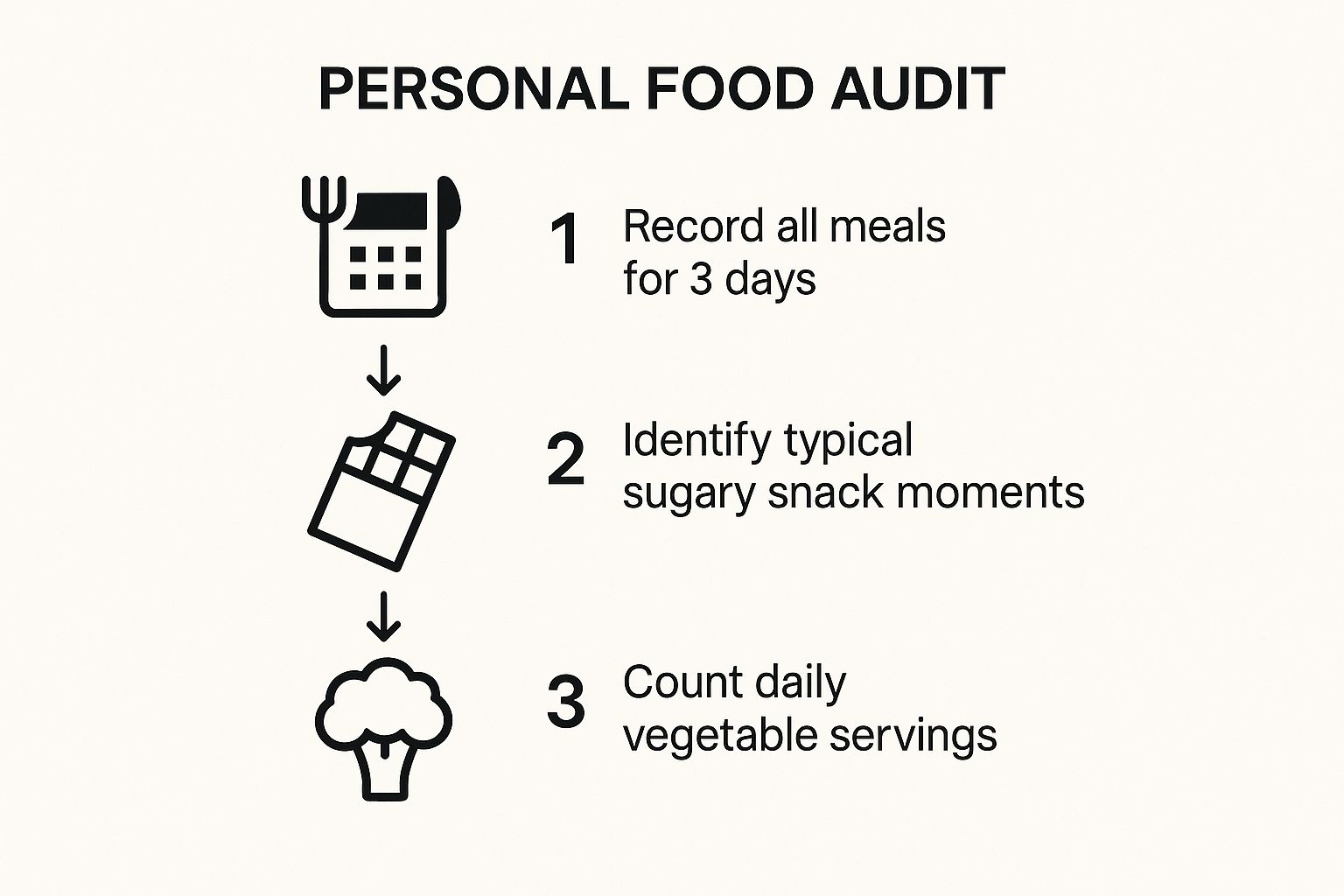
This guide breaks it down into three core actions: jotting down your meals, identifying your snack triggers, and getting an honest count of your daily veggie intake.
Turning Your Findings into Action
Once you have a few days of notes, it’s time to look at them with curiosity. Don't label foods as "good" or "bad." Instead, ask yourself a few simple questions to find actionable insights.
- Timing: When do you feel the most hungry or crave certain foods? Is there a link to stress, boredom, or a particular time of day?
- Nutrients: Are you getting enough protein to feel full and satisfied? How many servings of vegetables are you really eating each day?
- Hidden Culprits: Could sugary drinks, sauces, or dressings be adding more calories than you realised? This is where learning how to read nutrition labels becomes a genuinely powerful skill.
The purpose of a food audit isn’t to make you feel guilty. It’s to empower you with knowledge. When you understand your habits, you gain the power to consciously change them.
This audit gives you a personalised roadmap. Maybe you'll see a clear need to pack a healthy snack for the afternoon, or you'll decide to add a side salad to your lunch, or swap that soft drink for sparkling water. It's these small, informed adjustments that build a sustainable, healthy way of eating over time.
Crafting Your Realistic Eating Plan
Now that you've taken a good, honest look at your eating habits, it's time to build a plan that actually works for your life. Forget those rigid, complicated meal charts you see online. The best eating plan is one that feels flexible, realistic, and genuinely enjoyable. We're building a framework here, not a food prison.
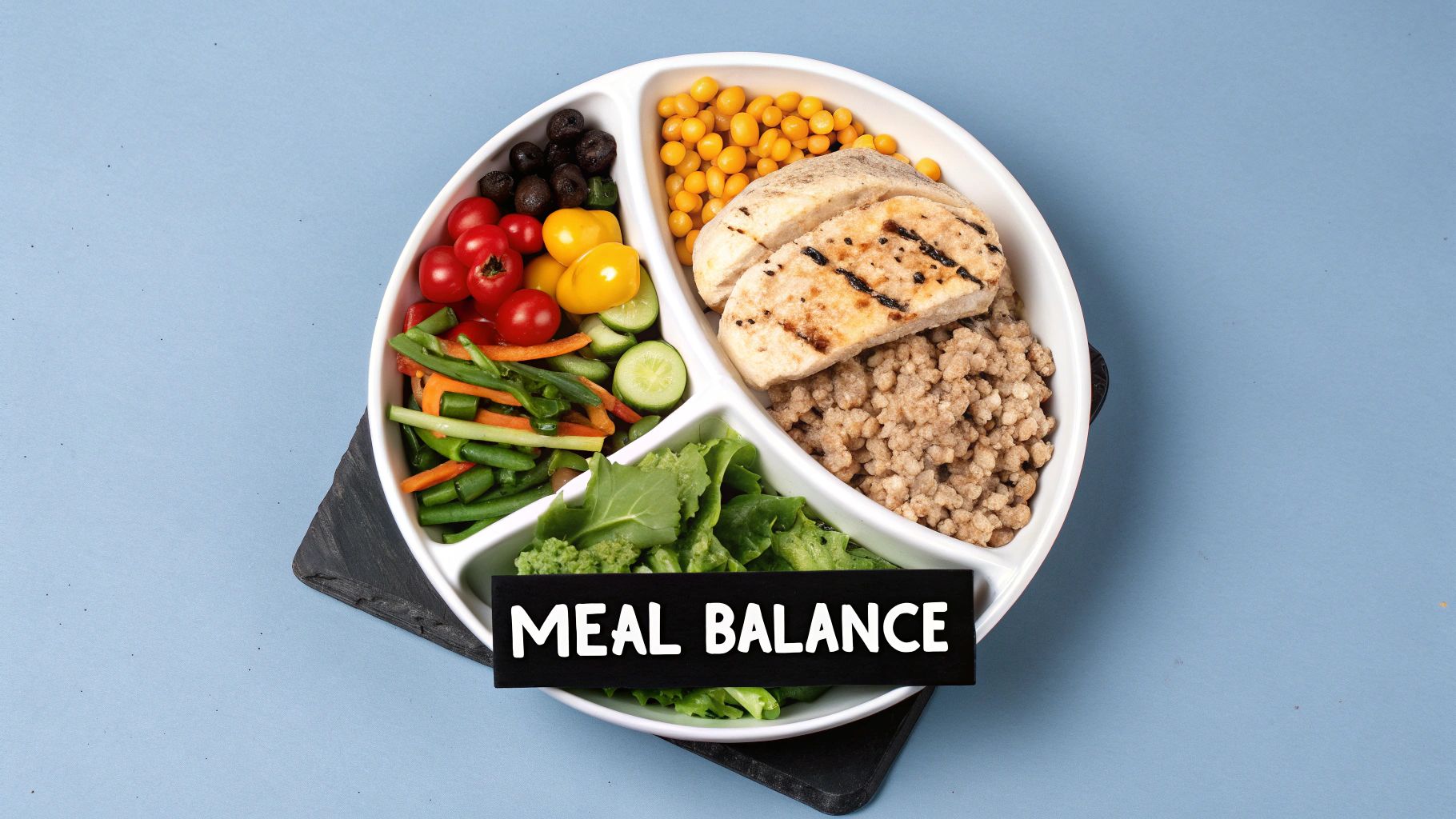
A brilliant place to start is with a simple visual tool called the 'plate method'. It’s an incredibly easy and memorable way to build balanced meals without the hassle of weighing food or counting calories.
The Simple Plate Method
Just imagine your dinner plate divided into a few sections. This little trick gives you a clear, visual guide to ensure you're getting a good mix of nutrients at every meal. It makes starting a healthy diet feel so much more intuitive.
Here’s the breakdown:
- Fill Half Your Plate with Vegetables: Aim for a rainbow of colours. Think leafy greens, broccoli, capsicum, carrots, and tomatoes. This part of the plate delivers essential fibre, vitamins, and minerals with minimal calories.
- Fill One Quarter with Lean Protein: This is what keeps you feeling full and satisfied. Great choices include chicken breast, fish, eggs, tofu, lentils, or beans.
- Fill the Final Quarter with Complex Carbohydrates: These give you that slow-release, sustained energy. Opt for whole grains like brown rice, quinoa, wholemeal pasta, or starchy veggies like sweet potato.
This isn't a strict rule for every single meal, but it’s a fantastic guiding principle. Using this for your main meals helps you naturally prioritise nutrient-dense foods.
Setting Actionable Goals You Can Start Today
Trying to change everything at once is a recipe for burnout. Instead, let's focus on small, specific actions you can implement right away. The real goal is to build momentum through consistent, manageable wins.
For example, instead of a vague goal to "eat healthier," try one of these concrete actions:
- Add one extra serving of vegetables to your dinner tonight.
- Swap your usual soft drink for sparkling water with a squeeze of fresh lime.
- Plan to have one meat-free meal this week.
A realistic plan acknowledges that life happens. It’s designed to accommodate a busy work schedule, a weekend barbecue with friends, and the occasional craving for something indulgent. Flexibility is the key to long-term success.
Getting organised for the week doesn't have to be a massive chore. A great way to set yourself up for success is by learning how to meal prep effectively. Even just preparing a few key things, like cooking a batch of quinoa or pre-chopping your veggies, can make the healthy choice the easiest choice when you're tired and hungry.
Think about a typical busy week: you've got back-to-back meetings until 6 PM on Tuesday and a family barbecue on Saturday. Your plan might involve having pre-prepped chicken and veggie stir-fry ingredients ready for Tuesday night. For the barbecue, you could decide to bring a large, vibrant salad to share, making sure you have a healthy option while still enjoying the social occasion. This is how a healthy diet coexists with a real life.
Navigating the Supermarket and Kitchen

A great eating plan is only as good as the food you have on hand. It's an old saying, but it’s true. This is where a little strategy at the supermarket and in your kitchen can make all the difference. Think of the grocery store as your first mission, and it all starts before you even leave the house with a well-thought-out shopping list.
This simple piece of paper (or note on your phone) is your best defence against those sneaky impulse buys. Stick to your list, and you'll find it much easier to bypass the aisles filled with processed snacks and sugary treats.
A clever tactic I’ve learned over the years is to shop the perimeter of the store first. This is usually where you'll find all the fresh, whole foods—fruits, vegetables, lean meats, fish, and dairy. By filling your trolley with these essentials first, you leave less room, and honestly, less temptation, for the packaged goods lurking in the centre aisles.
Decoding Nutrition Labels Quickly
When you do venture into the inner aisles for pantry staples, knowing how to quickly scan a nutrition label is a game-changer. You don't need to be a nutritionist or analyse every single detail. Instead, focus on a few key areas to spot the hidden culprits that can derail your hard work.
- Serving Size: Always, always check this first. The numbers on the label apply to a single serving, which might be much smaller than the amount you actually plan to eat.
- Sugar Content: Look for "added sugars." Naturally occurring sugars in fruit or dairy are perfectly fine, but it’s the added sugars you want to minimise.
- Sodium Levels: So many packaged foods, even the savoury ones, are loaded with sodium. A quick glance can help you easily choose a lower-sodium option.
This skill helps you make smart choices on the fly, ensuring what ends up in your trolley truly aligns with your new healthy eating plan.
Setting Up Your Kitchen for Success
Once you get your groceries home, the next move is to set up your kitchen to make healthy choices the most convenient ones. This is where a little bit of meal preparation, or "meal prep," comes in. And no, it doesn’t have to mean spending your entire Sunday chained to the stove.
Even small actions can have a massive impact on your week. Think about batch-cooking a versatile grain like quinoa or brown rice. You can also wash and pre-chop vegetables like capsicum, carrots, and broccoli so they're ready to be thrown into a stir-fry or salad at a moment's notice.
The goal of meal prep isn't to create gourmet meals for the entire week. It's about removing the friction that makes you reach for a takeaway menu after a long day.
Having these components ready makes pulling together a nutritious dinner on a busy Tuesday night almost as fast as ordering in. To make prepping and storing food even simpler, you might find an ultimate guide to collapsible food containers helpful for getting your kitchen organised. When healthy food is easy to grab, you're far more likely to stick with your plan.
Creating Healthy Habits That Last
Making a plan is one thing, but turning it into a lifestyle that actually sticks? That’s where the real magic happens. The secret isn't about having superhuman willpower or being perfect. It’s about building a collection of small, sustainable habits that, over time, just become part of who you are.
This whole journey is about so much more than what’s on your plate. It's about creating an environment and a mindset that make the healthy choice the easy choice. We want to move away from that old "all-or-nothing" diet mentality and into a way of living that’s balanced, forgiving, and genuinely enjoyable.
Navigate Social Events with Confidence
One of the first hurdles most people hit is figuring out how to handle their social life. Family dinners, nights out with mates, and those morning teas at work can feel like a minefield. The key is to have a simple game plan so you can enjoy yourself without feeling like you've completely derailed your progress.
Before you head to a party or a barbecue, try having a small, protein-rich snack. A handful of nuts or a small tub of Greek yoghurt can take the edge off your hunger, making it a lot easier to make mindful choices when you get there. Once you're at the event, do a quick scan of the options. Try filling your plate with salads and veggies first, then add smaller portions of the more indulgent stuff.
Listen to Your Body with Mindful Eating
In our busy lives, it’s so easy to eat while we're distracted—in front of the TV, hunched over our desks, or scrolling through our phones. This completely disconnects us from our body's natural hunger and fullness signals. Practising mindful eating is a seriously powerful way to reconnect and truly enjoy your food.
It’s a simple idea with a huge impact:
- Slow Down: Take smaller bites and actually chew your food. It gives your brain enough time to get the message that you're full.
- Engage Your Senses: Take a moment to notice the colours, smells, and textures of your meal. This simple act makes eating far more satisfying.
- Ditch the Distractions: When you can, try to eat at a table without any screens. It helps you focus on your food and recognise when you’ve had enough.
This isn’t about restriction; it's just about paying attention. You’ll probably find you enjoy your food more and feel satisfied with less.
The goal isn't to be perfect, but to be consistent. One off-day doesn't define your journey. Acknowledge it without guilt and simply get back on track with your next healthy meal.
The Bigger Picture Beyond Your Plate
The food choices you make don't happen in a vacuum. They're massively influenced by other parts of your life, especially your sleep and stress levels. When you're tired or stressed out, your body pumps out more cortisol—a hormone that can fire up cravings for high-sugar, high-fat comfort foods.
Prioritising good sleep and finding healthy ways to manage stress are non-negotiable parts of a successful healthy lifestyle. Things like going for a walk, listening to music, or just having a chat with a friend create a strong foundation that supports all your nutritional goals.
Sadly, poor dietary patterns are a major public health issue here in Australia. With around 31.3% of adult women and 32.8% of men living with obesity, the need to shift towards healthier habits is crystal clear. Moving away from energy-dense processed foods and towards the whole foods recommended in the Australian Dietary Guidelines is a critical step for long-term health. You can discover more insights about Australia's nutritional landscape at the Global Nutrition Report. This is how you build a resilient, healthy life that truly lasts.
Got Questions About Starting a Healthy Diet? Let's Talk.
When you first decide to eat healthier, it’s completely normal to have a million questions. It’s easy to get tangled up in the details or feel pulled in different directions by conflicting advice online.
Let's clear the air and tackle some of the most common worries people have when they're just starting out.
Do I Have to Give Up My Favourite Foods?
This is probably the biggest myth holding people back! A truly healthy and sustainable way of eating is built on balance and enjoyment, not strict rules and deprivation. Thinking you have to wave goodbye to your favourite chocolate or that weekend pizza is exactly what sets people up for failure.
A much healthier—and more realistic—mindset is the 80/20 approach. Just focus on filling your plate with nutritious, whole foods about 80% of the time. That leaves the other 20% for the treats you genuinely love and look forward to. This way, you never feel restricted, and healthy eating becomes a lifestyle you can stick with for good.
How Much Water Should I Really Drink?
That old "eight glasses a day" rule is a decent starting point, but it's not a one-size-fits-all answer. How much water you need really depends on things like your activity level, the climate here in Townsville, and your overall health.
Instead of obsessively tracking every millilitre, try this simple trick: check the colour of your urine. If it’s a pale, straw-like yellow, you’re on the right track. If it’s any darker, it’s a clear sign you need to top up.
Don't try to force down huge amounts of water all at once. The easiest way to stay hydrated is to keep a reusable bottle handy and take small, consistent sips throughout the day. And remember, herbal teas and fruit-infused water count towards your intake too!
Making this a habit keeps you consistently hydrated without it ever feeling like a chore.
Is Eating Healthy More Expensive?
It can certainly feel that way, especially when you compare the price of fresh produce to highly processed snacks. But with a few smart strategies up your sleeve, a healthy diet can be surprisingly friendly on your wallet.
Here are a few of my go-to tips for keeping costs down:
- Shop Seasonally: Fruits and vegetables are always cheaper and taste so much better when they're in season. Have a look at what’s abundant at your local market.
- Embrace Plant-Based Proteins: Things like lentils, chickpeas, beans, and eggs are fantastic sources of high-quality protein for a fraction of the cost of meat.
- Plan Your Meals: This is the ultimate money-saving hack. When you have a clear plan for the week, you buy only what you need. This dramatically cuts down on food waste and stops those costly impulse buys at the checkout.
I Had a Bad Food Day. Did I Fail?
Absolutely not. It's so important to remember that one "off" day is just a single moment in time, not a total failure. It doesn’t erase all the positive choices you've already made. This is a marathon, not a sprint.
What matters most is how you respond. Instead of letting guilt spiral into more poor choices, just acknowledge it and move on. Focus on making your very next meal a nutritious one. Consistency over perfection is the real secret to long-term success on this journey. Every meal is a fresh start and a new opportunity to get right back on track.
Feeling inspired but a bit short on time? Let Absolute Cravings help you kickstart your journey. Our menu is packed with delicious, healthy meals, fresh juices, and smoothies made from high-quality ingredients. Visit us in Townsville or check out our convenient delivery options to make your healthy start even easier. Find your new favourite meal at https://www.absolutecravings.com.au.