Let's be honest, the term "balanced diet" gets thrown around a lot. It often brings to mind strict rules, boring salads, and a long list of foods you can't have. But what if we looked at it differently?
A truly balanced diet isn't about restriction; it's a flexible, sustainable way of eating that gives your body everything it needs to not just survive, but to genuinely thrive. It’s about fuelling yourself with a wide variety of foods, in the right mix, so you can feel fantastic and have the energy to tackle your day.
Building Your Plate: The Foundation of a Balanced Diet
Think of your diet like building a house. You can't just throw up some walls and hope for the best. You need a solid foundation, strong framing, and all the essential wiring and plumbing to make it a functional, comfortable home. Your health works the exact same way—it’s built from the ground up, one meal at a time.
This infographic is a great visual for how different food groups work together to create a complete, healthy plate.
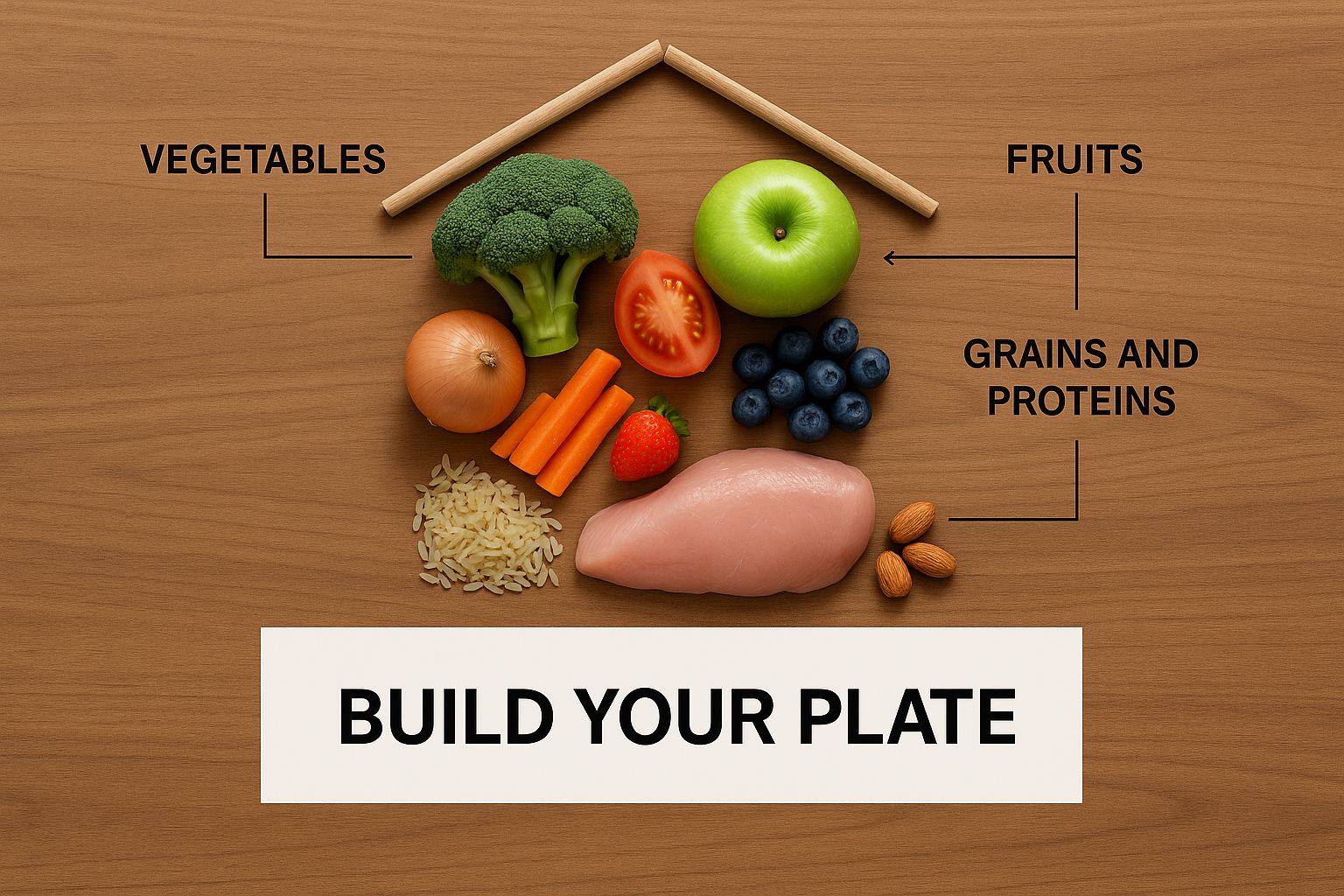
As you can see, a balanced plate is colourful and diverse. It’s a vibrant mix of proteins, grains, fruits, and veggies, with each component playing a vital role in your overall health.
The Blueprint for Your Health
So, what's the official 'blueprint' for this project? Here in Australia, we look to the Australian Dietary Guidelines. They recommend getting a daily mix from five core food groups: vegetables and legumes; fruit; grain (cereal) foods; lean proteins; and dairy or its alternatives. Sticking to this blueprint is the surest way to know you’re covering all your nutritional bases.
Breaking it down with the house analogy makes it even simpler:
- Macronutrients (carbohydrates, proteins, and fats) are your foundation and walls. They provide the main structure and the energy to power your body.
- Micronutrients (vitamins and minerals) are the electrical wiring and plumbing. They’re the little things that make thousands of critical processes happen behind the scenes.
- Water is the electricity itself, keeping the entire system switched on and running smoothly.
A balanced diet isn’t about being perfect 100% of the time. It’s about the big picture—creating a pattern of eating that nourishes your body and mind for the long haul. It’s about what you do most of the time, not the occasional treat.
Simplifying the Construction Process
We get it. Life is busy, and trying to build this healthy structure every single day can feel like a massive task. That’s where a bit of planning and meal prep can be absolute lifesavers.
For those days when time is your biggest enemy, services like Absolute Cravings can be your 'expert builders.' We take the hard work out of it by delivering delicious, chef-prepared meals that are already built on these balanced principles.
The real key to a balanced diet isn't about deprivation. It's about making smart choices that pack the most nutritional punch. It’s all about prioritizing nutrient density over restrictive dieting. This mindset is what builds lasting health without making you feel like you’re missing out.
We take the guesswork out of nutrition, making it easy to build your healthy 'house' one meal at a time. By focusing on these core ideas, you can create a way of eating that’s not just good for you, but genuinely enjoyable and easy to stick with. For more practical tips, you can explore our guide on https://www.absolutecravings.com.au/healthy-family-meal-ideas/.
Understanding Your Macronutrients: Fuel, Build, and Protect
If you think of your diet as the house you're building for your body, then macronutrients—that is, protein, carbohydrates, and fats—are the absolute essentials: the foundation, the framing, and the walls. They’re the major nutrients your body needs in large quantities to create energy, build and repair tissue, and keep all your internal systems running smoothly.
Getting a handle on what each one does is the first real step toward building a diet that doesn't just fill you up, but genuinely fuels your life.

It’s easy to get tangled up in complicated numbers and strict ratios, but the big picture is much simpler. Each of these three macronutrients has a specific job to do. When you give your body a steady supply of all three, it can finally run at its best.
Let’s get to know this essential team.
Protein: The Body's Construction Crew
Imagine protein as your body's dedicated construction crew. Its main job is to build, maintain, and repair everything—from your muscles and organs to your skin and hair. Literally every cell in your body contains protein, which tells you just how vital it is for growth and recovery.
Without enough of it, your body struggles to heal from injuries, can't build lean muscle effectively, and won't even produce the enzymes and hormones it needs for day-to-day functions. It’s the very backbone of your health.
While chicken, fish, and eggs are famous sources, they're far from the only options. Plant-based proteins are fantastic, powerful alternatives. To learn more, check out our guide on the best plant-based protein sources and see how you can mix things up.
Carbohydrates: The Primary Power Source
Carbohydrates have certainly taken a beating in the media over the years, but the truth is, they are your body's preferred primary power source. They break down into the glucose that fuels your brain, muscles, and nervous system. Trying to cut them out completely is like expecting a car to run without any petrol.
Of course, the type of fuel you choose makes all the difference.
- Complex Carbohydrates: These are your slow-release energy champs, found in whole grains, veggies, and legumes. They break down gradually, giving you sustained power without those awful energy crashes.
- Simple Carbohydrates: Found in sugary snacks, white bread, and soft drinks, these give you a quick spike of energy, but it's short-lived and usually followed by a slump.
By focusing on complex carbs, you’re ensuring your body and brain have the steady, reliable energy they need to perform at their best all day long.
Fats: The Master Regulators
Far from being the enemy, fats are the master regulators of your body. Their role goes way beyond just providing energy. They're absolutely essential for producing hormones, absorbing crucial vitamins (like A, D, E, and K), protecting your organs, and supporting brain health.
In fact, your brain is nearly 60% fat! That alone shows you how vital this nutrient is for clear thinking and cognitive function.
Just like with carbs, the type of fat you eat matters immensely. It's not about cutting out fat; it's about choosing the right kinds to support your health.
Unsaturated fats—the kind you find in avocados, nuts, seeds, and olive oil—are incredibly good for your heart and brain. On the flip side, it's a smart move to limit the saturated and trans fats often lurking in processed and fried foods.
To bring it all together, here’s a simple table breaking down each macronutrient, its role, and where you can find the good stuff.
Your Macronutrient Blueprint: Roles and Sources
| Macronutrient | Primary Role in the Body | Excellent Food Sources |
|---|---|---|
| Protein | Builds and repairs tissues, muscles, and organs. | Lean meats, poultry, fish, eggs, legumes, tofu, nuts, seeds. |
| Carbohydrates | Provides the main source of energy for the body and brain. | Whole grains (oats, quinoa), vegetables, fruits, beans. |
| Fats | Supports hormone production, brain health, and vitamin absorption. | Avocados, olive oil, nuts, seeds, fatty fish (salmon). |
Here at Absolute Cravings, we build our meals around this very principle of balance. Every single dish is carefully designed to deliver a healthy mix of high-quality protein, energy-sustaining carbs, and nourishing fats.
This means that when you eat with us, you’re not just satisfying a craving—you're giving your body the well-rounded, functional fuel it needs to truly thrive.
Micronutrients: The Hidden Keys to Optimal Health
If macronutrients are the foundation and walls of your health "house," then micronutrients are the specialist tradespeople—the electricians, plumbers, and network engineers. They are the vitamins and minerals that, while needed in smaller amounts, are absolutely essential for making thousands of critical processes run smoothly behind the scenes.
Without them, the entire system grinds to a halt.
Think of it like the engine in your car. Protein, carbs, and fats provide the fuel and build the structure, but vitamins and minerals are the spark plugs. They might be small, but they ignite the reactions that convert food into usable energy, power your immune system, and keep your brain firing on all cylinders.
The Power of a Colourful Plate
Instead of getting bogged down in a long list of scientific names like Ascorbic Acid or Cholecalciferol, it’s far more practical to think about micronutrients in terms of their benefits. The easiest way to make sure you're getting a wide range is to simply "eat the rainbow."
Different colours in fruits and vegetables are a fantastic clue to the different vitamins and minerals hiding inside.
- Reds (like tomatoes and capsicum): Often rich in lycopene, which is great for heart health.
- Oranges & Yellows (like carrots and sweet potatoes): Typically packed with beta-carotene, crucial for vision and immune function.
- Greens (like spinach and broccoli): Loaded with folate, iron, and Vitamin K for energy and bone health.
- Blues & Purples (like berries and eggplant): Bursting with antioxidants that protect your cells from damage.
This is why a truly balanced diet is so visually vibrant. A plate full of different colours isn't just appealing to the eye; it's a sign that you're supplying your body with a diverse team of micronutrient specialists, each with a unique and vital job to do.
Your Body's Essential Technicians
Let's look at what some of these key micronutrient "technicians" actually do for you. They are the unsung heroes working tirelessly to keep you healthy and energised.
Vitamin C: The Immune System Guardian
Found in citrus fruits, berries, and leafy greens, Vitamin C is famous for its role in supporting a strong immune system. It helps your body produce white blood cells, your first line of defence against illness. If you're looking for practical ways to support your body's natural defences, our guide explores how to boost your immune system naturally.
Iron: The Energy Transporter
Iron, found in lean meats and dark leafy greens, is essential for making haemoglobin—the protein in red blood cells that ferries oxygen around your body. Low iron can lead to fatigue and brain fog because your cells just aren't getting the oxygen they need to function properly.
Calcium: The Bone Builder
Well-known for building strong bones and teeth, calcium is also vital for muscle function and nerve signalling. Dairy products, fortified plant milks, and leafy greens like kale are all fantastic sources.
A varied diet rich in whole foods is the best insurance policy for getting all the micronutrients you need. Relying on a limited range of foods, even if they are healthy, can lead to nutritional gaps over time.
At Absolute Cravings, we take the guesswork out of micronutrients. Our chefs intentionally design meals that incorporate a wide variety of fresh, colourful ingredients. From the vibrant greens in our salads to the deep reds of our roasted vegetables, every dish is crafted to deliver not just amazing flavour but also a rich spectrum of these health-promoting vitamins and minerals, making balanced eating effortless and delicious.
The Underrated Role of Hydration in Your Diet
When we talk about what makes a balanced diet, it's easy to get laser-focused on the food on our plates—the proteins, the carbs, the colourful veggies. But there’s a vital, often forgotten, piece of the puzzle that makes everything else work: hydration.
Water is so much more than a thirst quencher. Think of it as your body's essential transport network.
Imagine your body is a bustling city. Nutrients are the crucial supplies that need to be delivered to every single house (your cells), and waste products are the rubbish that needs clearing away. Water is the massive network of roads and couriers that keeps everything moving smoothly.

Without enough water, that whole system grinds to a halt. Nutrient delivery becomes sluggish, and waste removal gets backed up. This is exactly why even mild dehydration can leave you feeling tired, foggy, and just plain off.
Beyond Thirst: The Subtle Signs of Dehydration
Here’s the thing: many of us walk around in a constant state of mild dehydration without even realising it. We often mistake the early warning signs for something else, like needing another coffee or a sugary snack to get through the afternoon slump.
The reality is that by the time you feel truly thirsty, your body is already playing catch-up. Staying ahead of thirst is the real secret to keeping your physical and mental performance sharp all day long.
Some common, yet sneaky, signs you might need more fluids include:
- Persistent fatigue that just won't go away, even with rest.
- Difficulty concentrating or that dreaded "brain fog."
- Dull headaches, especially those that pop up in the afternoon.
- Dark-coloured urine—this is a very clear indicator you need to drink up.
It's a common myth that everyone needs to drink exactly eight glasses of water a day. Our hydration needs are unique and change based on activity level, the climate we live in, and our overall health. The goal is consistent fluid intake throughout the day, not hitting a magic number.
Practical Ways to Stay Hydrated
Staying on top of your hydration doesn't have to mean constantly chugging plain water, especially when life gets hectic. You can actually get a good chunk of your daily fluids from the foods you eat and other drinks you enjoy.
Water-rich foods are a delicious and surprisingly effective way to boost your hydration. Things like cucumber, watermelon, oranges, and leafy greens are packed with water while also delivering a dose of valuable vitamins and minerals. Herbal teas can also be a flavourful and hydrating option.
This is where mindful eating really supports your hydration goals. At Absolute Cravings, our meals are packed with fresh fruits and vegetables. When you choose a dish rich in these ingredients, you’re not just nourishing your body with essential nutrients; you're also contributing to your overall hydration from the inside out. Every bite counts towards a fully balanced and well-hydrated system.
The Real-World Benefits of a Balanced Diet
Knowing the building blocks of a balanced diet is one thing, but seeing how it actually plays out in your day-to-day life? That’s where the real magic happens. The benefits aren't some far-off goal; they're tangible improvements you can see and feel, starting right now.
Think of switching to a balanced diet as a complete upgrade for your body and mind. Suddenly, everything just runs more smoothly. You’ll find that consistent, nutrient-rich eating translates directly into more energy, sharper focus, and a much more stable, positive mood.
Fuel for a More Energised Life
We all know that dreaded 3 PM slump. It feels like an unavoidable part of the workday, but it’s often just the crash after an unbalanced lunch packed with refined carbs and sugar. A balanced meal, on the other hand, delivers a slow, steady release of energy that carries you right through the afternoon. No more crash.
This consistent fuel does more than just stop you from feeling tired; it actively boosts your ability to handle whatever the day throws at you. You’ll feel more present and capable, whether you're tackling a big project, enjoying time with family, or hitting the gym.
Smart snacking is a huge part of this, too. For some great heart-healthy snack ideas, check out these options to keep your energy steady and your heart happy.
A Powerful Defence Against Chronic Disease
While the immediate perks are great, the long-term impact of a balanced diet is where its true power lies. Eating well consistently is one of the best things you can do to prevent chronic diseases that can really affect your quality of life down the track.
Research right here in Australia paints a crystal-clear picture. A massive review of 59 local studies confirmed that healthy eating patterns dramatically reduce the risk of cardiometabolic issues and health problems during pregnancy. On the flip side, diets full of processed foods, added sugars, and unhealthy fats were directly linked to a higher risk of obesity, type 2 diabetes, and even poor mental and cognitive health.
This isn't just about managing your weight. It’s about actively investing in your future health and protecting your body from the inside out. Every balanced meal is a deposit into your wellness bank.
Making a Healthy Lifestyle Sustainable
The benefits are clear, but let's be honest—making it happen every day can feel like a mission. That’s why convenience is the key to success. You don’t need to flip your entire life upside down overnight to start feeling better.
It’s the small, consistent choices that build momentum and create real, lasting change. This is exactly where a service like Absolute Cravings steps in, bridging the gap between knowing what to do and actually doing it. By offering chef-prepared, balanced meals, we make it simple to fuel your body with everything it needs to thrive, without the stress of planning and cooking from scratch.
Ultimately, a balanced diet empowers you to live a fuller, more vibrant life. It’s not about restriction; it’s about adding quality, energy, and resilience to your years, so you can enjoy every moment.
Common Nutrition Myths That Hold You Back
Trying to figure out what to eat can feel like walking through a minefield. There's so much conflicting advice out there, and a lot of well-meaning but totally outdated ideas just refuse to go away. These persistent myths often get in the way of building a genuinely healthy relationship with food.
So, let's clear the air. To create a balanced diet you can actually stick with, we need to separate the facts from the fiction. Once you understand the truth, you can make confident choices that truly nourish your body.
Myth 1: All Carbs Make You Gain Weight
This is probably the biggest villain in modern nutrition. Carbohydrates have been unfairly blamed for everything, but the truth is, they're your body's favourite source of energy. The real issue isn't carbs themselves, but the quality and quantity you're eating.
Think of it like fuel for your car. Simple carbs from things like white bread, sugary snacks, and soft drinks are like cheap, low-grade fuel. They give you a quick, zappy burst of energy, but it’s followed by a crash that leaves you tired and reaching for more snacks.
On the other hand, complex carbohydrates are your premium fuel. You'll find them in whole grains, veggies, and legumes, and they're packed with fibre. This fibre slows everything down, giving you a steady, slow-release of energy that keeps you feeling full, focused, and satisfied for hours.
The main takeaway is simple: don’t be afraid of carbs, just focus on quality. A balanced diet absolutely needs carbohydrates to fuel your brain and keep your body performing at its best.
Myth 2: Fat Is the Enemy
For decades, we were all told that low-fat everything was the secret to good health. This led to a flood of "fat-free" products on supermarket shelves, which were often pumped full of sugar and refined carbs to make them taste like anything at all. We now know that healthy fats aren't just good for you—they're essential.
Fats play a massive role in your body, supporting everything from your brain health and hormone production to helping you absorb crucial vitamins. The conversation has thankfully shifted from avoiding all fats to embracing the right kinds.
- Healthy Fats (Unsaturated): Think of these as your allies. You'll find them in avocados, nuts, seeds, and olive oil. They support a healthy heart and help reduce inflammation.
- Fats to Limit (Saturated & Trans): These are the ones usually found in highly processed snacks, fried foods, and fatty meats. It’s a good idea to enjoy these in moderation.
Myth 3: Healthy Eating Is Too Expensive and Difficult
This is a powerful myth because, let's be honest, it feels real. The idea that a balanced diet means hunting down expensive specialty ingredients and spending hours in the kitchen is enough to put anyone off. For many people, it feels completely out of reach. In 2023, more than one in eight Australian households (13.2%) faced food insecurity, making consistent access to fresh, nutritious food a genuine struggle. This often leads to a reliance on cheaper, processed foods, cementing the belief that eating well is a luxury. You can explore more data on Australian dietary patterns and health.
While budget and time are very real concerns, a balanced diet doesn't have to be complicated or break the bank. But for those juggling packed schedules and tight budgets, finding a practical solution that works is everything.
This is exactly where services like Absolute Cravings come in. We tackle the "too expensive and time-consuming" myth head-on by offering chef-prepared, balanced meals that are both affordable and incredibly convenient. We're here to prove you don’t have to choose between your health, your wallet, and your time.
Your Questions About Balanced Diets Answered
Thinking about starting a more balanced diet is one thing, but actually putting it into practice when life gets busy is another challenge altogether. It's easy to get bogged down in the details. So, let's clear up a few of the most common questions and hurdles people face.
How Can I Start a Balanced Diet with a Busy Schedule?
The secret isn’t a massive, dramatic overhaul. It’s about small, consistent actions that build up over time. Aim for progress, not perfection. You could start by just focusing on one meal a day—maybe making sure your breakfast is packed with protein and fibre to keep you full and focused.
A little planning goes a long way, too. Even just an hour on the weekend to think about the week's meals or chop a few veggies can be a lifesaver. Of course, if you really want to take the planning and prep work off your plate, a service like Absolute Cravings is designed for exactly that. Another great tip? Just try to add one new colour to your plate each day. It’s these tiny habits that create real, lasting change.
Does a Balanced Diet Mean I Can Never Eat My Favourite Foods Again?
Absolutely not! For any way of eating to be sustainable, it has to be enjoyable and flexible, not rigid and restrictive. When you label foods as "off-limits," it just makes you want them more and can lead to a cycle of guilt and frustration. The goal is balance over the long haul, not perfection at every single meal.
A lot of people find the 80/20 rule really helpful. Focus on eating nourishing, whole foods 80% of the time, and then leave that other 20% for the indulgences you love, completely guilt-free. This approach prevents you from burning out and helps you build a genuinely healthy relationship with food for life.
What Is the Single Most Impactful Change I Can Make Today?
If you're looking for the one change that delivers the biggest bang for your buck, it's this: eat more vegetables and fewer processed foods. It's a simple truth that most Aussies don't get enough veggies, but we often overdo it on foods loaded with sugar, salt, and unhealthy fats.
By just aiming to add one extra serving of vegetables to your lunch and dinner, you'll naturally be getting more essential fibre, vitamins, and minerals. This one small shift often pushes less healthy options off your plate without you even trying, creating a positive ripple effect on your energy, digestion, and overall wellbeing. It’s a small effort with a massive return.
Ready to make balanced eating simple and delicious? Let Absolute Cravings do the hard work for you. Explore our menu of chef-prepared, nutritious meals designed to fuel your busy lifestyle. Visit us at https://www.absolutecravings.com.au to see what's fresh today.


