That daily flat white isn't just a habit, is it? It’s a ritual. But when you try to recreate that perfect café experience at home, it can feel like something’s missing. The secret to truly exceptional espresso isn't just in the machine—it's all about choosing the best coffee beans for espresso.
Generally, you'll want to look for medium to dark roasts with low acidity. Think of classic Italian roast blends or single-origin beans from places like Brazil; these are popular for a reason, delivering those rich, bold, and chocolatey flavours we crave.
A Guide to Café-Quality Espresso at Home
So, you've got the machine, you've got the passion, but that perfect shot still feels just out of reach. Let's pull back the curtain on what really makes a great espresso. It’s less about buzzwords like 'single-origin' or 'dark roast' and more about understanding what they actually mean for the taste in your cup.
We're going to break down how the bean's origin, its roast level, and its freshness all come together to create that rich, aromatic shot you love. Think of this as your roadmap. It’s about empowering you to walk into a café or browse online and know exactly what you’re looking for. The journey to a perfect espresso starts long before you even flick the switch on your machine.
Understanding Australia's Coffee Culture
It's no secret that Australia runs on coffee. We're one of the most coffee-obsessed nations on the planet, with the average Aussie getting through 1.91 kg of coffee every year. Yet, we import nearly all of it. Our espresso culture is built on the back of beans from powerhouse producers like Brazil and Colombia, who supply the high-quality Arabica and robusta beans we love.
This is where our local roasters become the heroes of the story. They take these amazing imported beans and expertly blend and roast them to create profiles that are perfect for our milk-based coffee culture. That rich, syrupy base in your flat white? That's no accident—it's pure craft.
And once you’ve nailed that perfect espresso shot, the next step is getting that silky-smooth milk. If you're ready for that, we've got a great guide on how to froth milk to take your home barista skills to the next level.
What Makes a Bean Perfect for Espresso
So, why can’t you just chuck any old coffee bean in your machine and get a great espresso? Think of it like baking a cake—sure, you can use any flour, but if you want a perfect sponge, you need specific ingredients. An espresso machine's high-pressure, high-speed extraction is like a magnifying glass for a bean's flavour, amplifying every single characteristic.
This intense process means certain qualities are non-negotiable if you’re chasing that syrupy body and rich, stable crema we all look for. The bean has to be soluble enough to release all its deliciousness in under 30 seconds, but it also needs enough oils and proteins to create that signature golden-brown foam. Not every bean is up to the challenge.
Meet the Main Players: Arabica and Robusta
At the heart of almost every great espresso blend, you’ll find two main coffee species: Arabica and Robusta. Let's not get bogged down in dictionary definitions; it’s better to think of them as key ingredients, each bringing something unique to the final shot.
Arabica is the artist of the coffee world. Grown at high altitudes, it’s loved for its complex aromatic notes, bright acidity, and delicate sweetness. It’s like the top notes in a perfume—it provides those bright, floral, and fruity characteristics that make an espresso pop with personality. The trade-off? It’s lower in caffeine and tends to produce a lighter, thinner crema.
Robusta, on the other hand, is the workhorse. Just as its name suggests, it’s a hardier plant that thrives at lower altitudes. It delivers the deep, bold flavours that form the very backbone of a classic, punchy espresso.
Robusta beans typically contain around 2.5% caffeine, nearly double that of Arabica. This higher caffeine content doesn't just give you a bigger kick; it’s also the secret to a thicker, more stable, and longer-lasting crema—a hallmark of traditional Italian-style espresso.
The Art of the Espresso Blend
This is where the magic happens. Roasters will often combine these two beans to create a perfectly balanced and consistent espresso experience. A well-crafted blend truly leverages the best of both worlds, creating a shot that’s both flavourful and structurally sound.
- Arabica's Role: It brings the complexity and delicate sweetness, with tasting notes ranging from citrus and berries to rich caramel and florals.
- Robusta's Role: It provides that deep, chocolatey body, low acidity, and the rich crema that’s absolutely essential for a satisfying shot, especially in milk-based drinks like a flat white.
Understanding this partnership is the first step to knowing why some blends pull a perfect shot every single time. An espresso blend isn't just a random mix of beans thrown together; it's a carefully constructed recipe designed to perform under pressure. By balancing the elegance of Arabica with the raw power of Robusta, roasters craft the best coffee beans for espresso that consistently deliver that café-quality experience you crave at home.
How Roast Level Shapes Your Espresso Flavour
Roasting is where the magic happens. Think of it like toasting spices in a pan; the heat doesn't just change their colour, it unlocks a whole new world of deep, complex aromas. The same thing happens with coffee, and the roast level is easily one of the biggest influences on the final taste in your cup.
Each roast profile—light, medium, or dark—fundamentally changes the bean's internal chemistry. It tweaks everything from acidity and sweetness to the body and bitterness of the brew. Getting your head around these changes is the key to matching your personal taste with the perfect bag of beans. It's how you move beyond just guessing and start confidently picking coffee that will give you the flavour you love, every single time.
This infographic gives you a quick visual rundown of how the roast level affects key characteristics like acidity and caffeine.
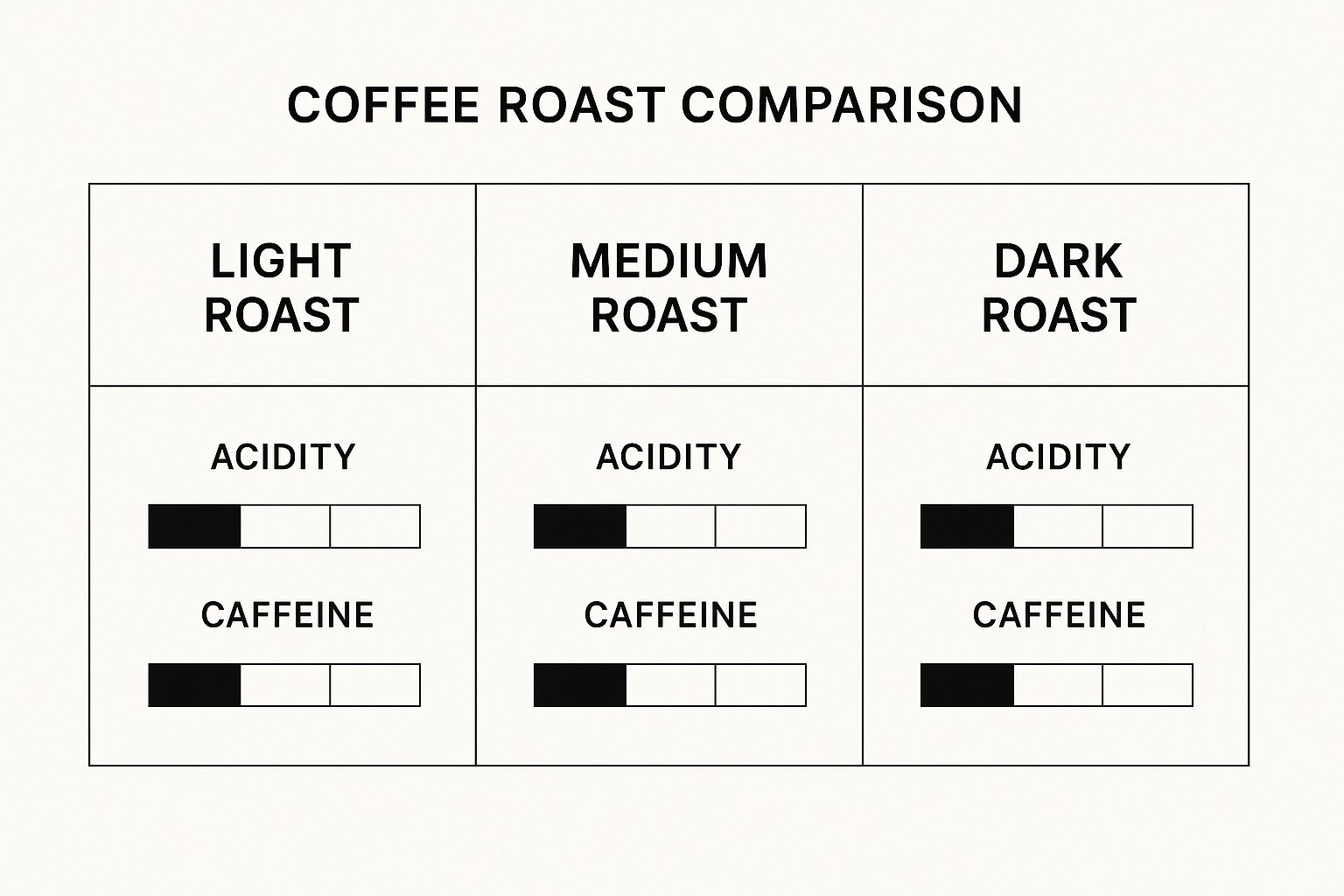
As you can see, lighter roasts hold onto more of their natural acidity and caffeine. As you go darker, both of these drop off, making way for a bolder, smoother profile.
Light Roast: The Origin Story
A light roast is all about preservation. The roaster's goal is to heat the bean just enough to develop its flavours without covering up the unique characteristics from where it was grown. What you get is a brew that’s bright, acidic, and often bursting with fruity or floral notes.
For espresso, light roasts can be a real challenge, but they're incredibly rewarding when you get them right. You need a very precise grind and some skill on the machine to avoid a sour shot. But when it all comes together, you're left with a vibrant, complex shot that truly lets the bean’s origin shine through.
Medium Roast: The Crowd-Pleasing Balance
Often called the sweet spot for modern espresso, a medium roast is all about balance. It keeps some of the bean's original bright acidity but also brings in those richer, sweeter notes that come from the roasting process itself—think caramel, nuts, and chocolate.
This balance makes medium roasts incredibly versatile. They’re complex enough to be enjoyed as a straight shot or a long black, but they have enough body and sweetness to stand up beautifully in a flat white or latte.
A medium roast really does offer the best of both worlds. It builds a bridge between the bean's inherent character and the deep, satisfying flavours of the roast. This versatility is why it's such a favourite among speciality roasters.
Dark Roast: The Classic Bold Choice
Dark roasts deliver that classic, traditional espresso profile many of us grew up with. These beans are roasted until they’re dark brown with a noticeable oily sheen, giving them a heavy body, low acidity, and those powerful flavours of dark chocolate, smoke, and spice.
These bold characteristics make dark roasts the natural choice for milk-based coffees. The robust flavour profile has no problem cutting through the sweetness of the milk, so the coffee's character never gets lost. This reliability is a big reason why cafés and restaurants—which make up a huge 58.2% of Australia's espresso market—often lean on these classic profiles to please a wide range of customers. With over 55,000 cafés nationwide, creating a consistently delicious cup is everything. You can find more details in this report on Australian espresso coffee market trends on market.us.
To make it even clearer, here’s a quick summary of how the different roast levels stack up for espresso.
Espresso Roast Profile Comparison
| Roast Level | Flavour Profile | Acidity Level | Crema Quality | Best For |
|---|---|---|---|---|
| Light | Fruity, floral, tea-like | High | Thin, light-coloured | Straight espresso, showcasing unique origin notes |
| Medium | Caramel, chocolate, nutty, balanced | Medium | Thick, stable, golden-brown | Versatile for both straight shots and milk drinks |
| Dark | Smoky, dark chocolate, roasty | Low | Dark, can be thin/bubbly | Milk-based drinks like lattes and cappuccinos |
Each roast has its place, and the "best" one really comes down to how you like to drink your coffee. Don't be afraid to experiment to find your perfect match
A Flavour Tour of Coffee Growing Regions
Think of it like wine. A Sauvignon Blanc from Marlborough tastes completely different to one from Bordeaux, and it all comes down to where the grapes were grown. Coffee is exactly the same. The unique combination of soil, climate, and altitude—what the experts call terroir—is what gives a coffee bean its soul.
Getting to know these regional flavour profiles is like having a secret map to your perfect cup. It takes the guesswork out of buying the best coffee beans for espresso. Instead of just relying on tasting notes, you start to recognise the kinds of flavours you love and, more importantly, where to find them.
So, let's take a quick trip around the globe and explore the key coffee-growing hotspots.
South America: The Dependable Foundation
When you picture that classic, comforting coffee flavour, you're probably dreaming of beans from South America. Powerhouse countries like Brazil and Colombia are the backbone of the coffee world, producing beans celebrated for their reliability and beautifully balanced profiles. It’s no surprise they form the foundation of so many espresso blends.
These beans are known for their low acidity and a smooth, full body. They have those familiar, welcoming tasting notes that just sing when you add milk.
- Common Flavours: Expect rich, satisfying notes of chocolate, nuts like almond and walnut, and sweet caramel.
- Best For: Crafting that perfect, crowd-pleasing flat white or latte that needs a robust, sweet base to shine.
Central America: The Balanced Complexity
As we move north into Central America, things get a little more interesting. Coffees from places like Guatemala, Costa Rica, and Honduras introduce a wonderful complexity. They manage to keep some of that chocolatey goodness from their southern neighbours but add a brighter, more refined acidity into the mix.
You can think of them as the perfect bridge between traditional and modern espresso. They have a lovely sweetness and a well-rounded character that is fantastic in a long black, but they still have enough body to hold their own in milk. They just bring a bit more excitement to the cup without being overwhelming.
Central American beans are really prized for their exceptional balance. They often deliver a super clean cup with notes of stone fruit, brown sugar, and a crisp, apple-like acidity that adds a sophisticated sparkle to your espresso.
Africa: The Vibrant Adventurer
For the truly adventurous coffee lover, Africa is where the flavour spectrum just explodes. Beans from Ethiopia and Kenya, in particular, are famous for being vibrant, exotic, and incredibly aromatic. These are the coffees that really push the boundaries.
They’re celebrated for their bright, clean acidity and a lighter, almost tea-like body. Because their profiles are so delicate and complex, they are often best enjoyed straight up as an espresso or a long black. This is where you can really appreciate their unique character, as milk can sometimes overshadow those stunning floral and fruity notes.
- Prominent Notes: Look for dazzling flavours of blueberry, strawberry, jasmine, and bright citrus.
- Ideal Use: Perfect for pulling a lively, brilliant espresso shot that wakes up your palate.
This passion for high-quality, distinct beans is a huge part of what drives Australia’s specialty coffee scene. In fact, this segment now makes up 40% of total coffee consumption, with Aussies spending an estimated $8 billion AUD on it each year. This demand encourages boutique roasters to hunt down exceptional beans and perfect their craft. You can dive deeper into the Australian coffee market on stellarmr.com.
Getting Your Grind and Storage Right
You can pick the most incredible coffee beans in the world, but if you don't treat them right at home, you're only getting half the experience. Even the best beans will give you a pretty average shot if the grind is off or they’ve gone stale. This is where we get into the hands-on stuff that makes all the difference.
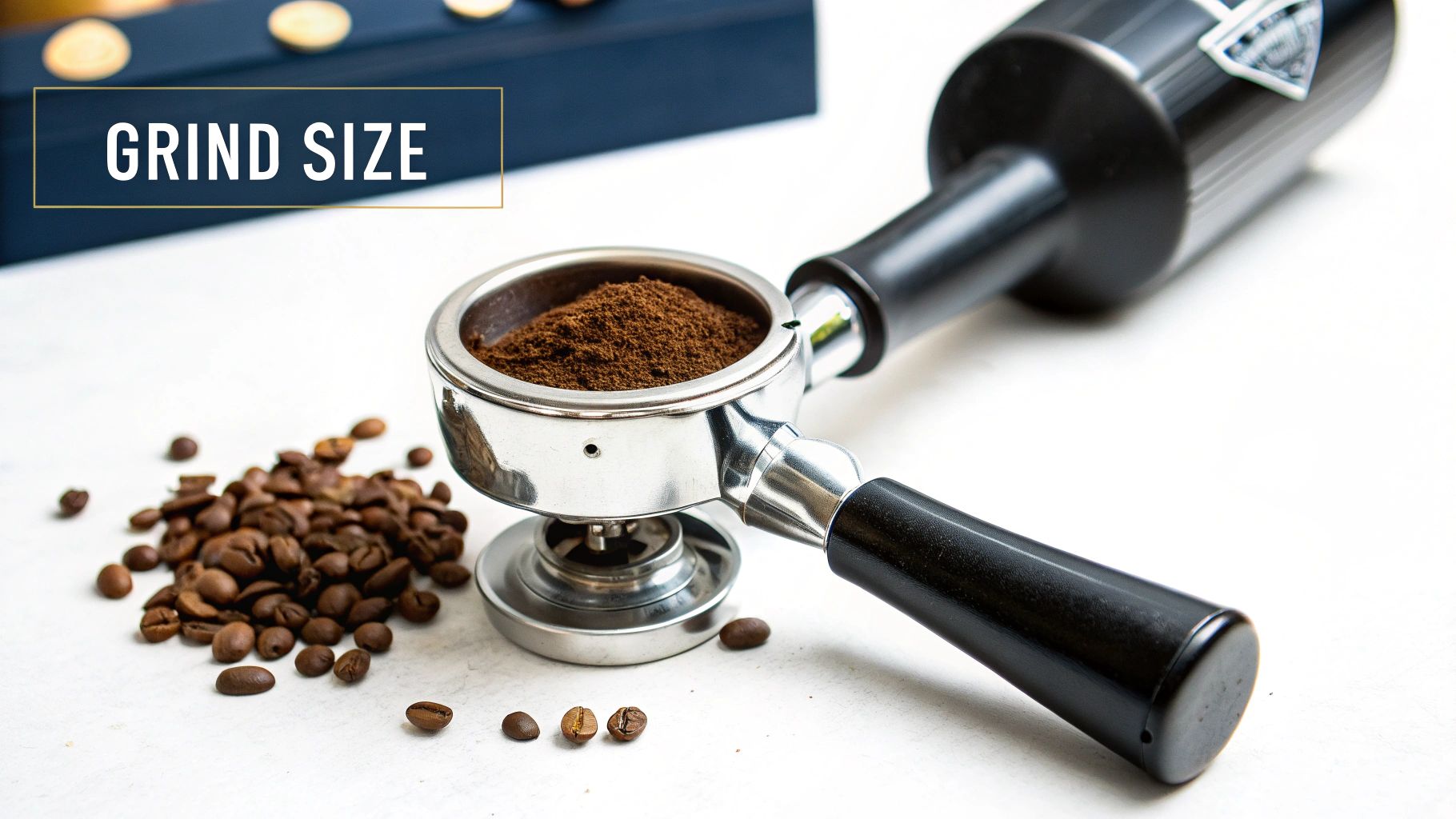
Think about pouring water through a bucket of pebbles versus a bucket of sand. The sand creates a lot of resistance, right? That’s exactly what we need for a brilliant espresso. The high pressure from your machine needs that tightly packed, fine coffee to work against to properly extract all the good stuff.
If your grind is all over the place, your coffee will be too. A coarse grind lets water gush through, leaving you with a weak, sour shot that’s disappointingly under-extracted. Go too fine, and you’ll choke the machine, forcing out a bitter, burnt-tasting mess. It’s a bit of a balancing act.
Dialling in That Perfect Espresso Grind
For espresso, you're chasing a fine, consistent grind that feels a bit like table salt. But here’s the thing: there's no single magic setting. Every bag of beans, every machine, and even the weather can change what works. This whole process of finding the sweet spot is what baristas call dialling in.
It’s best to start with your grinder’s recommended espresso setting and just pull a shot. You’re aiming for an extraction time of about 25-30 seconds. From there, you just need to make small tweaks.
- Shot pouring too fast? Go a touch finer with the grind.
- Shot taking too long? Back it off and make the grind a little coarser.
Patience is your best friend here. And trust me, grinding your beans fresh, right before you brew, is the biggest upgrade you can make to your home espresso game. Ground coffee starts losing its beautiful aromas almost immediately.
How to Keep Your Beans Tasting Their Best
As soon as you rip open that bag of coffee, the clock is ticking. Four things want to ruin your beans: oxygen, light, heat, and moisture. To keep them tasting great, you need to store them properly.
Can we just bust a common myth? Please don't store your beans in the freezer. It can mess with the delicate oils and cell structure. Plus, when you take them out, condensation forms, and moisture is the fastest way to a dull, flavourless cup.
The best way to store your beans is simple. Keep them in an airtight, opaque container somewhere cool and dark, like the pantry. This protects them from all their enemies and keeps all those vibrant flavours locked in, just as the roaster intended. That way, every single shot you pull is as fresh and delicious as it should be.
Choosing Beans Based on Your Taste
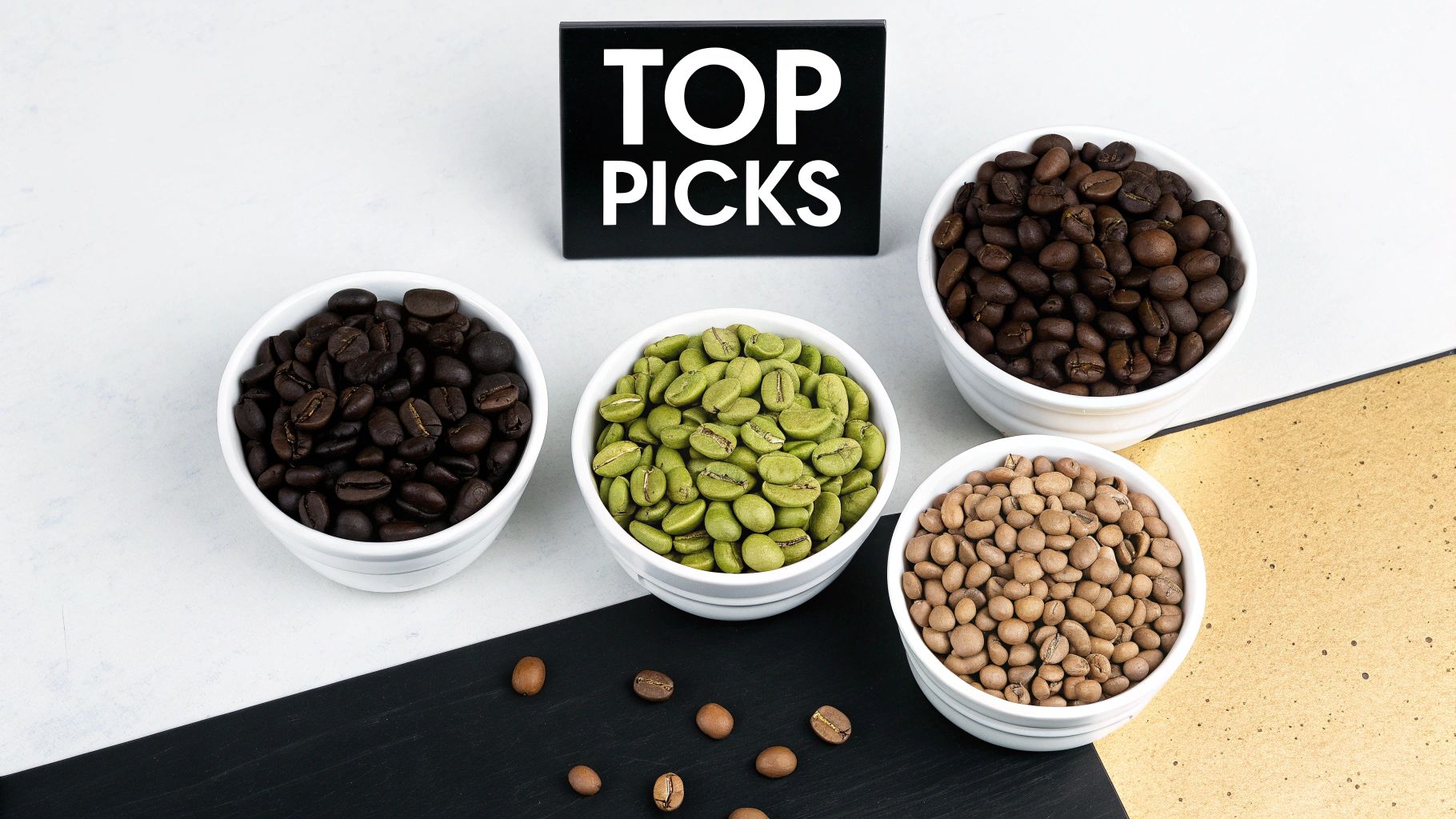
Alright, let's move from theory to practice. It’s one thing to understand roast levels and coffee origins, but the real magic happens when you connect that knowledge to the actual flavours you love. To make it simple, we’ve broken down our top picks based on how Aussies typically enjoy their coffee.
Think about your daily brew. Are you a devoted flat white drinker, or do you prefer the clean, bold taste of a long black? Knowing this is the key to finding your perfect beans. The goal is to match the bean's personality to your favourite drink, so every single cup is exactly how you like it.
For the Classic Milk Coffee Lover
If your day doesn't start without a flat white, latte, or cappuccino, you need a coffee with enough backbone to stand up to the milk. A weak or overly acidic espresso shot will just get lost, leaving you with something that tastes more like warm milk than a proper coffee.
The best coffee beans for this style are almost always the traditional espresso blends. Here's what to look for:
- Roast Level: Stick with medium-dark to dark roasts. They bring out deep, rich flavours and tone down the acidity.
- Tasting Notes: You're chasing notes of dark chocolate, toasted nuts, and rich caramel.
- Origin: Blends that feature beans from Brazil or Colombia are perfect for creating that classic, comforting flavour base.
These robust profiles create a beautifully balanced and satisfying milk coffee, giving you that classic café experience right at home.
When it comes to a classic espresso, consistency is everything. Roasters create these blends to deliver a reliable, balanced flavour all year round, which is why they’re the go-to for so many cafés and home baristas who just want a dependable, delicious shot every time.
For the Modern Black Coffee Drinker
If you take your coffee black—either as a straight espresso shot or a long black—you’ll want something with a bit more complexity and nuance. Without milk to soften the edges, the bean's unique character really gets to shine.
For this style, single-origin beans are a fantastic choice because they showcase the distinct flavours of a specific farm or region.
- Roast Level: A medium roast hits the sweet spot, preserving the bean's natural character while developing a lovely sweetness.
- Tasting Notes: Look for beans with notes of stone fruit, brown sugar, and a balanced, crisp acidity.
- Origin: Beans from Central American countries like Guatemala often deliver this sweet, complex profile. We love working with local suppliers who source these incredible beans, which is why we're so proud of our relationship with Townsville's own roasters. You can learn more by celebrating our local supplier Long Shot Coffee with us.
For the Adventurous Flavour Seeker
For those who see espresso as a flavour adventure and are always chasing something vibrant and different, naturally processed African beans are where it's at. These coffees are all about bright, fruity, and floral notes that completely challenge the traditional idea of what coffee can be.
These are best enjoyed as a straight shot to appreciate their dazzling, full-on complexity.
- Roast Level: A light to medium-light roast is essential to keep all those delicate, aromatic notes intact.
- Tasting Notes: Get ready for an explosion of blueberry, strawberry, jasmine, and citrus.
- Origin: Ethiopia is the classic origin for this wild and wonderful flavour profile.
Common Questions About Espresso Beans
Diving into the world of espresso can feel a bit like learning a new language. You're bound to have questions along the way! Here, we've gathered some of the most common queries we hear from home baristas, hoping to clear things up so you can brew with more confidence.
Can I Use Pre-Ground Coffee?
While technically you can, it's something we'd strongly advise against for making espresso. The whole process relies on intense pressure, making it incredibly sensitive to the size of your coffee grounds. Pre-ground coffee is almost always too coarse, and more importantly, it's stale.
Freshness is everything. Those wonderful aromatic compounds that create amazing flavour and a rich crema start to vanish within minutes of grinding. Grinding your beans right before you brew is probably the single biggest step you can take toward getting that true café-quality result at home.
Why Is the Roasted On Date So Important?
Think of the 'roasted on' date as your ultimate guide to freshness. For espresso, coffee beans hit their flavour peak somewhere between 5 and 21 days after they've been roasted. This sweet spot gives the beans enough time to de-gas (release built-up CO2) while holding onto all their vibrant, complex flavours.
A 'best before' date, on the other hand, isn't nearly as helpful, as it can be set for months down the track. Always look for a bag with a recent 'roasted on' date. It's the best guarantee you're going to extract maximum flavour and achieve that thick, stable crema we all chase.
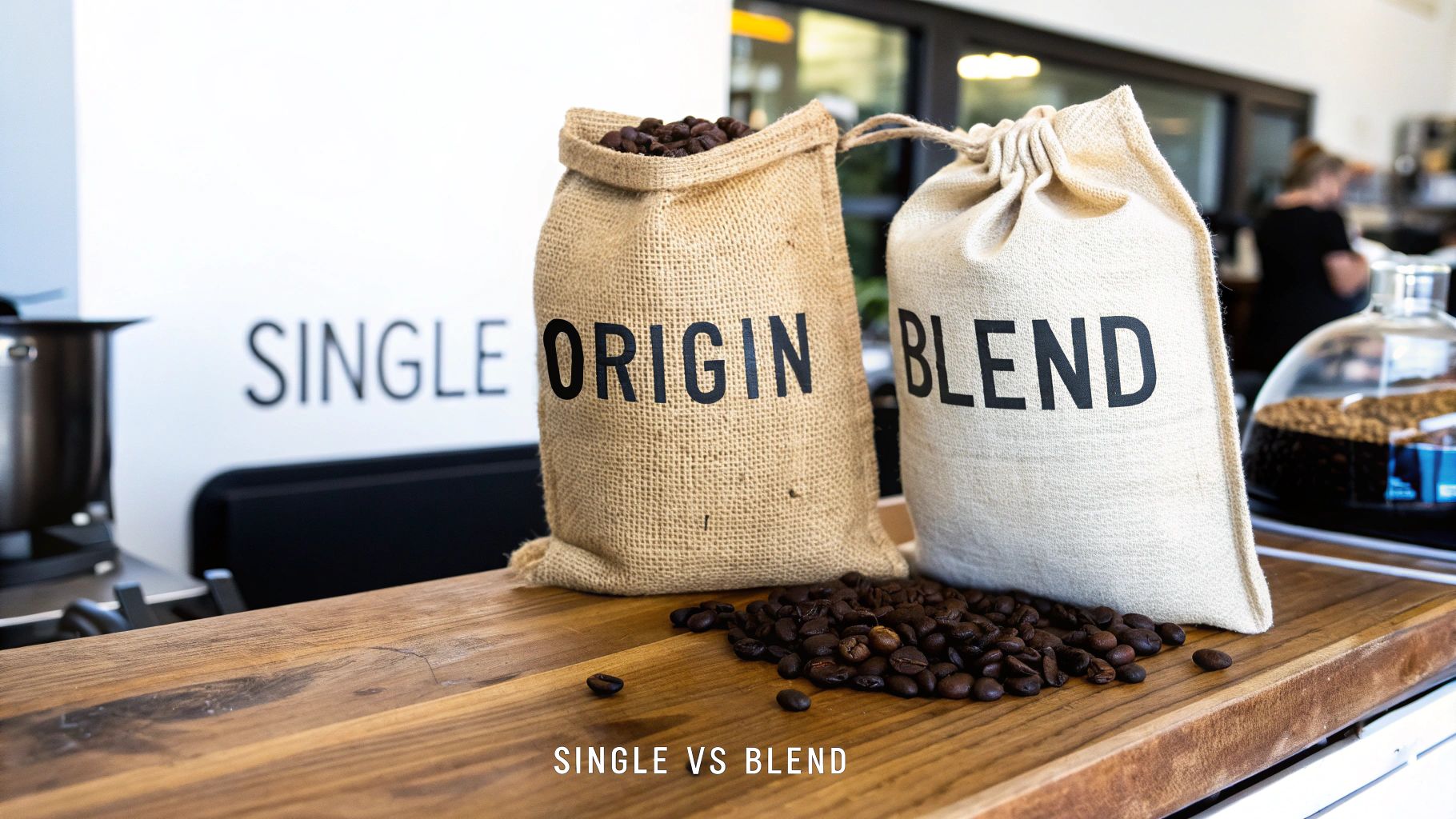
Are Single-Origin Beans Better Than Blends?
One isn't necessarily 'better' than the other—they just offer completely different experiences in the cup.
-
Single-origin beans are all about showcasing the unique, distinct flavours from one specific farm or region. They often produce a brighter, more nuanced and complex cup, which is fantastic if you enjoy drinking your espresso black. You might also find the unique character of single-origin beans interesting when exploring the benefits of cold brew coffee.
-
Blends are carefully crafted by roasters who are aiming for balance and consistency. They combine beans from different origins to create a well-rounded flavour profile that has an excellent body and produces a reliable crema. This makes them a fantastic and dependable choice, especially if you're adding milk.
And after you've pulled that perfect shot, you can even responsibly compost your used coffee grounds to keep your coffee habit a little more green.
At Absolute Cravings, we believe great coffee always starts with great beans. Drop by our café in Townsville to explore our hand-picked selection and let us help you find your perfect espresso match. Discover your next favourite brew at https://www.absolutecravings.com.au.


