

Taking care of your pet’s grooming at home is one of the most rewarding things you can do. It's more than just a way to save a bit of cash on salon trips; it’s a chance to build a real connection with your furry mate. With a bit of patience and the right approach, you can handle everything from a simple brush and bath to trimming their nails, keeping them happy, healthy, and comfortable. Think of this as your guide to creating a positive, stress-free grooming routine right in your own home.
Why Aussies Are Embracing At-Home Pet Grooming
Across Australia, more and more pet owners are swapping the salon for the living room, and it’s not just about the budget. For many, it's about strengthening that special bond and skipping the stress some pets feel in a noisy, unfamiliar grooming shop. When you're the one doing the grooming, you build a foundation of trust and show them they're in safe hands.
You can see this shift just by looking at the market. The Australian pet grooming products industry was valued at USD 168.22 million in 2024 and is expected to jump to over USD 306 million by 2030. What’s driving this? Simple. Aussies treat their pets like family and are happy to invest in quality shampoos, brushes, and clippers to give them the best. You can read more about it in this pet grooming market report.
The Core Benefits of DIY Grooming
Taking grooming into your own hands has some fantastic perks for both you and your pet:
- Less Stress: A professional grooming salon can be full-on for some animals with all the strange sounds, smells, and other pets. Your home is their safe space, making the whole experience much calmer.
- A Stronger Bond: Gentle, regular grooming is a wonderful way to interact. This quality time deepens the trust and affection you share.
- Early Health Checks: When you're grooming your pet, you're also giving them a hands-on check-up. You’re much more likely to spot things like lumps, skin irritations, ticks, or ear infections before they become bigger problems.
By turning grooming into a routine, you're not just maintaining their coat; you're actively participating in their preventative health care. It's a proactive step towards a longer, happier life together.
This move towards home grooming is all part of a bigger picture where our pets are truly part of the family. It's the same lifestyle that has us searching for dog-friendly restaurants near you so we can include them in every part of our lives.
Creating Your Home Grooming Sanctuary
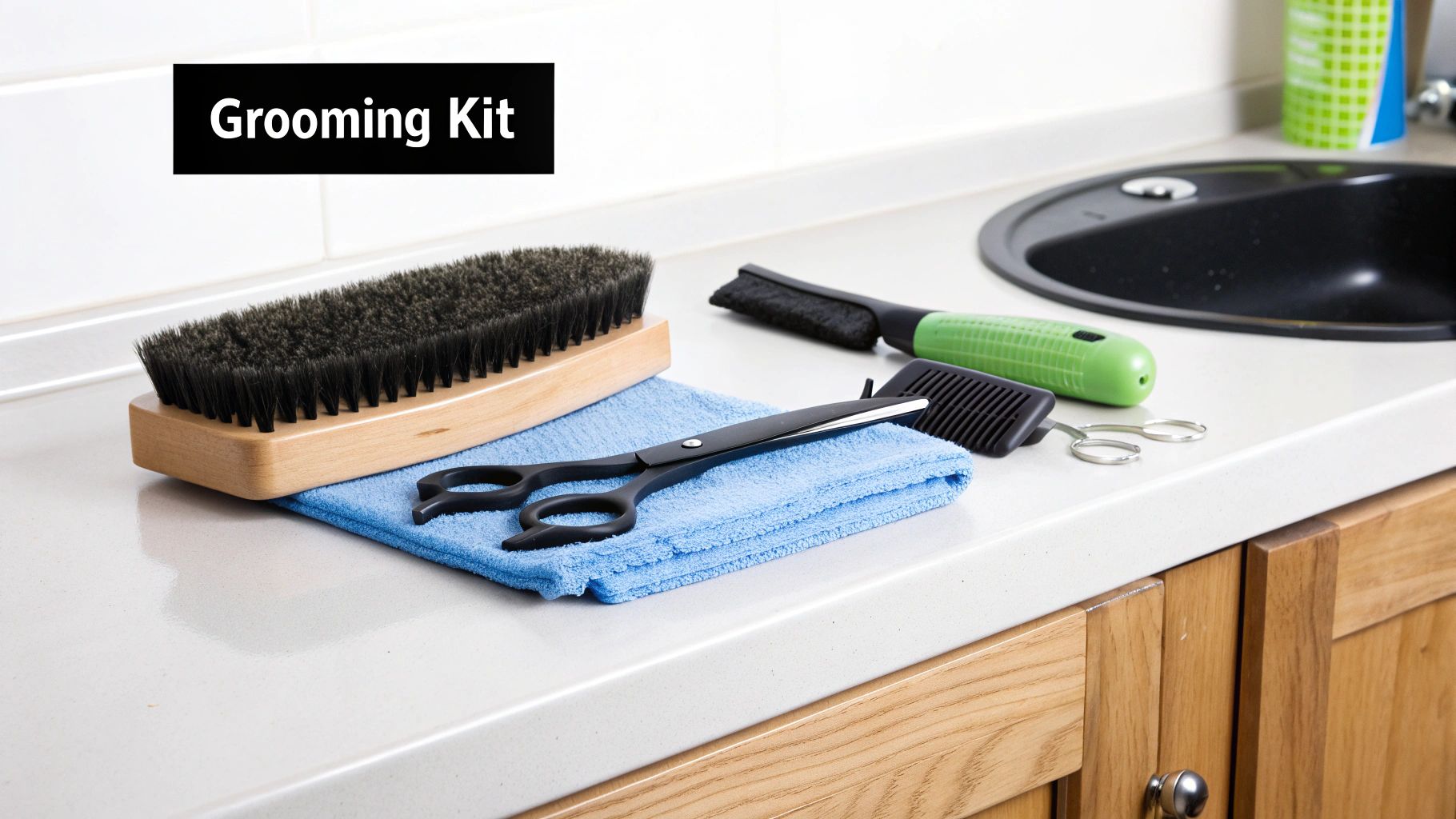
A successful groom starts long before you even pick up a brush. The secret to a stress-free session is creating a space where your pet feels safe and relaxed. Think of it as their own little grooming sanctuary.
This doesn't need to be a custom-built salon; a quiet bathroom, the laundry, or even a sectioned-off corner of the garage will do just fine. The real key is consistency. By using the same spot every time, you build a predictable routine that helps your pet understand what's happening, turning a potentially scary event into something familiar.
Setting Up Your Space for Safety and Calm
First things first: make the area safe. Slippery floors are a recipe for disaster, so putting down a non-slip mat in the tub or on the floor is an absolute must. It gives your pet solid footing, which goes a long way in preventing panic and potential slips.
Next, get all your tools organised and within arm's reach before you bring your pet in. Fumbling around for the shampoo or clippers mid-bath is a surefire way to dial up the stress for both of you.
Before you even think about starting, it’s a good idea to have your at-home grooming toolkit ready to go. Having everything in one place makes the whole process smoother and less stressful. Here’s a quick checklist of the essentials every pet owner should have on hand.
Your Essential At-Home Grooming Toolkit
| Tool Category | Essential Items | Best For |
|---|---|---|
| Bathing | Pet-specific shampoo & conditioner, non-slip mat, towels | Safely washing your pet's coat without irritating their skin. |
| Brushing | Slicker brush, undercoat rake, bristle brush | Removing loose fur, preventing mats, and distributing natural oils. |
| Trimming | Nail clippers/grinder, safety-tip scissors, electric clippers | Keeping nails at a healthy length and tidying up fur around the face/paws. |
| Comfort & Safety | Styptic powder, high-value treats, grooming table/restraint | Managing minor nicks, rewarding good behaviour, and keeping your pet secure. |
Having these items ready transforms grooming from a chaotic chore into a manageable routine. It shows your pet that you're prepared, which in turn helps them feel more secure.
A well-prepared space is the foundation of a positive grooming experience. When you're calm and organised, your pet picks up on that energy and is more likely to remain relaxed throughout the process.
This idea of thoughtful preparation is crucial for making any environment feel safe and welcoming. It's the same principle we apply in our café, which you can read more about in our guide on creating a welcoming and safe environment.
Introducing Your Pet to the Sanctuary
With your space all set up, it’s time to introduce your pet to it—gently. The goal here is to build positive associations before any actual grooming takes place.
Let them wander in and explore on their own terms. Give them a chance to sniff the clippers (while they’re off!), check out the brush, and just get used to being in the room. This isn't a one-and-done deal; plan for a few short, casual visits in the days leading up to the grooming session.
During these meet-and-greets, be generous with high-value treats and praise. You want your pet to learn that amazing things happen in this spot. This simple, proactive approach helps turn grooming from a scary ambush into a cooperative activity built on trust.
Mastering Brushing and Bathing Fundamentals
Brushing and bathing are easily the two most important parts of at-home grooming. When you get them right, they keep your pet’s coat healthy, stop painful mats from forming, and can actually be a great way to bond. But if you get them wrong, it can turn into a stressful tug-of-war that your pet learns to hate.
The secret is to really understand what your specific pet needs. For example, a slicker brush is fantastic for getting through a Golden Retriever's thick undercoat, but it would be far too harsh for a short-haired Vizsla. For a dog like that, a soft bristle brush is a much better fit, helping to spread their natural oils and give their coat a lovely shine.
This visual guide shows just how you can turn brushing into a calm, soothing routine.
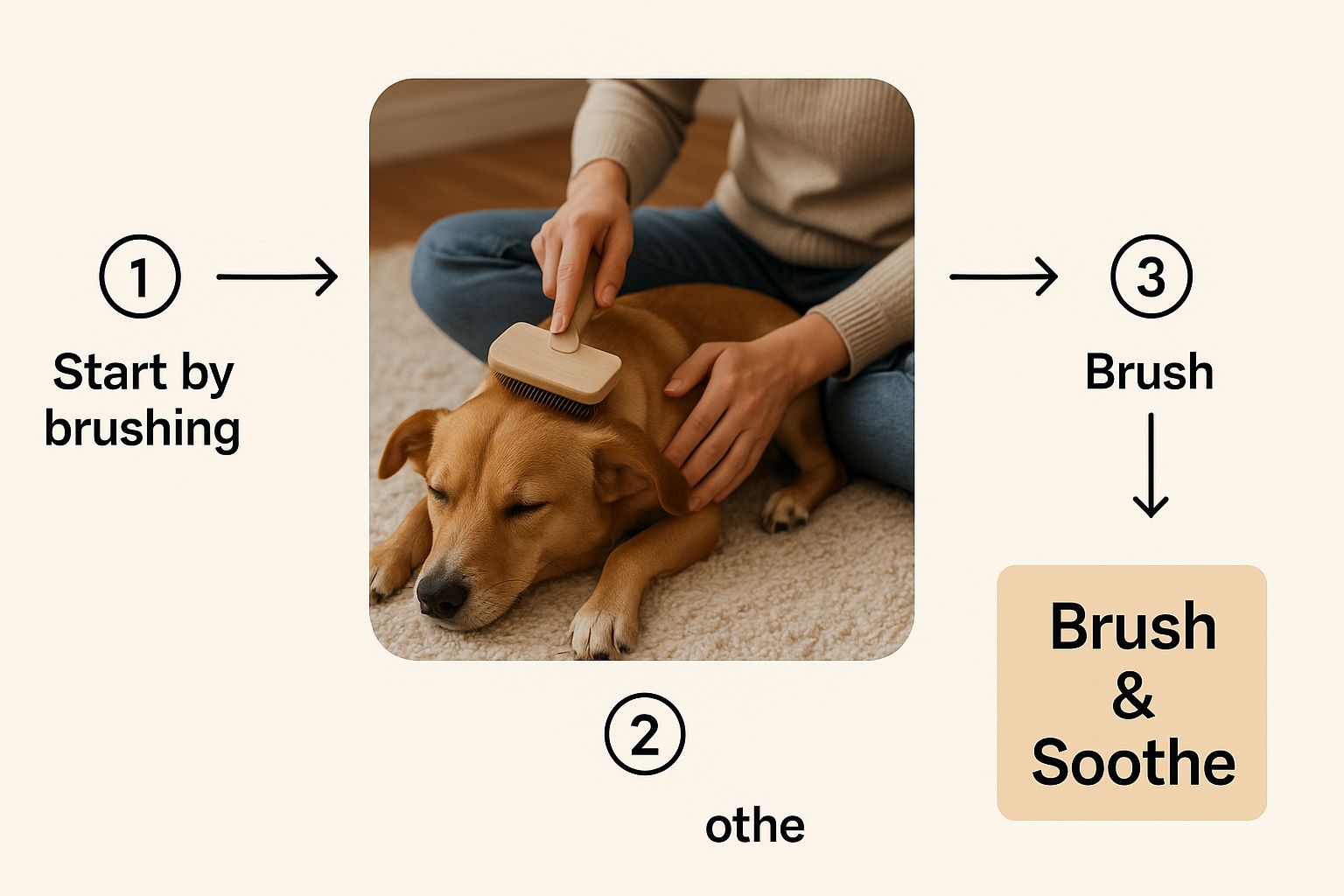
The image really drives home that a calm approach and having the right gear can make brushing a positive experience instead of just another chore.
The Art of Effective Brushing
Brushing isn't just about appearances; it's a vital health check. As you run the brush through their fur, you’re much more likely to find any lumps, ticks, or skin issues that could easily go unnoticed otherwise.
When you start, always use gentle but effective strokes. If you hit a tangle or a mat, never yank it. This is painful and will quickly make your pet fear the brush. Instead, gently pick at the edges of the mat with your fingers or a comb, making sure to hold the fur at the base so you’re not pulling on their skin.
For dogs with those dense double coats, it’s much easier to brush them in sections. Start near the bottom and work your way up, making sure you get right down to the undercoat—that’s where most of the troublemaking mats hide. To really get your routine down pat, it’s worth looking into specialised tools and finding the best brushes for specific breeds like Labrador Retrievers.
A consistent brushing schedule—even just five minutes a day—is far more effective than a long, difficult session once a month. It prevents mats from forming in the first place and keeps the experience low-stress for your pet.
Making Bath Time a Breeze
When it comes to bath time, being prepared is everything. Before your pet even gets a paw wet, have everything you need laid out and within arm's reach. This should include:
- Gentle, soap-free pet shampoo: Human shampoos have the wrong pH balance and can seriously irritate your pet’s skin.
- Plenty of old towels: You can never have too many on hand.
- A non-slip mat: This is a non-negotiable for preventing slips and helping your pet feel secure in the tub.
- High-value treats or a distraction: A lick mat smeared with peanut butter or a pet-safe pate and stuck to the shower wall is an absolute game-changer.
Once you're all set up, take a moment to protect their sensitive ears by placing a cotton ball in each one (not too deep!). This simple trick helps stop water from getting into the ear canal, which can lead to nasty infections. Always use lukewarm water to wet their coat thoroughly before you even think about adding shampoo.
Lather the shampoo in gently, massaging it right into their coat and skin. This is another great chance to give them a quick once-over for any skin problems. The rinse is, without a doubt, the most important part. Leftover shampoo residue is one of the most common causes of skin irritation and itchiness, so rinse, rinse, and then rinse again until the water runs completely clear. This will also help you avoid that lingering "wet dog" smell, which is often just bacteria feeding on leftover soap.
A Confident Approach to Nail Trims and Paw Care
You know the sound. That unmistakable click-clack of long nails on the floorboards. It’s more than just an annoying noise; it's a clear signal that it's time for a trim. For many pet owners, this is easily the most nerve-wracking part of pet grooming at home.
The fear of causing them pain is very real. But with a bit of know-how, you can tackle this task calmly and with confidence.
The secret to a safe trim is knowing where the quick is—that's the little bundle of nerves and blood vessels inside the nail. If your pet has light-coloured nails, you're in luck; you can see the pink part quite easily.
For those with dark nails, the trick is to go slow. Make tiny little snips at a time and look at the cut surface of the nail. When you see a small, dark oval appear in the centre, that's your cue to stop.
Choosing Your Nail Trimming Tool
When it comes to the tools of the trade, you've got two main options. The best one for you really comes down to what you're comfortable with and how your pet feels about the whole process.
- Scissor-style clippers are a classic choice for a reason. They give you fantastic control and make a quick, clean cut. They're ideal for pets who are generally pretty patient.
- Nail grinders are an amazing alternative, especially for anxious animals. They file the nail down gradually, which seriously lowers the risk of cutting the quick. As a bonus, you can smooth out any rough edges. The noise can take some getting used to, so introduce it slowly with plenty of praise and treats.
If you're looking to make the whole experience as calm as possible, it's worth checking out this detailed guide to a stress-free nail trim.
Here's a pro tip: don't try to get the perfect length in one go. It's so much better to trim a tiny amount every week or two. This helps the quick recede over time and makes the entire process less of a big deal for everyone.
Complete Paw Maintenance Beyond the Trim
Proper paw care is about more than just the nails; it’s a crucial part of your pet's overall health, especially with our Aussie climate. Getting into the habit of checking between their paw pads can help you spot little issues before they turn into big problems.
Try to inspect their paws after every walk, particularly during the hot summer months. You're on the lookout for a few common culprits that can cause some serious pain and even infection:
- Grass Seeds: These pesky little things are notorious for getting embedded in the fur between pads. If left, they can burrow into the skin and cause painful abscesses.
- Overgrown Fur: For our long-haired mates, the fur between their paw pads can easily become matted and collect dirt and debris. Carefully trimming this hair with a pair of safety-tip scissors keeps their paws clean and actually improves their grip on slippery floors.
- Cracked Pads: Hot pavement, rough trails, and dry weather can really do a number on your pet's paw pads, leaving them dry and cracked. A high-quality, pet-safe paw balm is a game-changer here. It provides a protective barrier and soothes any irritation.
When you build these simple checks into your grooming routine, a nail trim becomes a full health check. It ensures your furry friend stays comfortable, happy, and ready for all your adventures together.
Checking In on Ears and Teeth
A great at-home groom is about so much more than a fluffy, shiny coat. It's about looking after your pet's total wellbeing, from the tip of their nose to the end of their tail. Two areas that often get missed, but are so important, are the ears and teeth. Giving these spots some regular, gentle attention can head off painful infections and serious dental problems down the line.
Let's start with the ears. A healthy pet ear should look pale pink and clean, with no funny smells. When you're having a cuddle, make it a habit to just gently flip the ear flap up and have a quick peek inside. If you're seeing constant redness, a bit of a pong, or a lot of dark gunk, that's a sign something's not right, and it's time for a chat with your vet.
A Gentle Approach to Ear Cleaning
For a routine clean, all you need is a good vet-approved ear solution and some cotton balls or soft gauze. Never use cotton buds—it’s just too easy to accidentally push them too far and damage the delicate ear canal.
- Gently hold your pet’s head steady and lift their ear flap so you can see into the canal.
- Pop a few drops of the cleaning solution right into the ear. Don't stress, this is exactly how it's designed to work!
- Now, massage the base of the ear for about 20-30 seconds. You'll probably hear a squishy sound, which is just the solution breaking down all the wax and gunk.
- Let your pet shake their head! This is a crucial step that helps bring all the loosened debris up to the surface.
- Finally, grab a cotton ball and gently wipe away any visible grime you can see on the outer parts of the ear.
This simple routine is a lifesaver for keeping ears healthy, especially for those floppy-eared breeds that are prone to trapping moisture.
Making Dental Care a Daily Habit
Now, onto teeth. When it comes to dental health, consistency is everything. Introducing a toothbrush might feel a bit weird for your pet at first, but turning it into a quick, positive daily habit is one of the best things you can do for them. The goal here is to make it a normal part of their day, not a wrestling match.
A fantastic way to ease into it is by letting them lick some pet-specific toothpaste off your finger. These toothpastes come in flavours they’ll love, like chicken or beef, so they’ll just think it’s a new treat. After a few days of this, you can move on to rubbing the toothpaste on their gums with your finger, and then finally bring in a soft-bristled pet toothbrush.
Making dental care a quick, daily ritual with a pet-safe toothpaste can prevent the buildup of plaque and tartar, which is linked to serious health problems like kidney and heart disease.
With Australia having one of the highest pet ownership rates in the world, keeping our furry family members healthy is a huge priority for millions. The total pet population is around 30 million, with dogs making up about 6.33 million of that figure. As a nation, we spend billions on their care, and weaving dental hygiene into your routine is a simple but incredibly powerful part of that commitment. You can find more fascinating insights into Australia's pet industry statistics on dogster.com.
Your At-Home Grooming Questions Answered
Even when you've got all the right gear and the best intentions, diving into pet grooming at home for the first time can feel a little daunting. A lot of questions pop up, and it's good to know you're not alone in wondering about them. Let’s tackle some of the most common worries pet owners have.
One of the biggest hurdles is figuring out how to groom a pet who absolutely hates it. If your dog bolts the moment they see a brush, it’s a clear sign that you need to go back to basics and rebuild their trust around grooming tools.
The trick is to break the process down into tiny, positive experiences. Start with super short sessions—we’re talking 30 seconds to one minute at most. Just have the brush nearby while you offer them some high-value treats. The aim is to slowly change their association from fear to something they look forward to. Never, ever force a grooming session on an anxious pet; it will only make their fear worse.
What If I Accidentally Hurt My Pet?
It's a genuine fear, and it can happen to even the most cautious of us. The most common mishap is cutting a nail a little too short and nicking the quick. It looks scary, and there might be a bit of blood, but staying calm is the most important thing you can do. Your panic will only stress your pet out more.
This is exactly why having styptic powder in your grooming kit is non-negotiable. It’s a lifesaver that stops the bleeding almost instantly.
If this happens:
- Take a deep breath and don't panic. Gently apply the styptic powder with a bit of pressure.
- Once the bleeding stops, shower your pet with praise and a special treat.
- End the session right there on a positive note. You can always try again another day.
Mistakes are just part of the learning curve. How you react is what truly matters, as you can turn a negative moment into one that actually strengthens the trust you've been working so hard to build.
When to Call in a Professional
Doing it yourself is fantastic for keeping your pet tidy between professional appointments, but it’s just as important to know when to throw in the towel. Some jobs are simply best left to experienced groomers who have the right training and equipment to handle tricky situations safely.
You should definitely book an appointment with a professional groomer if you come across:
- Heavy Matting: Severe mats are more than just tangled fur; they pull tightly on the skin and can be very painful. A professional can shave them out without causing your pet distress.
- Behavioural Challenges: If your pet shows any signs of aggression or extreme fear despite your calm and patient efforts, a pro will have the experience to handle them safely.
- Breed-Specific Cuts: If you're hoping for that perfect Poodle pouf or a traditional Terrier hand-strip, those are specialised skills that take years to master.
Knowing when to step back and ask for help is the mark of a truly responsible pet owner. Your pet's safety and comfort should always be the number one priority.
Think of professional groomers as your partners in keeping your pet happy and healthy. Just like you might take your furry friend out for a special treat, sometimes they need a special kind of pampering, too. For a little inspiration on treating your pet, have a look at our top reasons to visit a pet-friendly cafe. This ensures all their needs are met without adding any unnecessary stress to their (or your) day.
At Absolute Cravings, we believe that caring for our pets is one of life’s greatest joys. Swing by our pet-friendly cafe for a post-grooming treat you can both enjoy. Visit us today