

So, what exactly is "clean eating"? You hear the term thrown around a lot, but what does it actually mean?
Simply put, clean eating is a way of life that revolves around eating whole, minimally processed foods. It’s about choosing foods that are as close to their natural state as possible. Think a crisp, juicy apple straight from the tree versus a squeezy pouch of sweetened applesauce, or a beautifully grilled piece of fish instead of a crumbed fish finger from the freezer aisle.
Defining Clean Eating Beyond The Hype
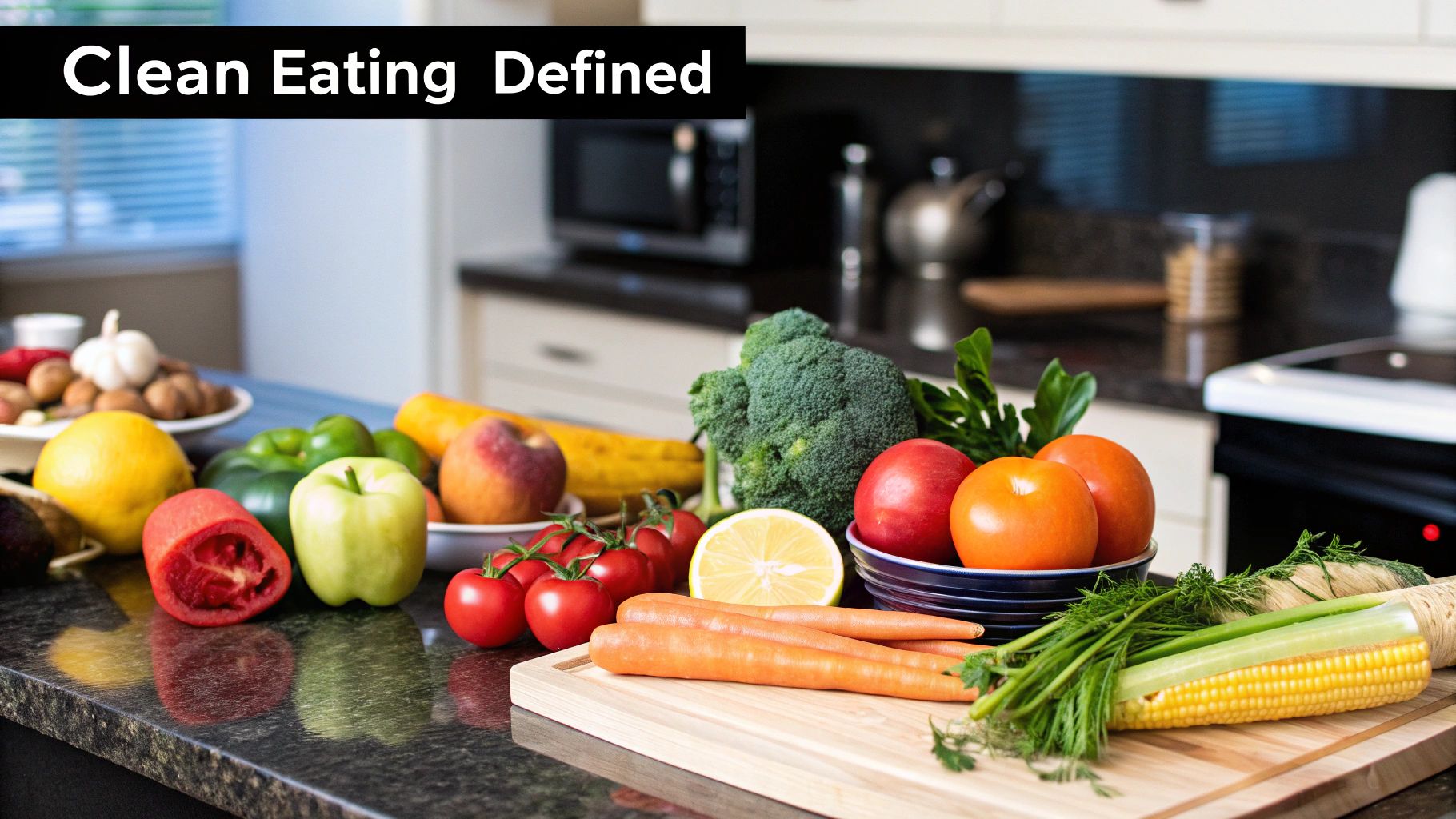
When people hear "clean eating," their minds often jump to super restrictive diets, eye-watering grocery bills filled with only organic produce, or saying goodbye to all their favourite comfort foods. But honestly, the real philosophy is much simpler and way more flexible than that. It's an approach that champions nourishment over deprivation.
Think of it as choosing foods that look like they did when they came from the farm, the ground, or the sea. This means they’ve gone through very little processing, refining, or handling, which helps keep all their good-for-you nutrients intact. The focus is less on what you’re cutting out and more on what you’re adding to your plate—things like vibrant fruits, fresh veggies, quality proteins, and wholesome grains.
The Foundation Of Clean Choices
Getting your head around clean eating is less about following a strict set of rules and more about building mindful, positive habits. The real goal is to fill your diet with foods that genuinely fuel your body and make you feel fantastic. This approach naturally encourages you to become more aware of what’s in your food, prompting you to read labels and recognise what you're actually eating.
A few key ideas are at the heart of this lifestyle:
- Prioritising Whole Foods: Building your meals around ingredients that don't even need a label, like vegetables, fruits, and lean meats.
- Limiting Processed Items: Cutting back on foods that come packed with added sugars, unhealthy fats, and a long list of artificial additives you can't pronounce.
- Mindful Preparation: Opting for healthier cooking methods that let the ingredients shine, like grilling, steaming, or baking instead of deep-frying.
This isn't about being perfect 100% of the time. It’s about consistently making better choices that help you feel your best, one meal at a time.
A Quick Look at Clean vs Processed Choices
To make this crystal clear, here’s a simple table that shows the kind of swaps you might make when you start eating clean. It really just comes down to choosing the less-messed-with option.
| Choose This (Clean) | Limit This (Processed) |
|---|---|
| Whole apple | Apple juice from concentrate |
| Grilled chicken breast | Chicken nuggets |
| Baked sweet potato | Packaged potato crisps |
| Plain Greek yoghurt | Flavoured, sweetened yoghurt |
| Brown rice | Instant white rice |
| Water with lemon | Sugary soft drinks |
See the pattern? It’s all about getting back to basics and enjoying food in its most wholesome, flavourful form.
The Core Principles of a Clean Eating Lifestyle

Jumping into a clean eating lifestyle feels incredibly empowering once you get the hang of its core pillars. It’s not about obsessing over a long list of "bad" foods. Instead, it’s about a handful of simple, guiding principles that completely reframe how you think about what you eat.
Think of these concepts as your trusty compass, whether you're navigating the grocery store aisles or mapping out your meals for the week.
The absolute foundation of it all is to prioritise whole foods. This just means building your plate around ingredients that look a lot like they did in nature. We’re talking vibrant vegetables, fresh fruits, lean proteins like chicken and fish, and whole grains such as brown rice and quinoa. These are the foods absolutely packed with the good stuff your body is craving.
Reading Labels and Limiting Processed Items
Another huge part of clean eating is becoming a bit of a detective at the shops. Start thinking of a food label as the product's "recipe." If the ingredients list is short and you can actually pronounce everything on it, you're on the right track.
On the flip side, if it reads like a science experiment filled with artificial colours, preservatives, and a heap of added sugar, it’s probably best to give it a miss. The goal here is to cut back on those ultra-processed items that bring very little to the table nutritionally.
A simple rule of thumb for clean eating is this: If it came from a plant, eat it. If it was made in a plant, reconsider. This little mantra makes it so much easier to tell the difference between nourishing whole foods and heavily processed products.
Hydration and Mindful Choices
Finally, clean eating isn't just about what you chew—it's also about what you drink. Making water your go-to beverage is such a simple change, but it makes a massive difference.
Sugary drinks like soft drinks and most fruit juices are often loaded with empty calories and added sugars that can easily sabotage your health goals.
Embracing these core ideas gives you a solid framework for making better choices, day in and day out. It shifts your focus from restriction to nourishment, turning it into a sustainable and enjoyable way of life, not just another diet.
The Reality of Modern Australian Diets
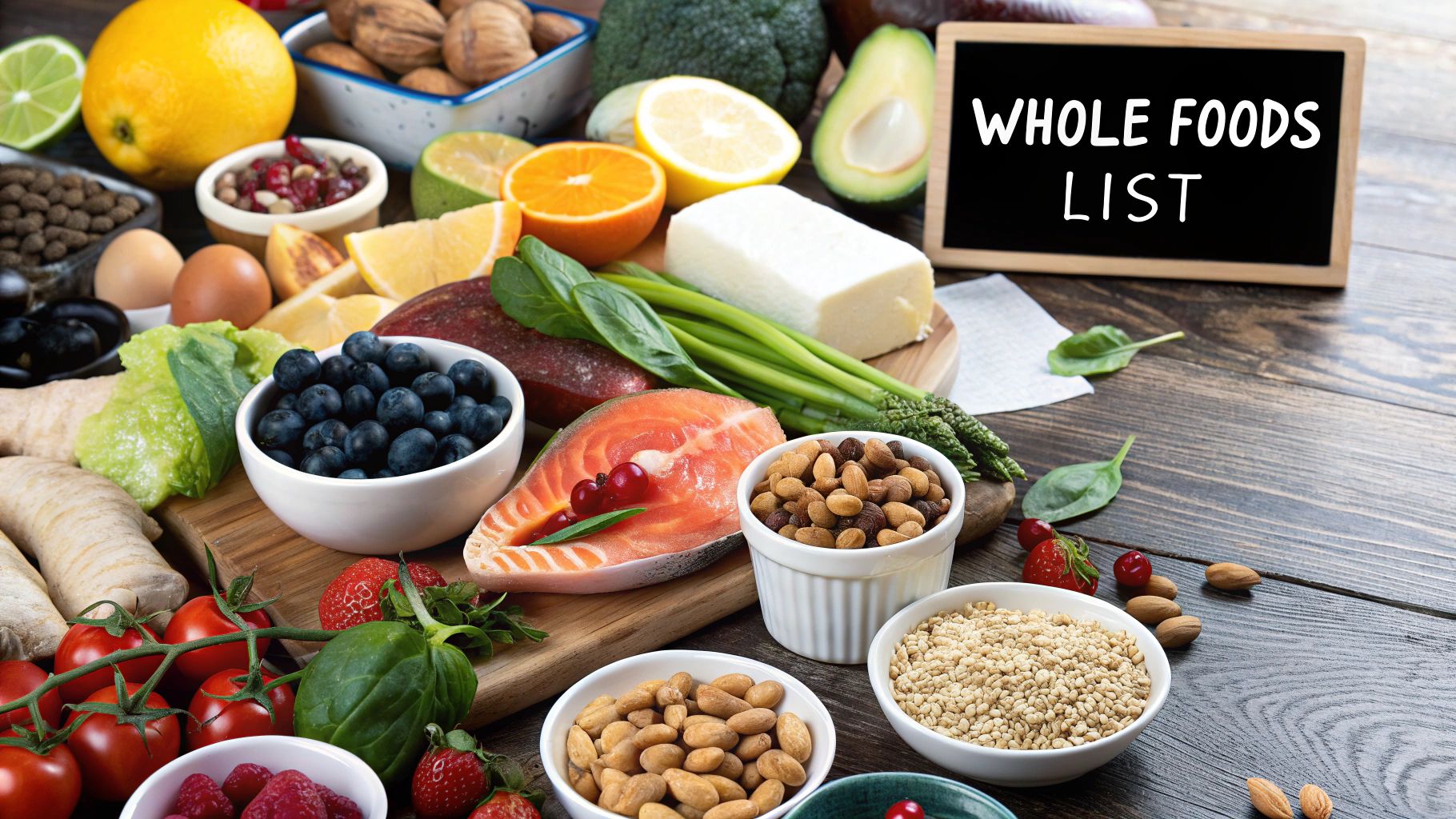
While the idea of clean eating is catching on, it helps to take a moment and look at where most of us are starting from. Getting a clear picture of Australia’s current eating habits really puts into perspective why making a shift towards whole, natural foods is so incredibly powerful.
Let’s be honest, this isn’t about making anyone feel guilty. The simple fact is that the average modern Australian diet often misses the mark when it comes to national dietary guidelines. There’s a pretty big gap between how we should be eating and what we’re actually putting on our plates.
The main reason? We're leaning a bit too heavily on what experts call discretionary foods. These are the usual suspects: biscuits, cakes, processed meats, sugary drinks, and takeaways. They're packed with kilojoules, saturated fat, added sugars, and salt, but they offer very little in the way of real nutrition.
The Growing Gap Between Guidelines and Habits
This isn't a small problem—it's a massive trend across the country. For so many of us, these discretionary foods have shifted from being an occasional treat to a daily habit. This makes it a real struggle to get enough of the good, nutrient-dense foods our bodies are crying out for and creates some serious challenges for our nation's health.
In fact, predictive modelling from the CSIRO paints a fairly bleak picture of where we're headed. Their research suggests that between 2023 and 2030, our consumption of discretionary foods is set to jump by 18%. At the same time, our fruit intake is expected to drop by nearly 10%, down to just 1.3 serves a day – a long way from the recommended two serves. You can dive into the full study on the CSIRO website.
This data shows that making conscious, cleaner choices isn’t just some wellness fad; it's a genuine way to push back against a growing national health concern.
Understanding this context is the first step toward positive change. By recognising that many of us are in the same boat, the idea of shifting towards clean eating becomes less about perfection and more about making small, impactful improvements to our daily routines.
Every time you choose a whole food, you're not just doing something amazing for your own wellbeing; you're actively stepping away from a pattern that affects millions of Australians.
How Discretionary Foods Sabotage Healthy Habits
So, what's getting in the way of our best intentions for healthy eating? More often than not, the main culprit is what we call discretionary foods. These are the items packed with calories, unhealthy fats, and sugars, but seriously lacking in the good stuff our bodies actually need to function well.
Think of them as the total opposite of what "clean eating" is all about. We're talking about the processed snacks, sugary drinks, and fast-food meals that give you a quick hit of flavour but leave you feeling tired and hungry again soon after. They actively work against the goal of fuelling your body with whole, real ingredients.
The Hidden Impact on Your Diet
Here's the really surprising part: these foods make up a huge chunk of what we eat. Even with all the growing interest in clean eating, the reality is that a lot of Aussies still get a massive portion of their daily energy from these less-than-ideal choices.
The latest stats show that discretionary foods provide an average of 38.5% of the total dietary energy for the average Australian. That's a staggering number. It means almost two-fifths of our daily intake offers very little nutritional benefit. You can dig into the specifics in the Australian Bureau of Statistics report.
This really highlights the core challenge when you're starting a clean eating journey. It isn't just about adding a few more veggies to your plate; it's about making a conscious effort to cut back on the huge role these highly processed, low-nutrient foods play in our lives.
Learning to spot these items is your first big step. A great skill to develop is learning how to read nutrition labels properly. It's the best way to uncover hidden sugars and artificial nasties.
This handy chart gives you a great visual for what a clean, balanced grocery shop should look like.
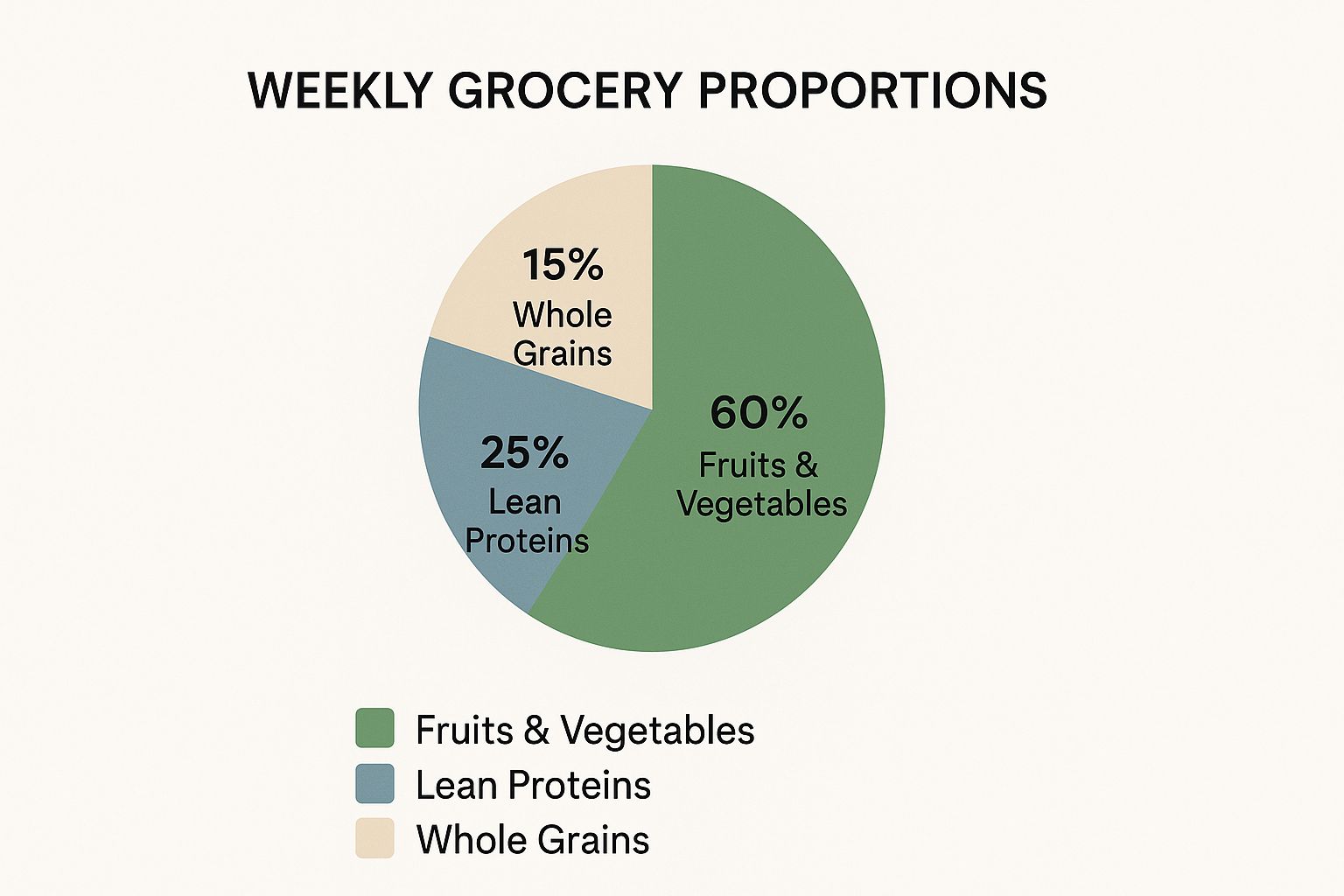
As you can see, the plan is to fill most of your trolley with fresh produce, quality proteins, and whole grains. When you do that, there's naturally much less room left for those discretionary items.
Health Benefits You Can Actually Feel
Switching to a diet centred around whole foods isn't just some abstract health goal; it's about making changes you can genuinely notice in your day-to-day life. The real "what's in it for me?" is perhaps the most powerful reason to give this way of eating a try. When you consistently fuel your body with nutrient-rich foods, the results are tangible and often pop up faster than you'd expect.
You can look forward to more steady energy levels throughout the day, finally ditching those afternoon slumps that have you reaching for a sugary fix. One of the most profound effects people notice is on their digestive system, leading to improved gut health and overall well-being. Many also find that cleaner eating habits naturally help with weight management, without having to obsessively count calories.
Long-Term Rewards and a Healthier Future
Beyond the immediate perks, the long-term benefits are where things get really exciting. Consistently choosing whole foods over their highly processed counterparts is one of the best things you can do to lower your risk of chronic diseases down the track.
A landmark Australian study highlights this beautifully. Researchers followed more than 9,500 Australian women for 17 years and found something incredible. The women whose diets most closely resembled a 'clean eating' model had a 40% greater chance of living well into their later years compared to those with poorer diets. It's a powerful reminder of the direct link between what we put on our plates and our long-term health.
Adopting a cleaner diet isn't just about adding years to your life; it’s about adding life to your years. The focus is on boosting your daily energy, mental clarity, and overall sense of wellness.
Making small, sustainable changes can feel much more achievable. For a bit of inspiration, have a look at our guide to creating healthy family meal ideas that everyone will actually enjoy.
Simple Steps to Start Eating Clean Today
Feeling inspired and ready to make a change? The best part about clean eating is that you don’t need to flip your life upside down to get started. It’s all about taking small, manageable steps that build on each other over time. Forget about perfection—just focus on making one better choice today.
One of the easiest places to begin is by simply drinking more water. Try swapping just one sugary soft drink or juice for a glass of water. Another simple switch is to add one extra serving of vegetables to your dinner each night. These tiny adjustments are surprisingly powerful.
Build Sustainable Habits
To make these new, healthier choices stick, consistency is your best friend. Planning just a few clean meals for the week ahead can make a huge difference, taking the guesswork out of what to eat when you’re tired and busy.
Here are a few practical ideas to get you going:
- Swap Your Snacks: Instead of grabbing a packet of crisps, try a piece of fresh fruit, a small handful of nuts, or some crunchy veggie sticks with hummus.
- Cook One More Meal at Home: Restaurant and takeaway meals can be a minefield of hidden processed ingredients. Cooking at home puts you back in the driver's seat.
- Prioritise Whole Foods: When you’re at the supermarket, aim to spend most of your time in the fresh produce section.
The key is progress, not immediate perfection. Celebrate the small wins, like choosing a whole-grain bread or trying a new vegetable. Every positive choice is a step forward on your journey.
For a deeper dive into getting organised, our guide on how to meal prep has some fantastic strategies to make your week smoother. To make clean eating truly sustainable, a practical meal prepping beginners guide can also be an incredible help for managing your week's meals.
Got Questions About Clean Eating?
When you first start thinking about eating cleaner, it's natural for a few practical questions to pop up. Let's clear the air and tackle some of the most common ones you might be pondering.
Is Clean Eating Expensive?
Not at all, or at least, it doesn't have to be. While you can find some pricey specialty health foods out there, the heart and soul of clean eating—things like seasonal fruits and veggies, oats, and beans—are often some of the most affordable items in the supermarket.
Getting back to basics by cooking more at home is one of the best ways to keep your food budget in check.
Do I Have to Buy Organic?
Nope! Going organic is a personal choice, not a hard-and-fast rule of clean eating. The main goal is simply to eat more whole, unprocessed foods.
If your budget has room for organic produce, that's fantastic. But if it doesn't, just giving your conventional fruits and vegetables a good wash is a brilliant step towards a healthier diet.
Remember, the goal of clean eating is progress, not perfection. It’s about making better, more mindful choices that fit your lifestyle and budget, one meal at a time. It should reduce stress, not add to it.
Even eating out is totally doable. Most restaurants have grilled or steamed dishes on the menu. Just look for simple preparations and ask for dressings or sauces on the side—that way, you’re in control.
At Absolute Cravings, we believe healthy eating should be delicious and easy. Visit us in Townsville for fresh, clean meals that nourish your body and soul. Explore our menu at https://www.absolutecravings.com.au.